Trump trade threats overshadow European defence meet / Photo: © AFP
The threat of a transatlantic trade war loomed large Monday over a gathering of European leaders aimed at boosting the continent's defences in the face of an aggressive Russia.
The EU's 27 leaders convened the Brussels talks involving Britain's prime minister and the head of NATO to brainstorm ways to ramp up European defence spending -- a key demand that President Donald Trump has made to America's allies.
But it was Trump's repeated threat to target Europe "soon" -- after having slapped tariffs on Canada, Mexico and China -- that set the meeting's opening tone.
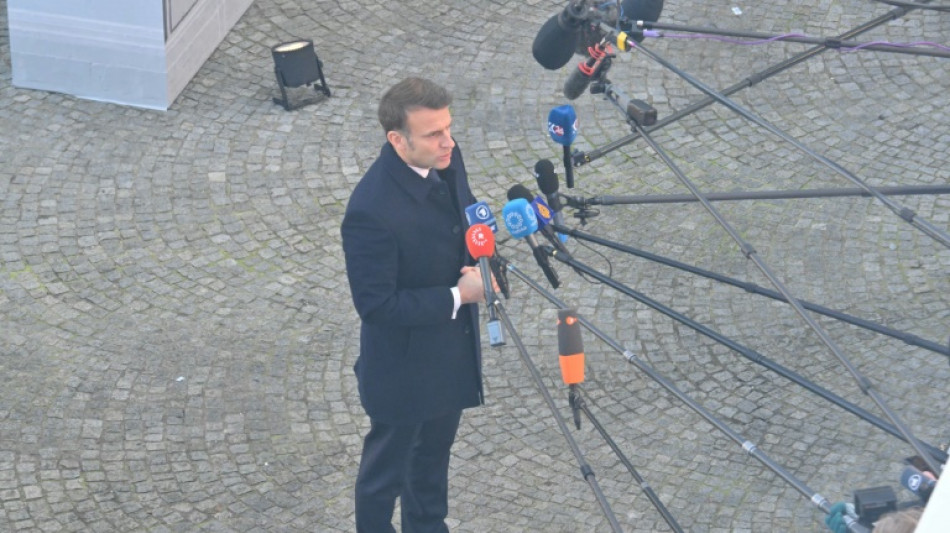
"If we are attacked in terms of trade, Europe -- as a true power -- will have to stand up for itself and therefore react," French President Emmanuel Macron warned on arrival.
The tough talk mirrored the message from the European Commission, which leads trade policy for the bloc and warned Sunday it would "respond firmly" to any US tariffs. German leader Olaf Scholz likewise said Europe should be ready to "act."
Beyond the signals of firmness, however, the overarching message from the EU's foreign policy chief was that reason must prevail.
"We need America, and America needs us as well," Kaja Kallas told reporters. "There are no winners in trade wars."
Poland's Prime Minister Donald Tusk, whose country currently holds the EU presidency, put it more bluntly, slamming trade wars as "totally unnecessary and stupid."
Trade aside, Trump has rattled US allies with a series of direct threats -- not least his insistence that he wants to acquire strategically important Greenland.
Denmark's prime minister, Mette Frederiksen, reiterated on arrival in Brussels that the Arctic island is "a part of our territory, and it's not for sale."
- Trump demands -
The trade threats from the White House add an unwelcome new layer to the already complex challenge of bolstering European defences -- faced with a menacing Russia and the spectre of Washington pulling back.
Trump has made clear Europe can no longer take US protection for granted, insisting that NATO countries more than double their defence spending target to five percent of GDP, a goal out of reach for many.
He has also vowed to bring a quick end to Russia's war in Ukraine, leaving Europeans fearful he could sideline them and force Kyiv into a bad deal.
European nations have ramped up their military budgets since Russia launched its all-out invasion almost three years ago.
But EU officials concede they are still not arming themselves fast enough as warnings grow that Moscow could attack one of their own in the coming years.
- 'Crucial' -
There is widespread consensus across Europe on the need to step up on defence, with Brussels estimating the needs at 500 billion euros ($510 billion) over a decade.
"It's crucial that we today start real discussions how we can and how much we strengthen," Finland's Prime Minister Petteri Orpo said.
Key dividing lines revolve around how to fund investment, whether EU cash should be spent only on EU arms, and NATO's role.
There is also a geographical split, with countries closer to Russia already doing far more in relative terms than those further West.
A number of member states are pushing for massive joint EU borrowing but Germany -- facing a fraught election -- has tried to shut down the sensitive discussion.
With no sign of movement on that, EU states have called for the bloc's lending arm, the EIB, to drop limits on lending to defence firms.
On weapons, France -- long accused of caring more for its own industry -- insists arms should be bought in the EU.
- UK security deal? -
As doubts swirl over the transatlantic relationship, many are keen to step up ties with an old friend: Britain.
Prime Minister Keir Starmer will be back in the fold -- at least for one dinner -- as the first UK leader to attend a European Council gathering since Brexit five years ago.
Starmer plans to urge EU leaders to "continue bearing down" on Russian President Vladimir Putin and to "step up and shoulder more of the burden in order to keep Europe safe."
Starmer, who has sought to "reset" relations after the rancour of Brexit, will also discuss a possible UK-EU defence and security deal.
That could bring Britain, with its potent military and large defence industry, a little closer.
But the bitter legacy of Brexit remains.
Numerous EU diplomats said there cannot be progress until a dispute over fishing rights is resolved and London drops its opposition to a youth mobility scheme proposed by Brussels.
P.Jones--TNT