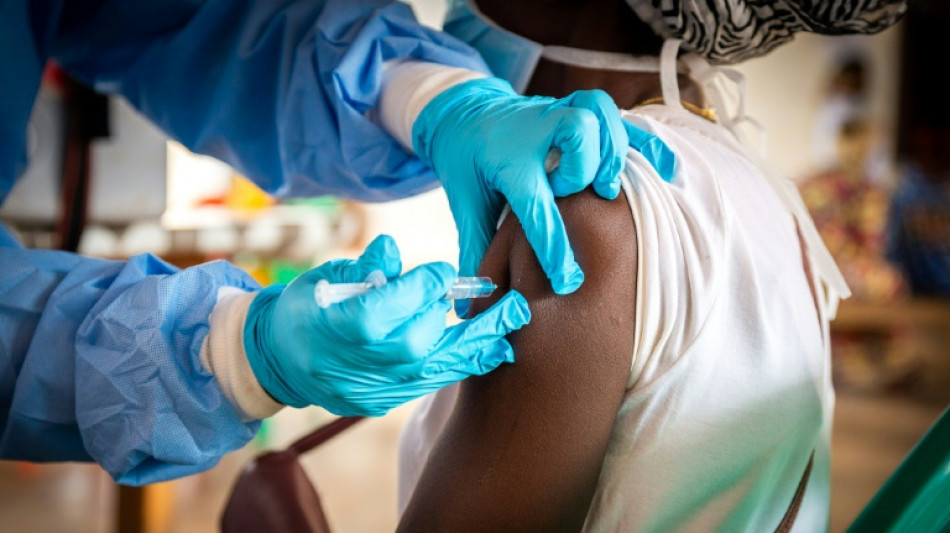
Six African nations to get own mRNA jab production
Six African countries have been chosen to establish their own mRNA vaccine production, the World Health Organization said Friday, with the continent largely shut out of access to Covid jabs.
Egypt, Kenya, Nigeria, Senegal, South Africa and Tunisia were selected as the first recipients of technology from the WHO's global mRNA vaccine hub, in a push to ensure Africa can make its own jabs to fight the Covid and other diseases.
"More than 80 percent of the population of Africa is yet to receive a single dose. Much of this inequity has been driven by the fact that globally, vaccine production is concentrated in a few mostly high-income countries," WHO chief Tedros Adhanom Ghebreyesus told a ceremony on the sidelines of an EU-Africa summit in Brussels.
"One of the most obvious lessons of the Covid-19 pandemic, therefore, is the urgent need to increase local production of vaccines, especially in low and middle-income countries."
Tedros has continually called for equitable access to vaccines in order to beat the pandemic, and rails against the way wealthy nations have hogged doses, leaving Africa lagging behind other continents in the global vaccination effort.
- Self-reliance -
Currently only one percent of the vaccines used in Africa are produced on the continent of some 1.3 billion people.
The WHO set up a global mRNA technology transfer hub in South Africa last year to support manufacturers in low- and middle-income countries to produce their own vaccines.
The global hub's role is to ensure that manufacturers in those nations have the know-how to make mRNA vaccines at scale and according to international standards.
As used in the Pfizer/BioNTech and Moderna Covid-19 vaccines, mRNA technology provokes an immune response by delivering genetic molecules containing the code for key parts of a pathogen into human cells.
Primarily set up to address the Covid-19 pandemic, the global hub has the potential to expand manufacturing capacity for other vaccines and products, such as insulin to treat diabetes, cancer medicines and, potentially, vaccines for diseases such as malaria, tuberculosis and HIV.
The scheme's ultimate goal is to spread capacity for national and regional production to all health technologies.
"The goal is in 2040 to have reached a level of 60% of vaccines produced in Africa that are administered in Africa," said EU chief Ursula von der Leyen.
- 'Back of the queue' -
The WHO said it would work with the first six countries chosen to develop a roadmap of training and support so they can start producing vaccines as soon as possible. Training will begin in March.
The South African hub is already producing mRNA vaccines at laboratory scale and is currently scaling up towards commercial scale.
But the announcement of the tech transfers does not solve the thorny issue of Covid-19 patents that has set Africa at loggerheads with Europe.
African -- and other developing -- nations are pushing at the World Trade Organization for the temporary intellectual property waiver to allow the generic production of vaccines and treatments.
Europe -- the home of some of the major companies behind the vaccines -- has opposed the move arguing that the first priority was to build up production capacity in poorer countries.
"We are talking about the lives of millions, hundreds of millions of people, rather than the profitability of the few companies," South African President Cyril Ramaphosa said.
"It is not acceptable that Africa is consistently at the back of the queue in relation to access to medicines."
French President Emmanuel Macron pushed back against the calls for a waiver, but mooted other options including "compulsory licensing" that could see the patents used in limited cases.
"We have to be consistent with everything we do, we have to protect intellectual property, because it's very important for us to continue to create, to innovate, to invent," Macron said.
"We have to make sure that this intellectual property never hinders the dissemination of knowledge and the building of its capacities."
S.Lee--TNT