The National Times - AC Schnitzer: When Iconic Tuners Fall Silent

AC Schnitzer: When Iconic Tuners Fall Silent


AC Schnitzer: When Iconic Tuners Fall Silent

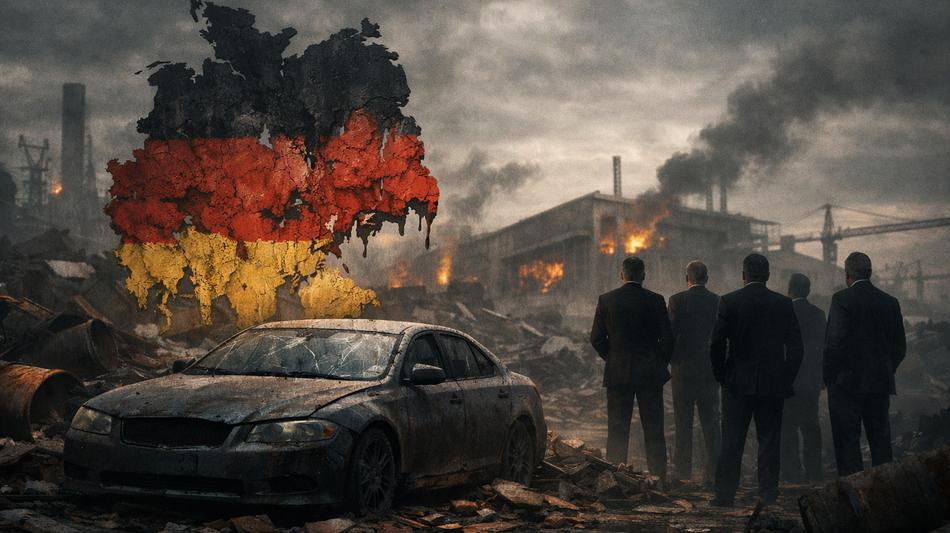
The announced end of AC Schnitzer by the close of 2026 is far more than the disappearance of a well-known tuning brand. It is a warning signal with meaning far beyond the BMW enthusiast scene. When a company that for decades stood for sporty BMW refinement, forged wheels, suspension upgrades, exhaust systems and a distinctly German form of engineering passion can no longer operate its manufacturing and tuning business economically in Germany, the issue is no longer just about one brand. It becomes a question about Germany as an automotive business location. AC Schnitzer therefore turns into a symbolic case: one that reflects weakening competitiveness, a cost structure that has become increasingly hard to carry and a growing public impression that politics is reacting too slowly, too cautiously and too late.

That is why the topic strikes such a deep emotional nerve. AC Schnitzer was never merely a supplier of aftermarket parts. The company represented an entire culture of refinement, balancing factory-like elegance with a more rebellious edge. For many BMW fans, it was part of the national automotive landscape: Aachen, BMW, motorsport associations, complete vehicle programs, distinctive forged wheels, aerodynamic components, performance kits and memorable special builds. In that sense, the end of AC Schnitzer is not simply a balance-sheet story. It is also the loss of a piece of industrial identity.

The reasons behind the closure are revealing because they expose exactly the chain of problems that German industry has been discussing for years. At the core lies a toxic mix of rising development and production costs, slow approval procedures, intensifying international competition and shifting demand. The most striking point is the complaint about the length of the German approval system. If aftermarket parts reach the market many months after foreign competitors have already launched theirs, a specialist niche player loses precisely what matters most: timing, visibility and margins. On top of that come more expensive raw materials, volatile exchange rates, supplier disruptions, tariffs in important export markets, hesitant consumer spending and the gradual decline of the combustion-engine culture that once fueled large parts of the tuning scene. AC Schnitzer is therefore not describing a single isolated problem, but a concentration of structural burdens.

Change text size:

This is also where the story becomes political. What is visible in the AC Schnitzer case is something that many industrial businesses in Germany have been feeling for quite some time in different forms: high labour-related charges, still elevated energy burdens in key areas, complex regulation, slow administration and a public debate that often fully recognizes economic reality only once a traditional name is already on the brink. The criticism that emerges from many reactions is therefore not merely that Germany has become expensive. It is that the state has been too slow to correct its own location disadvantages. If companies need faster procedures, lower burdens, more predictable conditions and a more modern administration, symbolic industrial policy is no longer enough. What matters then is whether the business environment works in practice.

That is precisely what makes the AC Schnitzer case so explosive. It does not happen in a time of industrial momentum, but in a period of sustained uncertainty. Germany’s automotive sector remains under transformation pressure, demand is fragile, parts of the cost base are internationally unattractive and competitive pressure is becoming harsher outside Europe. Niche suppliers are especially exposed. Large corporations can often absorb burdens internally, spread risks and offset pressure through scale. A specialized tuning house cannot do so to the same degree. For such companies, speed to market is not secondary. It is a condition of survival. Lose months, and you lose customers. Lose cost competitiveness, and you lose earnings. Operate in a market where younger buyers have different symbols, different mobility ideals and different spending priorities, and the pressure comes from several sides at once.

Public reaction is telling because it is not one-dimensional. There is, of course, a great deal of sadness. Many enthusiasts mourn a brand that stood for a specific BMW era, for individualized performance with a seal of quality and for a special blend of everyday usability, design and motorsport spirit. But the debate is also much harsher than pure nostalgia would suggest. A large share of public commentary does not only complain about bureaucracy, taxes, charges and Germany as a difficult industrial location. Many also argue that AC Schnitzer itself may have reacted too slowly to changes in the market. Criticism focuses on delayed product availability, a price level that some view as excessive, accessories that no longer appeal to everyone, and the question of whether the brand still had real reach among younger buyers. Pressure from factory-backed performance parts and other tuners is also mentioned repeatedly. The picture is therefore complex: AC Schnitzer is a victim of difficult framework conditions, but in the eyes of many observers not exclusively so.

That very ambivalence makes the case more credible. It would be too simple to read the end of AC Schnitzer only as proof of political inaction. It would be equally wrong to dismiss the location issue and explain everything solely through management or product-strategy mistakes. The real force of the story lies in the combination. Germany has become tougher terrain for specialized industrial players, while entire markets, customer groups and technologies are changing at speed. In such an environment, high costs, slow procedures and uncertain outlooks reduce a company’s ability to reinvent itself. This is where the accusation of political inertia grows stronger: the diagnosis has been known for years, yet relief for businesses often remains fragmented, bureaucratic or delayed.

Seen that way, the end of AC Schnitzer is a warning. Not because the entire German automotive industry is about to collapse, but because the case shows in miniature how a country can begin to lose its industrial fine mechanics. Economic decline is not always most clearly visible in the biggest factories or the loudest headlines. Often it is the retreat of highly specialized, brand-defining medium-sized companies and niche champions that says more about a location than any Sunday speech. AC Schnitzer shows how quickly legend can turn into cost accounting.

Germany will now be judged by whether it draws practical conclusions. Faster approvals, less administrative friction, more reliable investment conditions, a more competitive burden structure and a public administration that supports rather than slows companies would not be luxuries. They would be preconditions for preserving industrial diversity. At the same time, companies themselves must become quicker, younger in their market appeal, closer to their customers and more willing to innovate. The AC Schnitzer case proves both things at once: the location is under strain, and the industry is in transition. If that lesson is ignored, Germany may soon lose not only a cult tuner, but more of the names that have shaped its automotive identity for decades.

Featured

Maybach: Between Glory and a Turning Point

The new Mercedes-Maybach S-Class is far more than a carefully polished update of a familiar ultra-luxury limousine. It arrives at a moment when Mercedes is sharpening the very top of its portfolio, comprehensively modernizing the S-Class and expanding Maybach into a distinct luxury universe that now stretches from chauffeur-driven saloon to electric SUV and exclusive roadster. That is precisely why this model matters. The new Maybach is meant to feel more digital, more individual and more visibly luxurious, while still preserving the essence that made the name so powerful in the first place: serenity, space, comfort and ceremonial presence.Its exterior already makes that ambition unmistakable. The limousine remains an imposing figure at roughly 5.48 meters in length, yet the revised design pushes its presence even further. The grille grows larger, light becomes a central design instrument, Maybach insignia and other elements take on a more theatrical role, and new wheel designs sharpen the visual stance. Even smaller details, such as projected lettering when entering the car or rose-gold accents inside the headlamps, underline the idea that luxury here is not merely owned but staged. Buyers who prefer a darker, more dramatic interpretation still have that option as well. This is not design built around understatement. It is design built around effect.Inside, Mercedes makes its 2026 understanding of luxury even clearer. The new Mercedes-Maybach S-Class adopts the sweeping Superscreen layout, introduces MB.OS to a Maybach model and combines digital sophistication with a deliberate emphasis on tactile richness. The rear compartment remains the true centerpiece. Executive seating, chauffeur-oriented comfort, generous legroom, larger rear displays and a long list of comfort details create the impression of a private lounge on wheels rather than a conventional car cabin. At the same time, Maybach is moving toward a broader definition of exclusivity. Most telling is the availability of a leather-free interior using linen and recycled polyester. It signals that premium craftsmanship is no longer tied exclusively to traditional opulence, but increasingly to material intelligence, sensory quality and curated individuality.

Mercedes new electric VLE: Price and performance?

Mercedes is not simply pushing the V-Class into the electric age; it is changing the vehicle’s very character. With the VLE, the familiar people carrier becomes something much closer to a rolling grand limousine. That is the real message behind this reboot. In the future, Mercedes will draw a clearer line between the VLE, positioned roughly on E-Class territory, and the even more luxurious VLS at the top end. This restart is therefore aimed not only at European families or hotel shuttles, but at a global market in which large luxury vans have long since become status objects.The technical leap is just as significant. The VLE is the first model to sit on a dedicated electric van architecture and it brings precisely the ingredients Mercedes wants to associate with its upper-class passenger cars: 800-volt technology, very fast charging, air suspension, rear-axle steering, a much more digital cockpit and an interior that feels more like a lounge than a traditional van. Up to eight seats, a highly flexible rear compartment, generous luggage space and strong towing credentials are all meant to prove that this is not merely a beautifully staged product, but a genuinely usable one. Mercedes wants to dissolve the old compromise: the VLE is supposed to be a business shuttle, a family car, a travel vehicle and a prestige product all at once.That inevitably puts range at the centre of the debate. On paper, the package is convincing: a large battery, a modern EV-first platform, strong aerodynamics, rapid charging and a clear attempt to present long-distance usability as something tangible rather than theoretical. All of that supports the idea that the official WLTP claim is not just marketing theatre. Even so, it would be a mistake to read that figure as an everyday guarantee. A vehicle of this size already weighs roughly three tonnes before passengers or luggage are added, and the heavier versions push total weight significantly higher still. Add several occupants, baggage, winter temperatures, climate control, large wheels and brisk motorway speeds, and the usable range will naturally fall. The VLE does not defeat physics; it simply shows how far current engineering can reduce the traditional drawbacks of large electric vehicles.

Audi Q9 – how likely is it to become a reality?

The new Audi Q9 is not arriving at a moment of effortless supremacy. It arrives while Audi is renewing its range, trimming costs and trying to restore the full credibility of its premium promise. A flagship SUV above the Q7 is strategically sensible: more presence, more margin potential and more relevance in a highly profitable class. But that also raises the burden of proof.That burden begins with the facts. Audi has confirmed the Q9, yet there is still no official final price and no published WLTP range. Nor has the production powertrain line-up been fully disclosed in public. So the central question can only be answered provisionally today: the Q9 is not justified by default; its eventual price and its real-world electrified usefulness will have to justify themselves.Range is where the issue becomes especially delicate. If Audi launches the Q9 as an electrified combustion model or a plug-in hybrid, a merely decent figure will not be enough in 2026. Buyers in this class expect more than paper efficiency and a premium screen landscape. They expect genuine everyday usability, calm long-distance comfort, intelligent charging and powertrain logic, and the sense that this is modern mobility done convincingly rather than transitional technology sold expensively.

Dacia Striker: Stylish and sturdy?

With the new Striker, Dacia is attacking a part of the market where European family estates have become noticeably more expensive, heavier and, in many cases, less distinctive. The 4.62-metre lifestyle wagon is set to start below 25,000 euros, with hybrid, hybrid 4x4 and LPG versions confirmed. That places it as a deliberately down-to-earth alternative to far costlier C-segment cars. A full unveiling is scheduled for June 2026, while availability is expected from late 2026 or early 2027 depending on the market.The images released so far already make Dacia’s ambition clear. The Striker is not meant to be a dull load carrier, but a car with presence. Its stretched aerodynamic profile, raised ride height and almost shooting-brake-like silhouette give it character without making it look bloated. The upright front end, new daytime running light signature and glossy black element linking the rear lamps show that Dacia wants to sell more than price alone in this class. The Striker looks more deliberate, more modern and more carefully drawn than many of the brand’s earlier generations.That is exactly why the key question matters so much: can the Striker back up its design promise with convincing quality? For now, caution is essential. The model has only been shown in an early reveal. Full information on the cabin, equipment and final technical data is still to come. Any definitive judgment on materials, ergonomics, noise insulation and long-term quality would therefore be premature in March 2026.

Change text size: