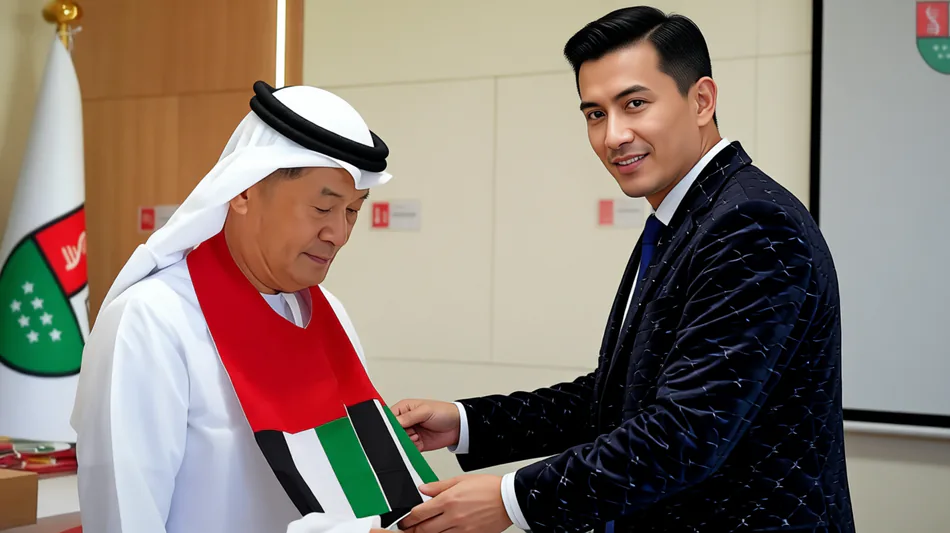
Disgraced Stem-Cell Scientist Hwang Woo-suk Loses Korean Citizenship After Acquiring UAE Passport
Hwang Woo-suk, the former Seoul National University professor whose career was dismantled by a fabricated stem-cell research scandal, has forfeited his South Korean citizenship. The loss of nationality follows his acquisition of Emirati citizenship in April, a move that automatically triggers the revocation of his Korean status under national law.
Hwang Woo-suk, the former Seoul National University professor at the center of a major scientific fraud scandal, has automatically lost his South Korean citizenship after acquiring that of the United Arab Emirates.
The Cheongju Immigration Office, operating under the Ministry of Justice, published a notice in the official gazette on August 13 confirming the forfeiture. The notice identified Hwang Woo-suk, born in 1953 with a registered family domicile in Buyeo County, South Chungcheong Province, as having lost his nationality upon acquiring UAE citizenship on April 9.
While the Justice Ministry stated it could not confirm personal details beyond the gazette disclosure, the birth year and domicile match those of the former professor, who has been conducting research in the UAE in recent years. Under Article 15 of South Korea’s Nationality Act, a Korean national who voluntarily acquires foreign citizenship automatically loses their Korean nationality at the moment the new status is obtained.
The United Arab Emirates rarely grants citizenship to foreigners, but since 2021 it has established a limited pathway for select professionals, including scientists and doctors. Hwang currently serves as the chief executive officer of the UAE Biotech Research Center in Abu Dhabi.
In a message posted on the institute’s website, Hwang described the organization's mission as harnessing biotechnology to address challenges in animal health, biodiversity, and sustainability through cloning, stem cell research, gene editing, and biobanking.
Hwang’s acquisition of Emirati status comes years after his reputation was destroyed by a scandal involving fabricated data. In 2004, he published a paper in the journal Science claiming to have successfully cloned human embryos. The claim was later revealed to be false when it was discovered that Hwang had fabricated images of the cells.
Seoul National University dismissed him in 2006, and the South Korean government stripped him of his designation as the country’s first "top scientist" that same year. More recently, in July, the government revoked the Top Scientist and Technologist Award of Korea, which had been presented to him 22 years prior in 2004.
Legal consequences for Hwang also followed the scandal. In 2014, the Supreme Court upheld an 18-month prison sentence, suspended for two years. The conviction was for embezzling stem cell research funds and obtaining human eggs through illicit channels, in violation of the Bioethics and Safety Act.
M.Davis--TNT