The National Times - Asian coastal cities sinking fast: study

Asian coastal cities sinking fast: study


Asian coastal cities sinking fast: study
Asian coastal cities sinking fast: study / Photo: © AFP

Sprawling coastal cities in South and Southeast Asia are sinking faster than elsewhere in the world, leaving tens of millions of people more vulnerable to rising sea levels, a new study says.

Change text size:

Rapid urbanisation has seen these cities draw heavily on groundwater to service their burgeoning populations, according to research by Singapore's Nanyang Technological University (NTU), published in the journal Nature Sustainability last week.

"This puts cities experiencing rapid local land subsidence at greater risk of coastal hazards than already present due to climate-driven sea-level rise," the study says.

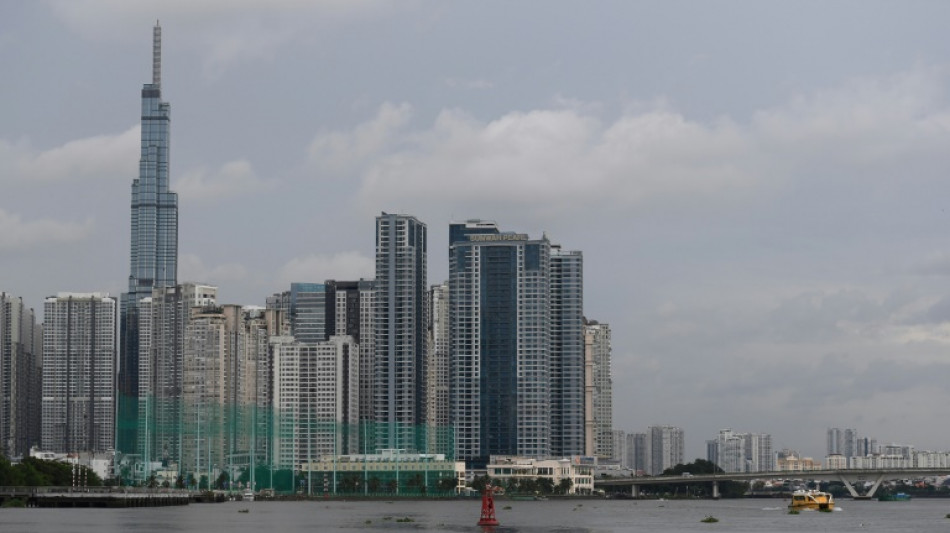
Vietnam's most-populous urban centre and main business hub, Ho Chi Minh City, was sinking an average of 16.2 millimetres (0.6 inches) annually, topping the study's survey of satellite data from 48 large coastal cities around the world.

The southern Bangladeshi port of Chittagong was second on the list, with the western Indian city Ahmedabad, Indonesian capital Jakarta and Myanmar's commercial hub Yangon also sinking more than 20 millimetres in peak years.

"Many of these fast-subsiding coastal cities are rapidly expanding megacities, where... high demands for groundwater extraction and loading from densely constructed building structures, contribute to local land subsidence," the study says.

Sinking cities are not of themselves a result of climate change, but researchers said their work would give a better insight into how the phenomenon would "compound the effects of climate-driven mean sea-level rise".

More than one billion people will live in coastal cities at risk of rising sea levels by 2050, according to UN Intergovernmental Panel on Climate Change.

The IPCC says that global sea levels could rise by up to 60 centimetres (24 inches) by the end of the century even if greenhouse gas emissions are sharply reduced.

T.Bennett--TNT

Featured

Mysterious world beyond Pluto may have an atmosphere: astronomers

A tiny, little-known world beyond Pluto appears to have an atmosphere, Japanese astronomers said Monday, defying what had been thought possible for icy objects in our cosmic backyard.

Datavault AI and CyberCatch Announce Signing of Binding Letter of Intent for Datavault AI to Acquire CyberCatch to Accelerate AI-Driven, Quantum-Resistant Cyber Risk Mitigation Solutions

Strategic acquisition is anticipated to position Datavault AI to bring CyberCatch's AI-enabled cyber risk mitigation solution into Datavault AI's SanQtum-secured edge Graphics Processing Unit ecosystem, addressing a global information security market projected to reach $240 billion in 2026 (Gartner)CyberCatch's post-quantum cryptography conversion plan is also expected to position the combined company ahead of the AI-enabled "Q-Day" quantum-attack horizon, now compressed to as early as 2029 (Google)AI-enabled adversary attacks in 2025 rose 89% year-over-year while average eCrime breakout time fell to 29 minutes, a 65% increase in adversary speed compared to 2024, per CrowdStrike's 2026 Global Threat Report, and Google Quantum AI research has now compressed the timeline for cryptographically relevant quantum computing to as early as 2029.

Apple earnings beat forecasts on iPhone 17 demand

Apple on Thursday said it had its best start to the year ever when it came to earnings, with iPhone demand and digital service sales helping it beat expectations.

Musk grilled on AI profits at OpenAI trial

Elon Musk sparred with lawyers for a third day Thursday at his California trial against OpenAI, struggling to explain why his own for-profit AI empire differs from the one he is trying to take down.

Change text size: