EU vows help for farmers hit by Iran war fertiliser price hikes / Photo: © AFP
The European Union will release emergency funds to help farmers deal with soaring fertiliser costs caused by the Iran war, under plans to support the sector unveiled Tuesday.
Brussels has been under pressure to take action to blunt the impact of the Middle East crisis on agriculture, as the increase in fertiliser prices risks pushing up food costs across the bloc.
"We will support European farmers so they can buy the fertilisers they need for the next harvesting season," said the EU's agriculture commissioner, Christophe Hansen.
But agriculture lobbying group Copa-Cogeca said the plan was disappointing, and failed to provide "any real response".
About a third of fertilisers shipped by sea reach the global market through the Strait of Hormuz, which has been effectively closed by the US-Israeli war against Iran.
That has sent prices up, and the World Trade Organization (WTO) has warned that the blockade threatens global food security, particularly in Africa and South Asia.
As a first measure, the European Commission said it would disburse what is left in the bloc's agriculture crisis reserve, around 200 million euros ($232 million).
It will also propose boosting the reserve by a "substantial amount" before the summer, Hansen said, later explaining Brussels was hoping to make another 200 million euros available.
"The commission will provide targeted exceptional support to the most affected farmers," Hansen told the European Parliament in Strasbourg.
In Europe, the price of nitrogen fertilisers, which are derived from gas, has risen to about 500 euros a tonne, from 380 euros last winter.
- 'Food crisis' -
It was a one-two punch for farmers already facing higher costs because of the war in Ukraine.
"If, in the coming weeks and months, prices for the main categories of fertilisers remain at their current levels, the farming crisis will quickly turn into food inflation for European consumers and a food crisis on a global scale," said Copa-Cogeca.
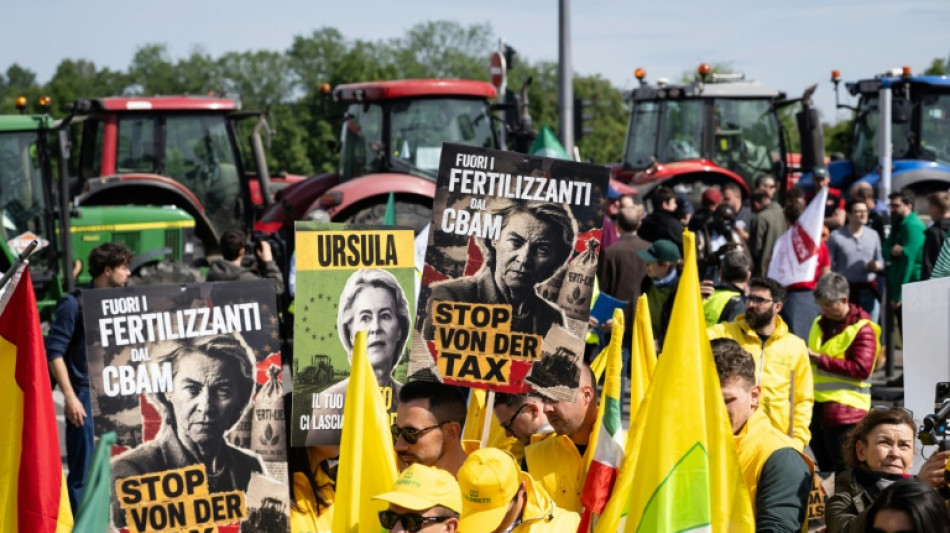
The group organised a small protest outside the European Parliament in Strasbourg, where the EU plan was presented.
Brussels has imposed high tariffs on fertilisers from Russia, a major producer, and plans to end imports entirely by 2028 in a bid to hit Moscow's war coffers over its assault on Ukraine.
Cereal producers, who need vast amounts of fertiliser, have been hit particularly hard, according to the industry.
Hansen said some farmers were planning to leave some land fallow to save on tractor fuel and fertilisers. "It is food security we cannot afford to lose," he said.
Fertilisers account for more than seven percent of input costs for the EU farming sector in general, rising to 16 percent for arable crop farmers, according to Brussels.
The EU, which is highly dependent on imports, is also looking to diversify supply sources and increase local production.
Brussels said it wants to allow farmers to make more use of digestate, a nitrogen-rich byproduct of biogas, in a move that has environmental groups worried over water pollution concerns.
It also suggested it might grant fertiliser-makers extra flexibility under the EU's carbon market scheme, which has heavy polluters pay for the greenhouse gases they emit, under certain conditions.
But it has ruled out a pause in the application of the EU's carbon border tax on fertilisers -- something Copa-Cogeca called for, along with a suspension of tariffs on all fertilisers bar those coming from Russia and Belarus.
Supporters point out the carbon levy targets imports to level the playing field for European industries subject to strict emissions rules, saying their development is key if Europe wants to avoid a similar crisis in the future.
About 30 percent of EU nitrogen fertiliser needs is imported, rising to 40 percent for potash.
For phosphatic fertilisers, about 70 percent of the bloc's demand is met through imports of phosphate rock, according to EU figures.
B.Cooper--TNT