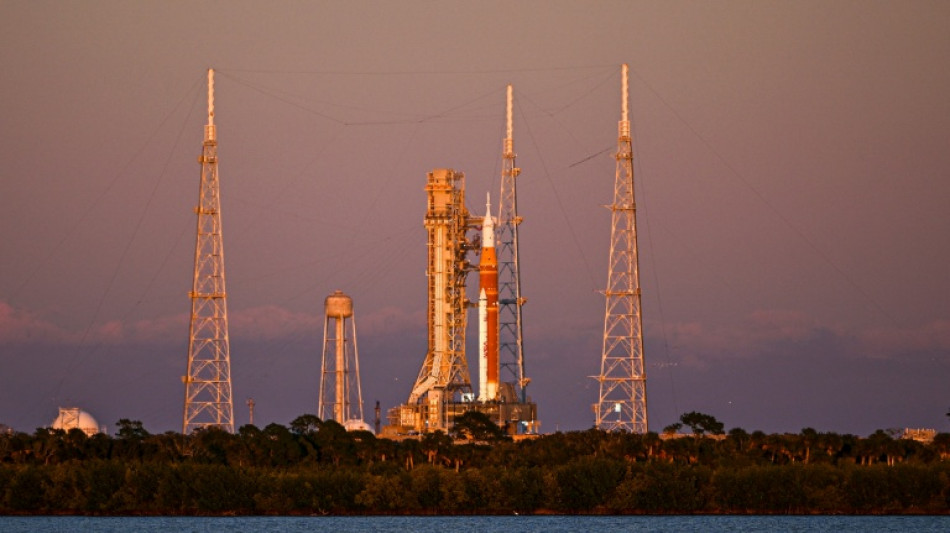
NASA Moon mission launch delayed to March after test / Photo: © AFP
NASA said Tuesday it's delaying until March the launch of its first crewed flyby mission to the Moon in more than 50 years, after encountering leaks during final tests.
The mishaps during a run-through that the US space agency calls a "wet dress rehearsal" dashed hopes that the mission around the Moon could launch as soon as Sunday. The next possible launch window now opens March 6.
The two-day test included filling the Space Launch System rocket with propellants, liquid hydrogen and liquid oxygen.
Teams were initially able to work through some of the hydrogen leaks they encountered, but ultimately the leak worsened as the simulated countdown reached about T-5 minutes, NASA Administrator Jared Isaacman said in a statement.
Operations were stopped, Isaacman said, adding that "we will only launch when we believe we are as ready to undertake this historic mission."
Hydrogen is particularly energetic, tiny, and difficult to contain, NASA officials told a Tuesday briefing.
Along with leakages teams had to troubleshoot a valve issue related to hatch pressurization, in addition to dropouts of audio communications, NASA said.
The latest leaks mirror issues that delayed for months the Artemis 1 launch, which was an uncrewed test mission that ultimately circled the Moon in 2022.
John Honeycutt, head of the Artemis 2 Mission Management Team, said scientists had been "aggressive" in their testing to understand the Artemis 1 leaks.
But "on the ground, we're pretty limited as to how much realism we can put into the test. We try to test like we fly, but this interface is a very complex interface. This one caught us off guard," he continued.
"To me, the big takeaway was we got a chance for the rocket to talk to us, and it did just that," Honeycutt said.
- Moon rush -
Mission managers said they are analyzing the data collected and making necessary repairs ahead of plans to run another dress rehearsal.
For now, officials said those fixes can be performed at the Florida launchpad.
The eventual Artemis 2 moonshot will send a team of four astronauts on a flyby of Earth's satellite.
That approximately 10-day mission will lay the groundwork for NASA's next planned Artemis phase, when a crewed mission is intended to actually land on the Moon.
US President Donald Trump has made evident that he wants to send astronauts back to the Moon as soon as possible, in order to "assert American leadership in space."
The Artemis 2 astronauts had been in quarantine in Houston, but were released following the delay.
"Immense pride seeing the rocket reach 100% fuel load last night, especially knowing how challenging the scenario was for our launch team doing the dangerous and unforgiving work," said team commander Reid Wiseman on X.
"The crew just shared a peaceful breakfast with our families and we jump back into training tomorrow to start our preps for a March launch to the Moon."
F.Harris--TNT