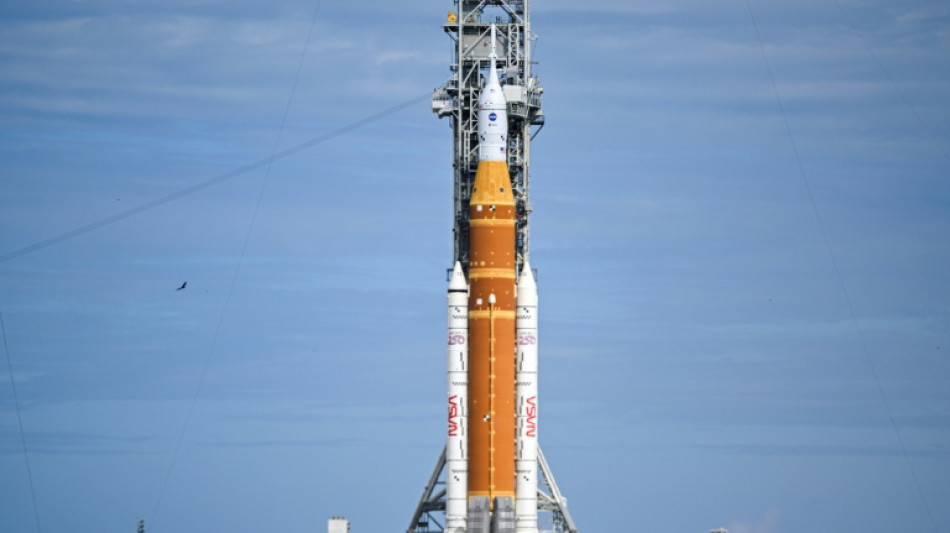
NASA delays Moon mission over frigid weather / Photo: © AFP
NASA on Friday pushed back the earliest date that astronauts could fly to the Moon, due to forecasts of freezing temperatures at the Florida launch site.
The earliest window for the moonshot will now be February 8, two days later than originally scheduled.
NASA was preparing to conduct a key fueling test over the weekend of the 322-foot (98-meter) rocket that is on the Cape Canaveral launch pad in Florida.
But large parts of the United States are grappling with severe winter weather, with Arctic air surging across the country following a deadly winter storm.
Florida is not immune: the normally sunny state could experience its lowest temperatures in decades that are forecast to hover around freezing.
"The expected weather this weekend would violate launch conditions," NASA said in a statement.
Weather permitting, NASA crews now are aiming to conduct their final tests Monday, after which a launch date will be determined.
The change narrows the possibility that NASA can launch their Artemis 2 team of four astronauts on their Moon flyby in February -- just three days of potential windows remain in that month.
The team remains in quarantine in Houston, NASA said.
Heaters are atop the Orion capsule to ensure it stays warm, the US space agency said, and purging systems are in place and configured for the colder weather to maintain proper conditions.
NASA officials are also preparing to launch a crew to the International Space Station, a mission that is being closely coordinated as it is currently planned to happen within days of a potential Artemis 2 launch.
The next NASA crew rotation to the ISS could happen as soon as February 11, but depending on the Artemis plans, it could get delayed.
"Our teams have worked very carefully to see how we can keep moving towards launch for both missions, while at the same time making sure we avoid any major conflicts," said Ken Bowersox, an administrator at NASA's Space Operations Mission Directorate, during a briefing Friday.
There's a possibility that Crew-12 could get some overlapping space time with the Moon team, a prospect that ISS astronauts said Friday they'd enjoy.
"If we do launch before Artemis, we'll be on board the International Space Station, and part of their flight plan actually involves a call to the ISS," said Jessica Meir, the crew's commander who said they'd be "excited" to have some intra-space conversation with their colleagues.
"We are all thrilled about the launch of Artemis. We are very excited to see how this will all play out."
The Crew-12 team to ISS also includes Sophie Adenot, who will be the second Frenchwoman to fly to space.
In another noteworthy tidbit, the new February 8 window for a potential launch to the Moon falls on the same day as the highly watched Super Bowl, the National Football League championship.
That launch window would open at 11:20 pm in Florida (0420 GMT on February 9) -- soon after the game would likely wrap.
E.Reid--TNT