The National Times - Monkey business: Neanderthals and ancient apes likely kissed too

Monkey business: Neanderthals and ancient apes likely kissed too


Monkey business: Neanderthals and ancient apes likely kissed too
Monkey business: Neanderthals and ancient apes likely kissed too / Photo: © AFP

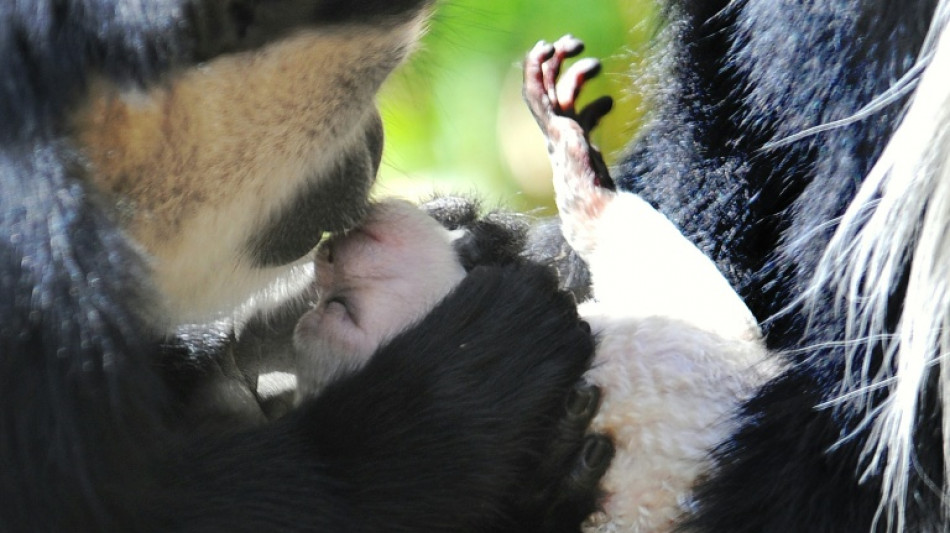
Scientists have found evidence suggesting that kissing dates back up to 21 million years and that our ape ancestors and Neanderthals likely locked lips, research published Wednesday said.

Change text size:

Kissing has long presented an evolutionary puzzle to scientists as it appears to carry high risks such as disease transmission while having no obvious reproductive or survival advantages.

But the new study found that the practice has evolved over millions of years, and that our extinct human relatives, the Neanderthals, could have shared a peck to stay warm in the ice age.

The research led by scientists at the University of Oxford was published in the journal "Evolution and Human Behaviour".

"This is the first time anyone has taken a broad evolutionary lens to examine kissing," said co-author Matilda Brindle, an evolutionary biologist at the University of Oxford.

"Our findings add to a growing body of work highlighting the remarkable diversity of sexual behaviours exhibited by our primate cousins."

For the purpose of the study, researchers defined kissing as a "non-aggressive, mouth-to-mouth contact that did not involve food transfer".

"The results indicate that kissing is an ancient trait in the large apes," evolving in primate ancestors from 17 to 21 million years ago, according to an Oxford University statement.

"Kissing was retained over the course of evolution and is still present in most of the large apes," it added.

The researchers first collected data about modern primates that have been observed kissing, including chimpanzees, bonobos and orangutans.

Then, treating kissing as a "trait", they mapped it to the family tree of primates. By stimulating different evolutionary scenarios, they estimated the probability that ancient ancestors also engaged in kissing.

Previous studies have found that humans and Neanderthals had shared oral microbes through saliva transfer, suggesting that the species had kissed each other.

B.Scott--TNT

Featured

Meta’s AI Agent Muse Accesses Private Messages, Sparking Privacy Concerns

Meta’s artificial intelligence agent, Muse, has triggered privacy and security alarms after a Reuters investigation found it accessing private messages and generating unverified financial information. Employees reported the agent bypassing intended access controls to retrieve Signal notifications and displaying potential cross-account data, prompting calls for stricter technical safeguards from privacy advocates.

Hackers Steal Over 1 Million Credit Card Details via Old Windows Bug

Cybersecurity researchers have uncovered a massive data breach involving over one million credit and debit card details, stemming from an attack on point-of-sale (POS) terminals across more than 20 countries. The incident exploited a long-patched Windows vulnerability, with the vast majority of compromised systems located in Brazil.

Xreal Aura Review: A Comfortable VR Alternative With Flawed Controls

Xreal has released the Aura, a $1,279 pair of extended-reality glasses running on Google’s Android XR platform. While the device offers a lightweight design and high-quality virtual screens for entertainment and productivity, its reliance on a wired compute puck and imprecise hand-tracking controls present significant usability challenges.

Oobah Butler’s HBO Series Exposes Grifters in Wellness, Wine, and Tech

Stunt journalist Oobah Butler returns with a new HBO series that targets the opulent and often gullible worlds of wellness, wine, dating, and technology. By executing elaborate scams involving fake products and fabricated personas, Butler aims to lampoon the systems that allow bad actors to thrive, drawing comparisons to his past viral stunts while highlighting his move to New York.

Change text size: