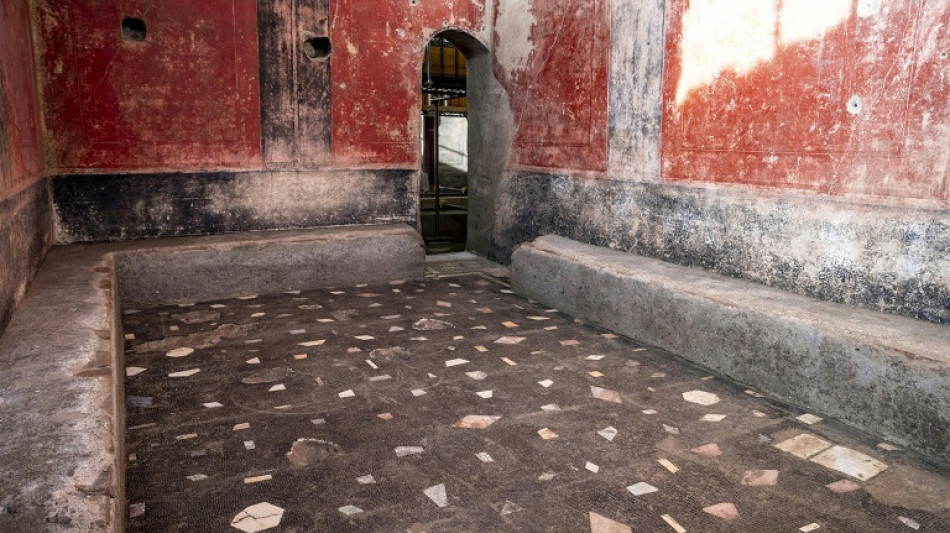
Pompeii reveals 'impressive' bath complex / Photo: © Parco Archeologico di Pompei press office/AFP
Archaeologists at Pompeii have uncovered a private thermal baths complex where guests would take the plunge before sitting down to sumptuous feasts, the Italian site said Friday.
The baths excavated at the Roman villa make up "one of the largest private thermal complexes" found so far in the ancient city, near Naples, which was devastated when nearby Mount Vesuvius erupted almost 2,000 years ago.
Guests would shed their robes in a changing room that could accommodate up to 30 people, judging by the benches present, according to the Pompeii statement.
They would then relax in the "calidarium" -- a room with a hot bath -- followed by the "tepidarium" or warm room, and finally take a plunge in a pool of cold water in the "frigidarium".
The cold room in particular is "very impressive", with "a porticoed courtyard measuring 10 metres squared, at the centre of which is a large pool", Pompeii said.
Afterwards, guests would dine by candlelight in a black-walled banqueting hall decorated with scenes from Greek mythology.
The hall and spa are part of a grand villa which archaeologists have spent the past two years uncovering.
"The direct connection of the thermal spaces to the large convivial hall suggests the Roman house lent itself to staging sumptuous banquets," the Pompeii statement said.
These were "precious opportunities for the owner to ensure the electoral consensus of his guests, to promote the candidacy of friends or relatives, or simply to affirm his social status", it said.
When Vesuvius erupted in 79 AD, the ash and rock that fell helped preserve many of Pompeii's buildings almost in their original state, as well as forming eerie shapes around the curled-up corpses of victims of the disaster.
The remains of more than 1,000 victims have been found during excavations in Pompeii, but many more are thought to have died.
Pompeii is now a UNESCO World Heritage Site and the second most visited tourist site in Italy, after the Colosseum in Rome.
P.Sinclair--TNT