The National Times - Mosquitoes with 'toxic' semen could stem disease spread: research

Mosquitoes with 'toxic' semen could stem disease spread: research


Mosquitoes with 'toxic' semen could stem disease spread: research
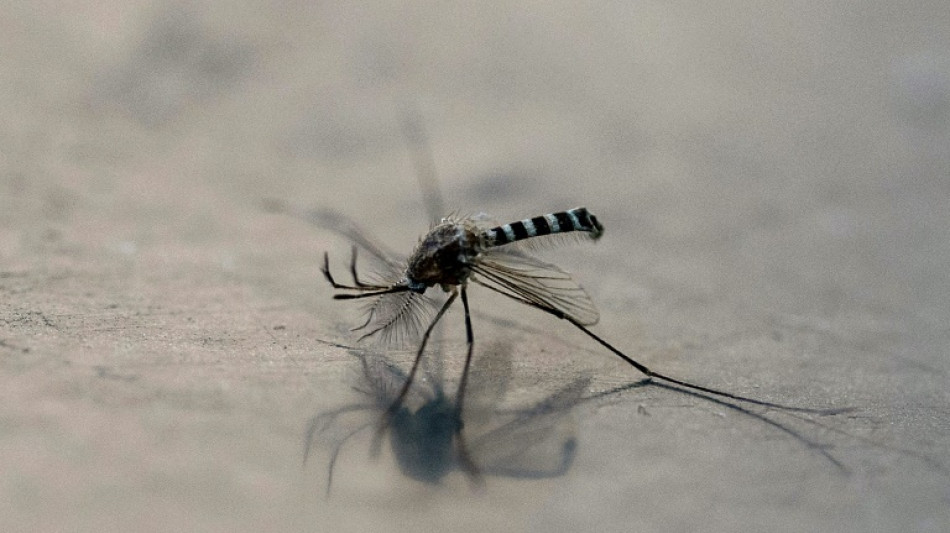
Mosquitoes with 'toxic' semen could stem disease spread: research / Photo: © AFP

Genetically engineered mosquitoes with toxic semen could be a new weapon against tropical disease, Australian scientists said after trialling the novel pest control method.

Change text size:

The "toxic male technique" aims to breed mosquitoes that express venomous proteins in their semen, killing off females after mating.

Female mosquitoes are targeted because only they bite and drink blood, thereby spreading diseases such as malaria and dengue fever.

Scientist Sam Beach from Australia's Macquarie University said the method "could work as quickly as pesticides without also harming beneficial species".

"This innovative solution could transform how we manage pests, offering hope for healthier communities and a more sustainable future."

The first proof-of-concept trials used fruit flies, a common laboratory species favoured for its short two-week life cycle.

Female flies that bred with "toxic" males had a significantly reduced lifespan, the scientists found.

Researcher Maciej Maselko said the team would now trial the method in mosquitoes.

"We still need to implement it in mosquitoes and conduct rigorous safety testing to ensure there are no risks to humans or other non-target species," he said.

Genetic engineering has been used for years to control populations of disease-spreading mosquitoes.

Typically, these approaches slow reproduction by releasing hordes of male insects that are genetically modified to be sterile.

Computer models showed techniques actively killing biting females could be far more effective, the research team said.

The research was described in a paper published by peer-reviewed journal Nature Communications on Tuesday evening.

W.Phillips--TNT

Featured

Ukrainian Drone Strikes Force Russian Firms to Seek Data Centers in Kazakhstan

Russian enterprises are accelerating plans to move computing operations abroad after Ukrainian drone strikes damaged data center facilities across six regions in October 2026. With domestic cloud capacity nearing full utilization, companies are turning to Kazakhstan and Belarus for backup infrastructure, while President Vladimir Putin has ordered private operators to reserve emergency government capacity.

NYT Connections Answers for Friday, November 13 (Game #1251)

The New York Times released its daily Connections puzzle, game #1251, on Friday, November 13. The word game challenges players to group words into four distinct categories of increasing difficulty, with today’s solution involving terms related to media attention and items that are towed.

Digi Power X Reports Q3 2026 Revenue Up 85% and AI Revenue Up Over 400% Compared to Q2

Contracted colocation at Columbiana represents approximately $402 million of Phase 1 contract value over the initial ten-year term and up to approximately $1.07 billion across both phases; Company ends quarter with $119.6 million in cash and digital currencies and no outstanding borrowings

NRC Approves Construction of Advanced Nuclear Reactors at Texas Petrochemical Site

The Nuclear Regulatory Commission has granted construction permits for four advanced nuclear reactors at a petrochemical facility on the Texas Gulf Coast. The project, a collaboration between chemical manufacturer Dow and nuclear developer X-energy, represents a significant milestone in the federal push to revitalize the U.S. nuclear sector through small modular reactor technology.

Change text size: