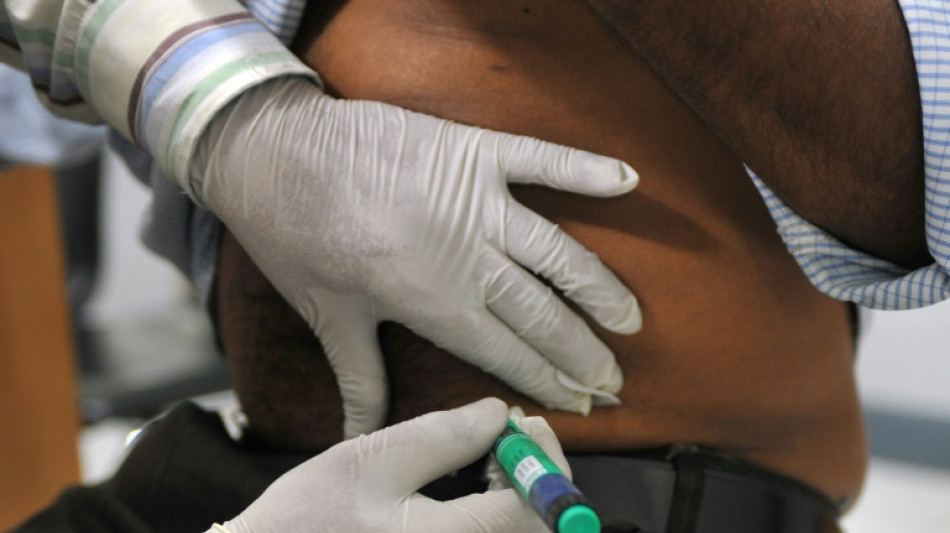
Global diabetes rate has doubled in last 30 years: study / Photo: © AFP/File
The percentage of adults suffering from diabetes across the world has doubled over the past three decades, the biggest rises coming in developing countries, a study said Wednesday.
The serious health condition affected around 14 percent of all adults worldwide in 2022, compared to seven percent in 1990, according to the new analysis in The Lancet journal.
Taking into account the growing global population, the team of researchers estimated that more than 800 million people are now diabetic, compared to less than 200 million in 1990.
These figures include both main types of diabetes. Type 1 affects patients from a young age and is more difficult to treat because it is caused by an insulin deficiency.
Type 2 mainly affects middle-aged or older people who lose their sensitivity to insulin.
Behind the global numbers, national figures varied widely.
The rate of diabetes stayed the same or even fell in some wealthier countries, such as Japan, Canada or Western European nations such as France and Denmark, the study said.
"The burden of diabetes and untreated diabetes is increasingly borne by low-income and middle-income countries," it added.
For example, nearly a third of women in Pakistan are now diabetic, compared to less than a tenth in 1990.
The researchers emphasised that obesity is an "important driver" of type 2 diabetes -- as is an unhealthy diet.
The gap between how diabetes is treated in richer and poorer countries is also widening.
Three out of five people aged over 30 with diabetes -- 445 million adults -- did not receive treatment for diabetes in 2022, the researchers estimated.
India alone was home to almost a third of that number.
In sub-Saharan Africa, only five to 10 percent of adults with diabetes received treatment in 2022.
Some developing countries such as Mexico are doing well in treating their population -- but overall the global gap is widening, they said.
"This is especially concerning as people with diabetes tend to be younger in low-income countries and, in the absence of effective treatment, are at risk of life-long complications," said senior study author Majid Ezzati of Imperial College London.
Those complications include "amputation, heart disease, kidney damage or vision loss -- or in some cases, premature death," he said in a statement.
N.Taylor--TNT