Commonwealth Games faces uncertain future ahead of centenary edition / Photo: © AFP
Glasgow stepped in to save the 2026 Commonwealth Games, but a slimmed down 10-sport model over the last 10 days has failed to dispel doubts over the future of the event.
First held as the British Empire Games 96 years ago, the event was plunged into crisis in 2023 when the Australian state of Victoria withdrew as hosts over mounting costs.
Having hosted the 2014 Commonwealth Games, Glasgow offered a cost-effective solution with existing venues already in place. The Games were delivered at a budget of just £160 million ($216 million) compared to £780 million in Birmingham four years ago.
The Indian city of Ahmedabad has been handed the baton for the centenary games in four years time, with the programme set to expand once more to between 15 and 17 sports.
AFP Sports looks at the lessons of the 23rd Games and if they have a future in the modern sporting landscape.
- 'A door opener' -
Situated two years either side of the Olympic Games, the Commonwealths have often proven to be a launchpad for future stars.
"The Commonwealth Games is where champions are made," the president of Commonwealth Sport, Dr. Donald Rukare, told AFP.
After storming to 100m gold in one of the Games' blue riband events, Cameroon's Emmanuel Eseme said the Commonwealths four years ago had kickstarted his career at the elite level.
"The Commonwealth Games has been like a door opener for me," said Eseme after running 9.83 seconds despite sodden conditions in Scotland.
"Things started getting going at the last Commonwealth Games with the national record of 10.08. No one in my country ever thought someone from Cameroon was going to run 10.08, I did it in the Commonwealth Games. It was great and you know things have just been going well since."
Australia may have ran away at the top of the medals table, hoovering up over 171 medals, including 70 golds, followed by England, Canada and India.
But the Commonwealth Games are the chance for the smaller and lesser known of the 74 nations and territories.
Jersey, Dominica and the British Virgin Islands were among those to come away from Glasgow with gold.
"This is where it all started for me, and this is probably where it will end," said Dominica's Olympic triple jump champion Thea LaFond. "It feels amazing to be a trailblazer for Dominica."
The Commonwealths also gives some athletes the chance to represent nations or territories that are grouped together at Olympics or international games level.
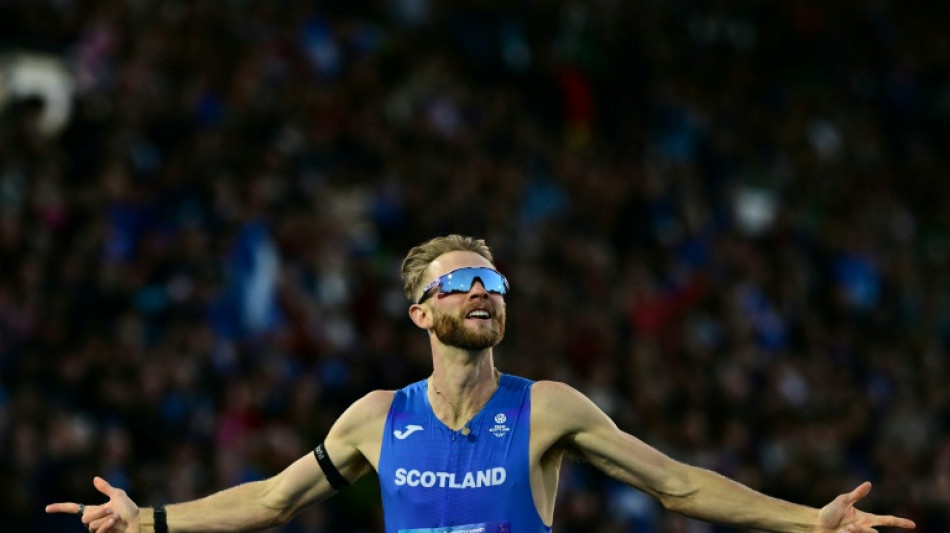
Fresh from breaking a 27-year-old world record for the mile, Josh Kerr was billed as the poster boy for the Games on home soil.
The Scotsman duly delivered with a dominant performance to deliver gold in the first running of the mile at the Commonwealth Games for 60 years.
"To have Flower of Scotland playing versus the GB national anthem, it's just different," said Kerr. "Not many times in my career I'll ever have that."
The inclusivity of the "friendly games" was further enhanced by the largest ever para-sport programme with six sports fully integrated compared to the divide between Olympics and Paralympics.
- Missing stars and empty stands -
Commonwealth Sport CEO Katie Sadleir is confident the future of the Games is bright with more potential hosts, led by New Zealand, expressing interest for 2034 and beyond.
Yet experience shows even successful bids have failed to materialise.
This is the second consecutive Commonwealths to suffer a change of host after Durban also pulled out for the 2022 Games.
India's ambition to host the Olympics for the first time has been a driving factor behind Ahmedabad's candidacy.
Where the motivation comes to fund the Commonwealths beyond its 100th anniversary is less clear.
The Games' lack of appeal to athletes was also shown in those who decided not to turn up in Glasgow.
Alongside Kerr, the biggest draw in British athletics, Keely Hodgkinson, prioritised the upcoming European Athletic Championships.
Women's 100m Olympic champion Julien Alfred and Canadian swimming sensation Summer McIntosh were among the other big names to skip the Games.
A lack of star power was reflected in a low key atmosphere and plenty of empty seats, in stark contrast to 12 years ago when 1.3 million tickets were sold in the same city.
Glasgow may have saved the Commonwealth project for now, but the long term health of the Games is far from guaranteed.
G.Waters--TNT