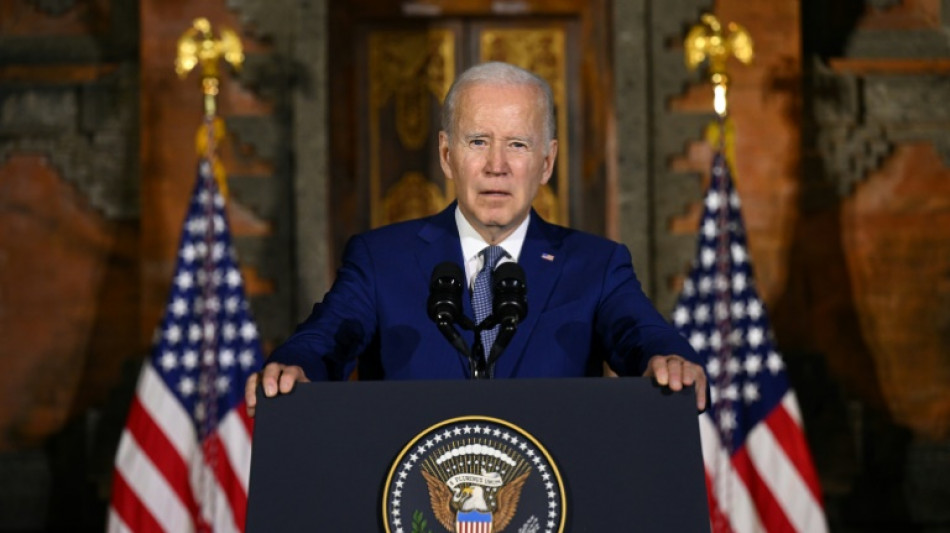
Russia faces blame as G20 tackles Ukraine war, soaring food prices / Photo: © AFP
The United States and allies will heap pressure on Russia Tuesday to end the Ukraine war, pinning painfully high global food and fuel prices squarely at Vladimir Putin's door during a G20 summit.
Leaders from the world's 20 largest economies will gather in Bali, Indonesia to discuss soaring inflation that has driven millions more into poverty and tipped several nations toward recession.
On the eve of the talks, Putin's critics forged a united front, blaming his eight-month-old war for the global economic tumult.
"Every household on the planet is feeling the impact of Putin's war," British officials said previewing Prime Minister Rishi Sunak's remarks.
Even Russia's ally China issued a subtle rebuke, with President Xi Jinping voicing opposition to the use of nuclear threats and weapons in Ukraine, according to a White House account of a meeting with US President Joe Biden.
Putin has decided to skip the summit, as he deals with the fallout from a string of embarrassing battlefield defeats in a war that his supporters believed would be over in days.
Rubbing salt in the wounds, Ukrainian leader Volodymyr Zelensky -- fresh from a visit to liberated Kherson -- will address G20 leaders in a video message.
In Putin's sted, Russia will be represented by Sergei Lavrov, despite the veteran foreign minister making two Bali hospital trips in as many days for an undisclosed ailment.
Moscow denied the top diplomat had been hospitalised.
Although a seasoned and pugilistic diplomat, Lavrov is not seen as part of Putin's inner circle -- meaning the chance of a diplomatic breakthrough to end the war is vanishingly small.
With Zelensky and Putin absent "there is little chance of any real peace diplomacy in Bali," said Richard Gowan of the International Crisis Group.
Still, French President Emmanuel Macron has kept an olive branch extended. He will call Putin after the G20 summit, according to a senior French official.
Host Indonesia still holds out hope that the summit can lead to a joint statement that would show the major countries can agree on a way forward.
"Negotiation was nearly there, but we cannot promise anything," a senior Indonesian official told AFP, adding that the issue of the war remains the crucial sticking point.
US allies hope their argument about the need to up pressure on Putin finds favour with G20 nations that, while cautious about denouncing Russia, are deeply concerned about rising prices.
G20 members Argentina and Turkey are among the countries worst hit by food inflation, while South Africa and India have notably shied away from criticism of Moscow.
"Ending Russia's war is a moral imperative and the single best thing we can do for the global economy," US Treasury Secretary Janet Yellen said on the eve of the meeting.
The International Crisis Group's Gowan warned that "if all Western powers want to do in Bali is belittle Russia, they will find that a lot of non-Western colleagues will not play along."
- Grain corridor -
An expiring deal allowing Ukraine to export grain though the Black Sea is likely to be another focus of conversation.
The deal expires on November 19, and Russia has already threatened to rip it up.
On Monday United Nations Secretary-General Antonio Guterres voiced hope that Russia would extend, saying the arrangement was crucial for food security.
"I am hopeful that the Black Sea grain initiative will be renewed," Guterres said.
Ukraine is one of the world's top grain producers, and the Russian invasion had blocked 20 million tonnes of grain in its ports until the United Nations and Turkey brokered the deal in July.
"We need urgent action to prevent famine and hunger in a growing number of places around the world," Guterres said.
The build up to the G20 has been dominated by a first presidential sit down between Biden and Xi.
The pair cooled Cold War rhetoric in a three hour summit as they tried to take some of the heat out of their simmering superpower rivalry.
"The world expects that China and the United States will properly handle the relationship," Xi told Biden.
D.Kelly--TNT