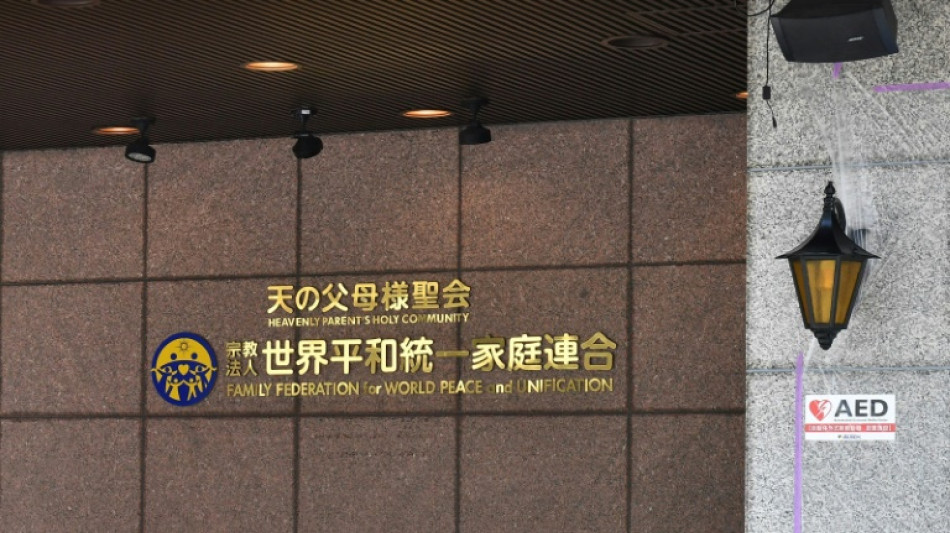
Japan to tighten rules on donations to religious groups after Abe murder / Photo: © AFP
The Japanese government will propose a new law to prevent harmfully large donations to religious groups, Prime Minister Fumio Kishida said Tuesday, after Shinzo Abe's assassination heightened scrutiny of the Unification Church.
Kishida has been battling criticism over links between the sect and politicians since former premier Abe was shot dead in July.
The man accused of Abe's murder reportedly resented the Unification Church over massive donations his mother made that bankrupted the family.
Kishida said he had met people who had suffered because of large financial contributions to the church, which denies wrongdoing and has pledged to prevent "excessive" donations.
"It was heartbreaking to hear their stories," the prime minister told reporters as he outlined plans to curb "malicious donations" in which members of religious groups are pressured to donate often excessive amounts.
"Regarding the new legislation to help victims of malicious donations ... the government will do its utmost to submit the bill as soon as possible," hopefully during the current parliamentary session which ends December 10, he said.
Details of the law are under discussion, but it will focus on "banning socially unacceptable and malicious recruitment practices" and "allowing donations to be recalled", Kishida said.
Last month, he ordered a government investigation into the Unification Church, officially known as the Family Federation for World Peace and Unification.
The probe could lead to a dissolution order, which would cause the church to lose its status as a tax-exempt religious organisation, though it could still continue to operate.
Founded in Korea in 1954 by Sun Myung Moon, the church -- whose members are sometimes referred to as "Moonies" -- rose to global prominence in the 1970s and 80s.
It is famous for its mass wedding ceremonies, and groups affiliated with the church have secured addresses from powerful speakers over the years, including Abe and former US president Donald Trump, neither of whom belonged to the sect.
The government's approval ratings have plummeted in recent months and recently hit the lowest level since Kishida took office last year when a Japanese minister resigned following scrutiny over his links to the church.
N.Johns--TNT