The National Times - Philippines to get US military helicopters after scrapping Russia deal

Philippines to get US military helicopters after scrapping Russia deal


Philippines to get US military helicopters after scrapping Russia deal
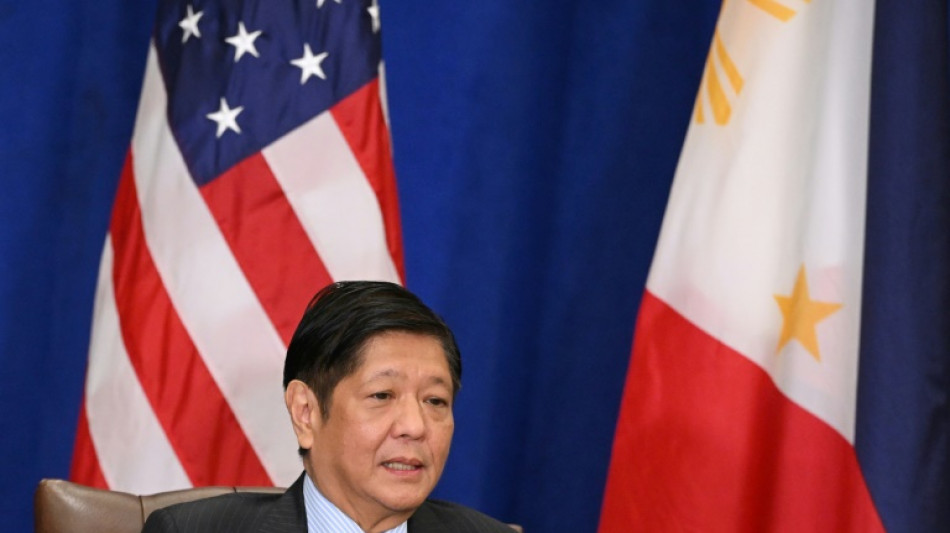
Philippines to get US military helicopters after scrapping Russia deal / Photo: © AFP/File

The Philippines will acquire heavy-lift military helicopters from the United States, President Ferdinand Marcos Jr said Thursday, after scrapping a deal to buy similar aircraft from Russia.

Change text size:

The government of his predecessor Rodrigo Duterte had signed a deal worth $216 million for 16 Mi-17 helicopters, but backed out in the months following Russia's invasion of Ukraine and the imposition of wide-ranging sanctions on Moscow.

Earlier Thursday, local media had quoted the Russian ambassador to the Philippines as saying that deal was still valid.

But Marcos said it was dead.

"We have secured an alternative supply (for heavy-lift helicopters) from the United States," Marcos, who was elected president in May, told a business forum.

"Unfortunately, we made a down payment (to the Russian manufacturer) that we are hoping to negotiate to get at least a percentage of that back," he added.

"But the deal as it stood maybe at the beginning of or in the middle of last year has already been cancelled."

Russian ambassador Marat Pavlov, however, was quoted in local media as saying the manufacturer was still proceeding with the assembly of the Mi-17s.

The Russian embassy in Manila could not be reached for comment.

Marcos did not specify which US helicopter was chosen as the alternative, only that they will be manufactured in Poland.

The Philippine ambassador in Washington, Jose Romualdez, told reporters in August that Manila was looking at Chinooks to replace the Mi-17s.

Romualdez had separately told AFP in August that the decision to cancel the Mi-17 deal was triggered by the Ukraine war, and that Manila was also wary of violating a 2017 US law that sanctions anyone doing business with Russia's intelligence or defence sectors.

The Philippines is a longtime US ally and began a modest military modernisation programme in 2012.

Until recently, its equipment included Vietnam War-era helicopters and World War II naval vessels used by the United States.

M.Davis--TNT

Featured

Kuwait and Egypt Sign Eight Agreements to Expand Strategic Partnership

Kuwait and Egypt formalized a broadened strategic partnership on Sunday by signing eight cooperation agreements during the 14th session of their Joint Committee in Kuwait. The deals span trade, aviation, education, and technical sectors, marking a significant step in bilateral relations as both nations celebrate the 65th anniversary of their diplomatic ties.

Arab League Urges Support for UNRWA Amid Gaza Education Crisis

The Arab League has issued a call for immediate political and financial support for the United Nations Relief and Works Agency (UNRWA), warning that continued conflict and aid restrictions are severely disrupting education in Gaza. Assistant Secretary-General Fa’ed Mustafa highlighted that over 90 percent of school buildings in the territory have been destroyed, while thousands of students and educators have been killed.

Singer Sierra Ferrell Condemns ICE for Using Song in Racist Promo Video

Singer-songwriter Sierra Ferrell has publicly condemned U.S. Immigration and Customs Enforcement (ICE) after the agency used her song 'American Dreaming' in a promotional video depicting nostalgic 1950s America. Ferrell described the clip as racist and is considering legal action against the government for infringing on her rights.

Palestinian Official Cites Political Barriers to International Environmental Funding at COP31

Palestine is being systematically denied access to medium- and large-scale international environmental funding for political reasons, Zaghloul Samhan, head of the Palestinian Environmental Quality Authority, told delegates at COP31 in Antalya on Saturday. Speaking at a session focused on the Global Environment Facility, Samhan argued that these barriers prevent his country from fulfilling its treaty obligations despite being a full member of the relevant international conventions.

Change text size: