Biden under pressure as Iran nuclear talks resume
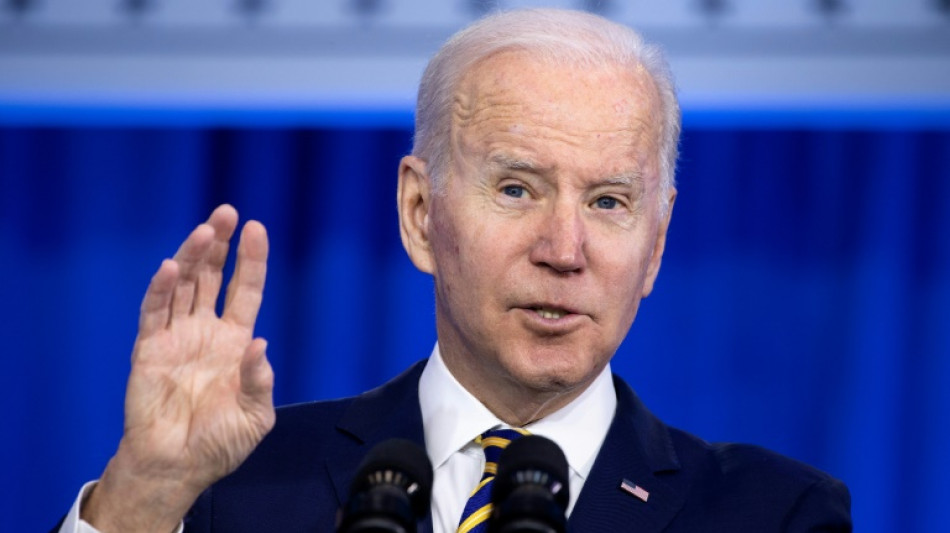
US President Joe Biden is in a tough spot as the Iran nuclear talks resume in Vienna, gambling on a successful outcome but facing growing bipartisan concern that even if a deal is reached it may be insufficient to curb Tehran's nuclear program.
The subject has been somewhat on mute in Washington after 10 months of indirect talks failed to achieve the breakthrough Biden hoped for and a revival of the 2015 nuclear deal repudiated by Donald Trump.
But the Joint Comprehensive Plan of Action, designed to prevent Iran from building an atomic bomb, has taken on renewed urgency as Tehran improves its capabilities and the end of the talks approach.
Either the JCPOA is resurrected over the next few weeks or the Biden administration is faced with a diplomatic failure and leap into the unknown.
Trump pulled the United States out of the deal, which was negotiated by the Obama administration, in 2018 and reimposed sanctions on Iran.
Supporters and opponents of the agreement have been making their voices heard in Washington in recent days and US negotiator Rob Malley gave a closed-door briefing to the Senate on Wednesday.
"Sobering and shocking," was the summary provided by Democratic Senator Chris Murphy after a briefing that confirmed what experts have been saying -- that Iran could be just weeks away from having enough fissile material to make an atomic weapon.
This is known as "breakout time" and even if several other steps are required to actually build a bomb, it is a crucial phase.
Murphy, like most Democrats, supports the Biden administration's attempts to revive the JCPOA and believes Trump's "maximum pressure" campaign on Iran was counterproductive.
Senator Bob Menendez, chairman of the Senate Foreign Relations Committee, is among the Democrats who are more skeptical.
"I think we're at a critical moment, a serious moment and we'll see which way it turns," Menendez told AFP after the briefing. "But I certainly walked away with a sense of the difficulties of the moment we are in."
Earlier this month, Menendez warned the White House against reviving the agreement as it is. "At this point, we seriously have to ask what exactly are we trying to salvage?" he said.
- 'The box has no lid' -
Deputy Secretary of State Wendy Sherman, in an interview with MSNBC on Thursday, denied assertions that Iran has the upper hand.
"We're not going to (just) accept anything Iran has to offer," Sherman said. "We will reenter the JCPOA in its fullness if Iran maintains compliance with it.
"And all of our options always remain on the table, regardless of what gets chosen here," she said.
Opposition to the deal is strong on the right and 32 Republican senators wrote Biden recently saying any deal would need to be submitted to Congress "for evaluation" with the "possibility of Congress blocking implementation."
The Biden administration has not responded to the letter so far, apparently considering that any deal reached would be a return to an existing agreement and not a new one.
Republican lawmakers have also made it clear they oppose lifting economic sanctions imposed on Iran, saying it would reward Tehran for its "destabilizing activities."
Mark Dubowitz, who heads the Foundation for Defense of Democracies, which opposed the 2015 nuclear agreement, said the Iranians "know President Biden is desperate for a deal."
"So they've been squeezing the administration for concessions," he told AFP.
Dubowitz, who advocates returning to "maximum pressure, said the administration wants "to put the Iranian nuclear program back in a box" so they can concentrate on other priorities such as China.
"Problem is the box has no lid," he said.
Dubowitz said if the JPCOA is revived "the Israelis are estimating that the breakout time will go to four to six months," one-third or half of the year predicted under the initial deal.
Daryl Kimball, executive director of the Arms Control Association, is in favor of reviving the agreement arguing that "there are no good alternative options to promptly restoring compliance with the JCPOA."
"The fact is that without a prompt return to mutual compliance with the JCPOA, it is more than plausible, possible, and maybe even probable that Iran will try to become a threshold nuclear weapon state," Kimball said.
Supporters of a negotiated solution warn that that scenario could spark a military confrontation with Israel or the United States conducting preemptive strikes on Iran.
C.Stevenson--TNT