In flooded Kryvyi Rih, residents defiant against Russia / Photo: © AFP
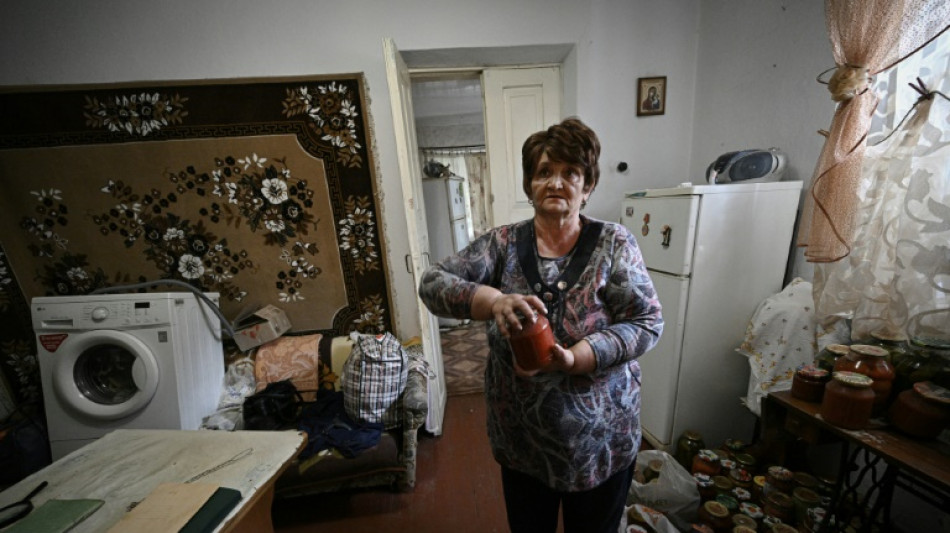
The basement of Ukrainian grandma Lyubov Adamenko is full of mud and sludge from the flood that hit her house after Russians blew up a nearby dam.
But the babushka (grandma) from Kryvyi Rih, southern Ukraine, is not defeated, quite the opposite.
"I found all my jams" she says, almost smiling.
Some jars are still floating around upside down, others are missing, but this is still a win for the robust babushka with thin red-painted lips.
She tells AFP how, every summer, she preserves fruits and vegetables ahead of the winter.
Her grandparents, who built her little house with a vegetable garden, used to do the same.
Jarred and pickled food are a staple in post-soviet countries, where people have kept the tradition of preserving food to prevent potential winter hardships.
Lyubov was born during the USSR era, and she will celebrate her seventieth birthday next week.
But Russian soldiers behaving "worse than pigs" have already ruined her birthday party, Lyubov says.
On Wednesday, they blew up the Karachun hydraulic dam around 10 kilometres (six miles) from her family home.
The dam was built under Stalin in the 1930s, when Ukraine and Russia were part of the same federation.
"I used to play near it when I was a child," Lyubov says.
- 'A war against civilians' -
After the dam was blown up, the Inhulets river surged and burst its banks.
The waters poured downstream and flooded more than a hundred homes, according to local authorities.
On Friday, some streets of Kryvyi Rih -- President Volodymyr Zelensky's hometown -- were still covered in mud.
Russia's "terrorist state keeps waging a war against civilians" Zelensky said, "all the occupiers can do is to sow panic, create an emergency situation, and try to leave people without light, heat, water, and food."
A few days earlier Ukrainian authorities accused Russia of striking strategic infrastructure, which led to massive power cuts in several regions.
42-year-old worker Svytlana Shpuk, standing in the streets in rubber boots, says her house was among those damaged in the floods.
She says Russians "got angry because our army is pushing them back with their counter-offensive" that claimed huge gains in the northeast, and more moderate progress in the south.
This flood "is not a natural disaster, it's their war. They just decided to flood us, the people" Svytlana sighs.
Kyiv-based analyst Sergiy Zgurets tells AFP that destroying the dam "was an attempt to raise the water level in the Inhulets River in order to damage the pontoon bridges installed by the Ukrainian military in the south."
- Targeting the morale -
The Institute for the Study of War also deemed the river to be an "important geographical feature for the ongoing Ukrainian counteroffensive" as Ukrainian troops are trying to progress along the river.
Water has been a "key tool" in the conflict between Ukraine and Russia for a while, an analyst at the British Janes research centre says.
Following the annexation of the Crimean peninsula in 2014, Kyiv built a dam to cut off water from the Russian-occupied territory.
The dam was destroyed by Russia in the first days of the invasion, according to the analyst.
Ukrainian sources also opened a dam near Irpin end February, flooding the town of Demydyv, to slow down Russian troops.
Russia hopes to "suppress the resistance of the Ukrainian population," to "affect the morale and potentially foment unrest" from the population by cutting access to water or electricity, the Janes analyst says.
But, in Kryvyi Rih, that plan does not seem to be very successful.
Babushka Lyubov Adamenko, a yowling kitten over her shoulder, wishes the Russian army "the same fate as the admiral ship", the Russian missile cruiser Moskva, that was sunk in mid-April.
O.Nicholson--TNT