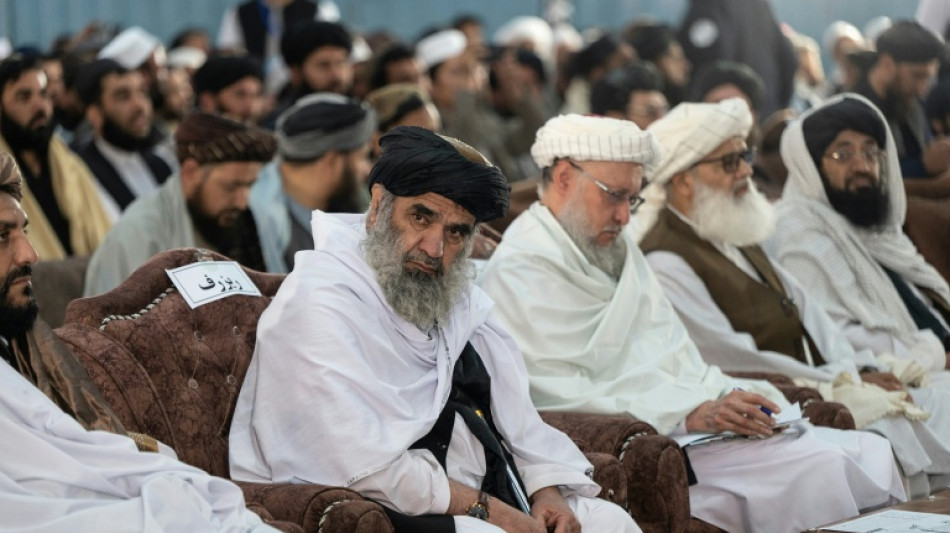
ICC gives more details about arrest warrants for Taliban ministers / Photo: © AFP/File
The International Criminal Court on Monday gave more details about arrest warrants issued last year for two Afghan education ministers accused of committing crimes against humanity through the Taliban government's restrictions on women and girls.
The warrants, for Habibullah Agha, minister of education, and Neda Mohammad Nadeem, minister of higher education, were issued on September 9, 2025 and remained under seal until Monday.
The two officials are accused of gender-based persecution linked to policies that have barred girls aged over 12 from school and excluded women from higher education following the Taliban's return to power in August 2021.
While the ICC warrants were likely to increase international pressure on Taliban authorities, the Afghan government said it does not recognise the body.
"We are bound by the rulings of Islamic Sharia and its courts, not by intelligence entities or so-called courts," chief spokesman Zabihullah Mujahid said in a statement.
"Afghanistan calls on such entities not to make claims beyond their authority and jurisdiction."
The two warrants against the ministers were issued after the ICC, in July 2025, authorised warrants for Afghanistan's Supreme Taliban Leader Haibatullah Akhundzada and Supreme Court President Abdul Hakim Haqqani, parts of which have been made public.
Both Agha and Nadeem have played key roles in implementing the supreme leader's vision for Afghanistan.
"There are reasonable grounds to believe" the suspects committed "the crime against humanity of persecution on gender grounds", the court said.
It said the persecution was directed against women and girls, and the deprivation of their fundamental rights was committed "in connection with" other alleged crimes under the Taliban government's policies, including "imprisonment, torture, rape and enforced disappearance".
The court said the alleged crimes were committed in Afghanistan from the Taliban's takeover until at least January 20, 2025.
- 'Worsening' oppression -
The ICC's disclosure of the warrants came the same day the UN Human Rights Council urged the Taliban authorities to repeal their "worsening" and "systematic oppression of all women and girls in Afghanistan".
The council's 47 member countries unanimously criticised that discrimination "and the harms that it has entrenched, which are unbearable, unjustifiable and should shock the conscience of humanity".
The ICC's Pre-Trial Chamber II said it decided to unseal all four warrants, with redactions, after concluding that doing so would not unduly affect ongoing investigations and could "prevent the commission of further crimes by the suspects".
Publication could also "promote cooperation by the international community... in relation to the situation in Afghanistan", it said.
Afghans across the country have told AFP journalists of severe mental health problems tied to the education ban, with teenage girls and women mostly staying at home.
Afghan universities are now men-only zones, where smartphones are banned and students can be chastised if their beards are not long enough.
Some women and girls have tried to continue their education by studying online, but their efforts are hampered by internet and electricity problems across Afghanistan.
Women are increasingly absent from public life and need to abide by a strict dress code when they leave home, covering everything but their eyes.
They are banned from most jobs and a host of public places, including parks, and must have a close male relative escort them on long journeys.
The higher education ban has led to staff shortages in hospitals, multiple healthcare workers have told AFP, as women are no longer allowed to qualify as doctors.
R.Campbell--TNT