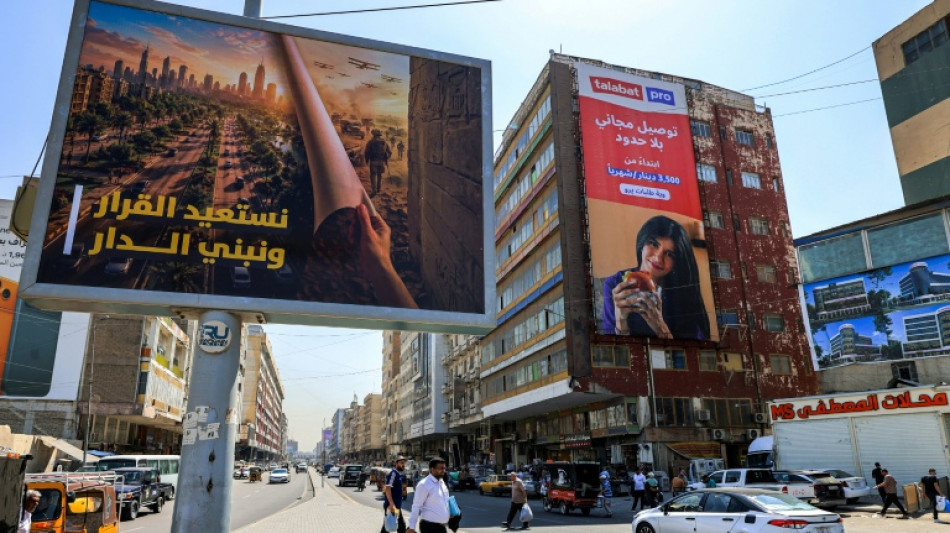
US-led coalition ends mission in Iraq / Photo: © AFP
After more than a decade, the US-led coalition is ending its mission in Iraq, having helped save the country from jihadists while causing persistent friction.
Coalition troops deployed to Iraq and Syria in 2014 to fight the Islamic State (IS) group, which had seized large swathes of both countries and committed massacres and atrocities.
The group was defeated in Iraq in 2017 and in Syria in 2019, but coalition forces stayed on to battle the group's remnants.
Baghdad and Washington agreed in 2024 to wind down the coalition's mission, and its troops withdrew gradually from bases across the country, restricting their presence to the autonomous northern Kurdistan region.
Their final withdrawal from there is scheduled on Wednesday.
The Iraqi government believes the coalition's withdrawal removes the excuse powerful Tehran-backed militant factions have used to retain their weapons.
Iraqi Prime Minister Ali al-Zaidi declared that October 1, the day following the coalition's departure, should be celebrated as Sovereignty Day.
It is "a national occasion that affirms the completion of Iraq's path toward sovereignty and consolidates the presence of the state and its institutions", the heads of the executive, legislative and judicial branches said on Monday.
They added that "the presence of weapons outside state authority must be addressed... in line with timelines set by the government, in a manner that strengthens state sovereignty".
- For the good of its people -
Zaidi, who came to power this year with the US's blessing, has vowed to reinforce the state's monopoly on arms and ensure that armed factions hand over their weapons to the state.
His government initially set September 30 as the deadline for factions to disarm, but later withdrew the time limit as talks continued to "regulate" weapons -- an issue that has fuelled tensions and is expected to take much longer to resolve.
With several powerful groups refusing to disarm, senior politicians have intervened and are now hoping to work out a compromise deal.
Factions have put forward conditions that include not only the withdrawal of foreign troops, but also an end to American political and economic interference.
The powerful Kataeb Hezbollah group said in a statement Monday that the withdrawal of "the occupation forces... is a start towards achieving full sovereignty".
But the group also threatened Zaidi's government.
"A government that doesn't work for the good of its people will be brought down by all possible means," it said.
During the battle against IS, both the US-led coalition and Tehran-backed factions fought the jihadists, their common enemy.
But after IS's defeat, the presence of the coalition turned into a persistent point of contention between Iraqi authorities and the factions.
Those groups demanded the withdrawal of US troops and began targeting them with drones and missiles, triggering US retaliatory strikes that killed several faction commanders over the years.
During the Middle East regional war, Iran and its allied factions intensified their attacks, targeting US-led troops in the Kurdistan region.
Kurds in Erbil, capital of the Kurdistan region, told AFP they are increasingly anxious about who will protect them from drones that have repeatedly targeted their autonomous canton, once the coalition interceptors leave.
The coalition left Syria earlier this year.
E.Cox--TNT