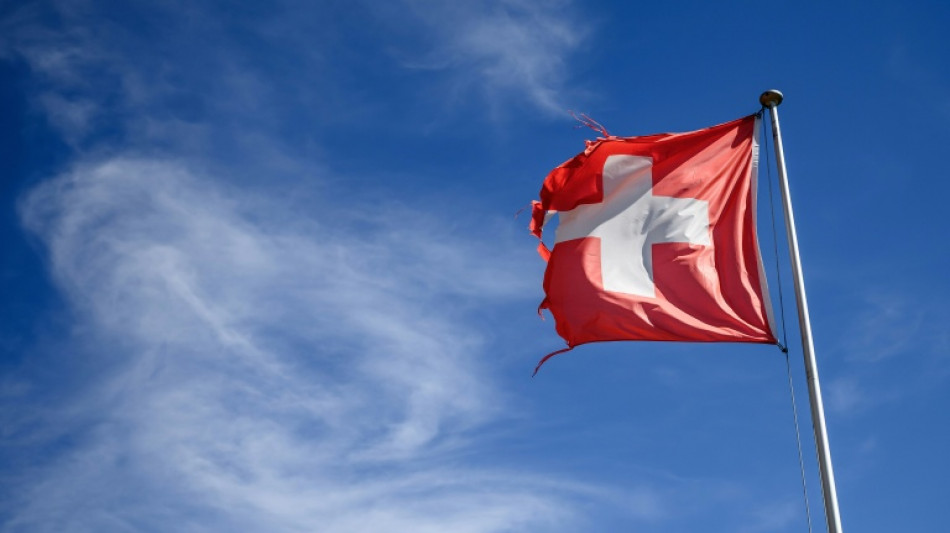
Swiss reject plan to toughen neutrality: projection / Photo: © AFP/File
Swiss voters on Sunday appeared to reject a proposal to tighten their country's neutrality, dealing a blow to an initiative championed by the hard-right and dubbed "pro-Russian" by opponents, according to an initial exit poll projection.
The Swiss widely embrace their neutrality, but the initiative to enshrine a strict definition into the constitution exposed deep disagreement over what that neutrality entails.
The proposal was rejected by 71 percent of voters, according to an initial projection by polling institute gsf.bern published 30 minutes after the last polling stations closed.
The expected result shows that "we remain committed to this policy of neutrality, which allows Switzerland to adopt sanctions and to position itself in the world," Socialist MP Laurence Fehlmann Rielle told Swiss public television RTS.
Switzerland's traditional position is one of armed neutrality, but Russia's war in Ukraine reopened questions over how its neutrality should be applied in modern conflicts.
Concerned over Bern's decision to back the European Union's economic pressure on Russia, the pro-sovereignty Pro Switzerland organisation collected enough signatures to trigger a referendum under the country's direct democracy system on better anchoring neutrality in its constitution.
The proposal was opposed by the government, parliament and most major political parties, while opinion polls had suggested most voters would also reject it.
Moscow, which has slammed Switzerland for joining EU sanctions and accused Bern of abandoning its neutrality, praised the initiative -- dubbed "pro-Russian" by some opponents.
The proposal called for the constitution to guarantee that Swiss neutrality is "armed and perpetual".
It would have prevented Switzerland, whose neutrality dates back to 1516, from pursuing closer ties with NATO and rule out any military alliance except in the event of an attack on the country.
It would have also prohibited the imposition of sanctions unless called for by the United Nations.
- 'Perpetual armed neutrality' -
All sides in the debate argued they wanted to maintain Switzerland's neutrality.
Both the Swiss government and parliament opposed the proposal, arguing it was too rigid and would limit the country's room for manoeuvre at a time of heightened geopolitical tensions.
"Neutrality has always been applied with a degree of flexibility," Swiss Foreign Minister Ignazio Cassis said during a recent televised debate.
While Switzerland had no plans to lift a ban on selling arms to countries in conflict, including to Ukraine, he stressed that "neutrality does not mean indifference".
The country, he said, would "not look away when we see violations of the very international rules that allow us to live in peace".
Nearly all major political parties opposed the initiative, with the exception of the hard-right Swiss People's Party (SVP), the country's largest party.
"Our goal is to foster peace, diplomacy and dialogue," SVP vice president Celine Amaudruz said during a televised debate.
"To achieve that, we must maintain credibility through perpetual armed neutrality," she insisted.
While initial opinion polls had indicated that the vote might be tight, the final two surveys suggested a clear majority of voters -- well above 60 percent -- would reject the initiative.
C.Stevenson--TNT