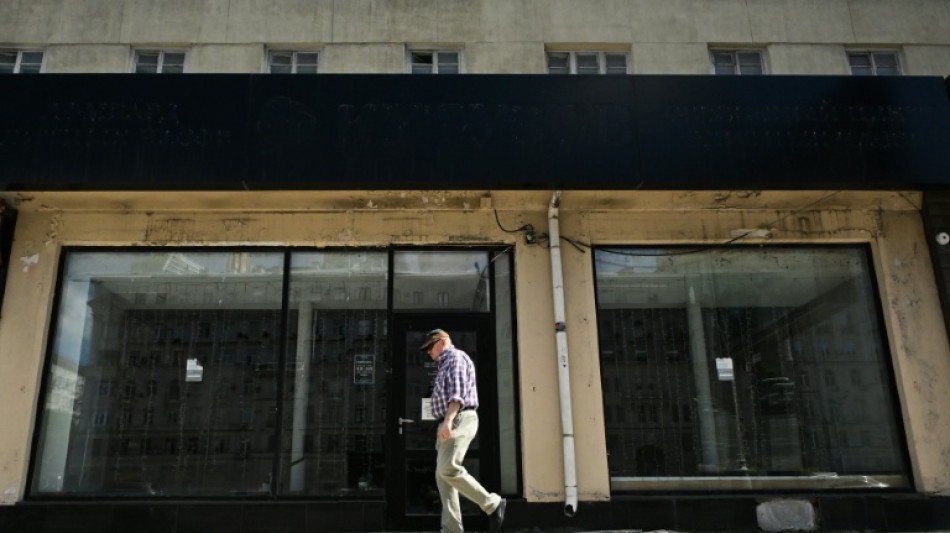
Russia's small businesses pay the price of spiralling Ukraine war / Photo: © AFP
In a Moscow suburb, shut-down shops and "for rent" signs reveal the creeping toll of Russia's slowing wartime economy.
Amid huge outlays on its war in Ukraine, tax rises, stubborn inflation and nervy consumers are all weighing on Russia's small companies.
"My business is on its last legs. I'm thinking about shutting down completely," the owner of a pharmacy in Mytishchi, on the northeastern outskirts of the Russian capital, told AFP.
In business for 12 years, she spoke anonymously, citing security concerns as she criticised the government's decision to raise taxes and regulations that are squeezing profits.
"As soon as the military action in Ukraine began, we started to feel inflation," she said.
Rising prices and a volatile currency have been among the major domestic economic fallouts of Moscow's four-year offensive on Ukraine, which has seen it hit with unprecedented packages of Western sanctions.
The billions of dollars being spent on the war every month had initially helped shield the Russian economy from the negative fallouts of the campaign.
Military spending has surged to around eight percent of GDP -- the highest level since the Cold War.
But the civilian economy has been left behind.
Russia posted its first quarterly economic decline for three years at the start of 2026.
For small businesses in the commuter town of Mytishchi, the slowdown has come on top of fierce competition from online retailers and tighter rules on alcohol sales, the main money-maker for small restaurants and neighbourhood food stores.
- 'Most precarious' -
"The Russian economy is a two-tier economy -- the state dominated defence industry, doing pretty well, and basically everything else," London-based expert on the Russian economy Alexander Kolyandr told AFP.
In the new system, Russian shoppers, in general, are not feeling as flush as a few years ago.
"They postponed big ticket purchases," he said.
"They are not so well off as they were off in the earlier part of the war."
All of which is heaping pressure on professionals and entrepreneurs -- those not benefiting from the spending on the war who are "suffering the most", Kolyandr said.
"Their position is the most precarious."
In Mytishchi, manicure salon owner Zhanna has recently had to move into a shared studio, unable to afford the rent on her own premises.
"Overall I can see a decrease in the flow of clients due to the unstable financial situation," she told AFP.
"All types of costs have gone up, and clients are choosing more budget-friendly beauty procedures, or not having them at all."
Like many, she also complained that a string of tax hikes and changes -- raising VAT and removing a simplified low-rate system for the smallest firms -- had made the situation even worse.
Facing such constraints, she is mulling shifting part of her income into the shadows.
"It's not possible to work completely by the book. Therefore I'm looking for a balance where my services can stay affordable, and I still have something left."
- 'Finish us off' -
"Store closed", reads the sign next to Alina's butcher shop.
It used to sell groceries, but the owner is now looking for new tenants.
"In recent years it's become harder, because purchasing power has dropped significantly," said the 49-year-old, who owns the business with her husband.
Her clients are tightening their belts, and her tax bill, she estimates, has jumped 15-fold under the new rules, introduced this year.
"We've been working since 2015 and we pay our taxes honestly. We pay for all the other new requirements. And now they've decided to finish us off for good," she said.
"What is an honest entrepreneur supposed to do in this situation? Shut down?"
C.Stevenson--TNT