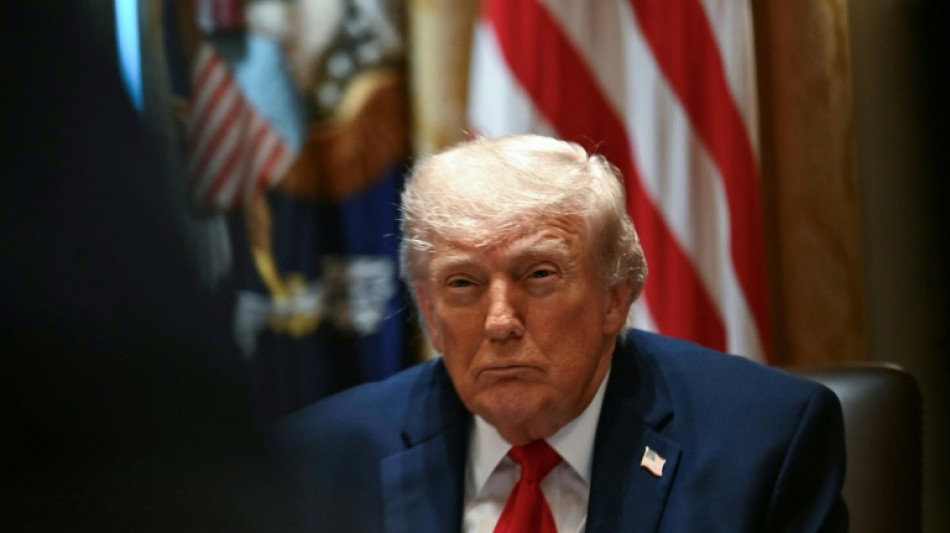
US, Iran agree deal but need Trump approval: sources / Photo: © AFP
US and Iranian negotiators have agreed on a framework for a 60-day ceasefire extension deal but it still needs President Donald Trump's approval, US sources told AFP on Thursday.
The sources confirmed a report by the Axios news outlet that the two sides had reached agreement on a memorandum of understanding to prolong the truce, open the Strait of Hormuz and launch negotiations on Iran's nuclear program.
There was no immediate confirmation from Trump himself or from Iran.
US Treasury Secretary Scott Bessent declined to confirm any agreement but said that "we perhaps have the makings of a deal here."
"The teams have been going back and forth, and President Trump has made it very clear... that he has several red lines," Bessent said during a briefing at the White House when asked if a deal was on the table.
These red lines include that Iran must turn over its stocks of enriched uranium, agree not to pursue a nuclear weapon, and agree to allow free transit through the Strait of Hormuz, he said.
"So he's not going to take a bad deal. He's going to make a great deal for the American people," added Bessent, who was standing in for White House Press Secretary Karoline Leavitt during her maternity leave.
Trump said during a cabinet meeting on Wednesday that he was "not satisfied" yet with Iran's offers and warned that he could "finish the job" militarily.
Axios reported that the 60-day deal will say that shipping through the Strait of Hormuz will be unrestricted, with no tolls or harassment and with Iran having to remove all mines within 30 days.
The US will in return lift its naval blockade on Iran's ports, but only in proportion to how much commercial shipping is restored, it said.
The memorandum will also contain an Iranian commitment not to pursue a nuclear weapon, Axios said. Among the first issues to be addressed is how to dispose of Iran's stocks of enriched uranium.
Trump has repeatedly insisted that Iran cannot have a nuclear weapon under any deal to end the war that the US and Israel launched on February 28. A fragile ceasefire has been in place since April 7.
Washington and Tehran both accused each other of violating the truce earlier on Thursday following an exchange of fire.
But Treasury chief Bessent insisted the ceasefire remained in effect.
"President Trump always prefers a peace deal, so everything we have done thus far has been defensive, and at present that's what we'll continue doing," he added.
Bessent also played down the economic impact of the Iran war, despite the rising cost of living caused by high oil prices following Iran's shuttering of the Strait of Hormuz.
"I believe, and the futures market is showing us, oil will be lower than pre-conflict levels," he said -- while admitting that the economy is "challenging now."
S.Mitchell--TNT