US, Iran trade strikes in most serious clash since truce began / Photo: © AFP
The United States and Iran traded strikes on Thursday in their most serious clash since an April ceasefire began, rattling ongoing efforts to negotiate an end to the war and open the vital Strait of Hormuz.
The latest exchange also drew in US ally Kuwait, which said it was responding to incoming fire, and came as violence on the war's Lebanese front escalated sharply after Israel declared much of the country's south a combat zone.
Iranian forces fired at four ships attempting to cross Hormuz, according to state broadcaster IRIB. Iran has blockaded the strait since the start of the war in late February.
US forces struck a ground control station in the southern port area of Bandar Abbas, a US official said, prompting Iran to then target "the American air base that served as the source of the attack", according to IRIB, citing the country's Revolutionary Guards.
The Guards did not provide details on the location of the base, though Kuwait, which hosts US troops, said its air defences were responding to an attack.
Iranian foreign ministry spokesman Esmaeil Baqaei condemned the US strikes and said the Islamic republic would "take all necessary measures to defend its national sovereignty".
The ministry called the strikes "violations" of the truce, though the US official described them as "purely defensive, and intended to maintain the ceasefire".
The clash underscored the uncertainty surrounding the stuttering negotiations aimed at formally ending the conflict that began on February 28 with US-Israeli attacks on Iran, though neither side has appeared eager to return to all-out war.
Before Thursday's strikes, Amir, a 27-year-old software developer in the Iranian capital, said fears of renewed fighting were ever present in spite of the ceasefire and talk of a deal.
"I feel like nothing is certain yet," he said. "The daily question is: Will there be missile strikes tonight?"
- Hormuz impasse -
A key focus of the proposed deal has been restoring full traffic in the Strait of Hormuz, leaving global energy markets grappling with curbed supplies of the huge amounts of oil and gas that normally pass through it.
Oil prices bounced higher on Thursday after reports of the strikes, reversing much of the previous day's fall spurred by hopes of a deal.
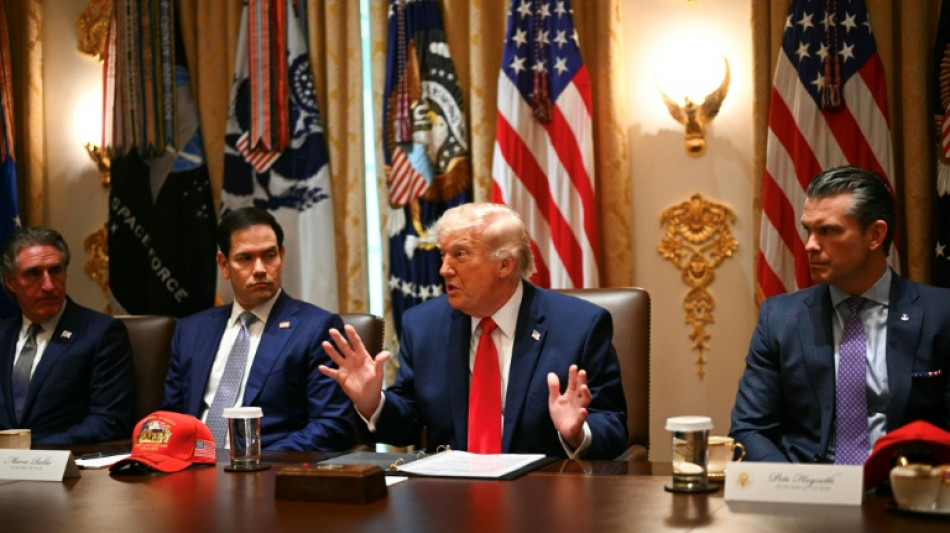
President Donald Trump threatened US ally Oman when asked about a possible short-term arrangement allowing it and Iran to control the Hormuz.
"No, the strait is going to be open to everybody," Trump said. "It's international waters and Oman will behave just like everybody else or we'll have to blow them up."
Oman has played a mediation role in the war and has itself come under attack from Tehran.
Baqaei condemned the threat towards Oman, calling it "a worrying sign of the normalisation of anarchy and intimidation in international relations".
The US Treasury, meanwhile, announced sanctions on Wednesday against Iran's Persian Gulf Strait Authority, Tehran's new agency that collects fees for travelling through the Strait of Hormuz.
- Lebanon strikes -
In Lebanon, a separate ceasefire has done little to stop the fighting between Israel and Iran-backed Hezbollah, which has only escalated in recent days.
The Israeli military said on Thursday it had begun new strikes on Hezbollah infrastructure around Tyre after issuing an evacuation warning to residents of the southern city.
The previous day it had declared all areas south of Lebanon's Zahrani River -- which roughly 40 kilometres (25 miles) from the border -- as "combat zones" and told residents to leave.
The sweeping warning, the first of its kind since an April 17 ceasefire, came as many Lebanese tried to celebrate the Muslim holiday of Eid al-Adha.
Lebanon's official National News Agency also reported a series of strikes on Nabatieh city resulting in "huge destruction" in residential areas.
Lebanon's health ministry on Wednesday reported the overall death toll since the war erupted on March 2 stood at 3,269.
The Israeli military, meanwhile, said on Thursday that a soldier was killed the day before by a Hezbollah drone near the Lebanon border, taking to 24 the number of its troops killed in the war with the Iran-backed group.
Iran has also insisted any agreement must apply to Lebanon.
G.Morris--TNT