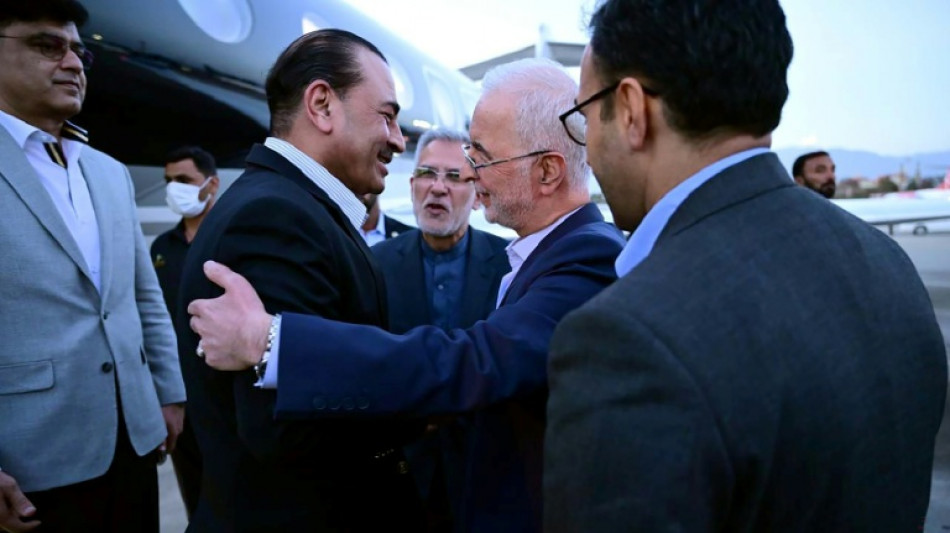
Pakistan military chief arrives in Tehran in push to end Iran war / Photo: © Inter-Services Public Relations/AFP
Pakistan's powerful army chief arrived in Tehran on Friday, with Islamabad mediating as the Islamic republic examines a new US proposal to end the Middle East war.
Iran's foreign ministry spokesman Esmaeil Baqaei, however, said the visit did not necessarily mean "we have reached a turning point or a decisive situation".
The disagreements between Iran and the United States were "deep and extensive", he added in quotes carried by Iran's ISNA news agency.
US Secretary of State Marco Rubio had earlier voiced hope of progress on ending the war, which broke out on February 28 when the US and Israel launched attacks against Iran.
A ceasefire on April 8 halted the conflict, but negotiation efforts, including historic face to face talks hosted in Islamabad have so far failed to yield a lasting agreement.
Previous comments by President Donald Trump had suggested weeks of stop-start negotiations to strike a permanent end to the war were teetering on the "borderline" between a deal and renewed attacks.
Pakistan's military said in a statement that Munir had "arrived in Tehran as part of ongoing mediation efforts".
It said he had been welcomed by Iran's Interior Minister Eskandar Momeni and Pakistani counterpart Mohsin Naqvi.
Naqvi visited Iran for the second time in a week on Wednesday and met President Masoud Pezeshkian and Foreign Minister Abbas Araghchi.
Baqaei said a delegation from Qatar had also held talks with the Iranian foreign minister on Friday.
"In recent days, many countries -- both regional and non-regional -- have been trying to help bring the war to an end... However, Pakistan remains the official mediator."
Pakistan, Iran's eastern neighbour, hosted in April the only direct negotiations between US and Iranian officials to take place since the war began.
Munir was at the centre of the action during that round of talks, greeting both delegations on their arrival and displaying bonhomie with US Vice President JD Vance.
But the talks ultimately failed, with Iran accusing the US of making "excessive demands".
Since then, the two sides have exchanged multiple proposals, with the threat of renewed war looming all along.
- Hormuz -
Iranian media had reported on Thursday that Munir had been due in Tehran that day in order to continue "talks and consultations" with Iranian authorities.
Rubio later said to reporters of the Pakistani visit: "Hopefully that'll advance this further."
On Friday, he said that Trump's "disappointment" with America's NATO allies over a lack of support in the Iran war would need to be "addressed".
Rubio added that he told European countries they may have to come up with a "Plan B" to help force open the Strait of Hormuz if the war with Iran drags on.
Tehran effectively closed the key shipping lane, through which large amounts of oil and gas usually travel, in retaliation for the US-Israeli strikes launched in February.
The future of the Strait of Hormuz remains a key sticking point in negotiations, with fears growing that the global economy will be hit hard as pre-war oil stockpiles are depleted.
European Union nations moved on Friday towards imposing sanctions on Iranian officials and others responsible for blocking the strait.
Baqaei also listed the situation in the strait and a US blockade of Iranian ports as issues to be examined.
"The issue of ending the war on all fronts, including Lebanon, is very important," he added.
- Lebanon front -
Hezbollah drew Lebanon into the Middle East war with rocket fire at Israel in retaliation for the killing of Iran's supreme leader in US-Israeli strikes.
Since a truce began on April 17, Israel has continued to launch strikes, carry out demolitions and issue evacuation orders in south Lebanon, saying it is targeting Hezbollah, which has also kept up attacks.
Lebanon's health ministry said Israeli attacks have killed at least 3,111 people in Lebanon since March 2.
The ministry said Israeli strikes on the south killed 10 people on Friday, including six rescuers and a child.
The Israeli military also announced a separate airstrike that killed two people in an area in southern Lebanon where it is fighting Hezbollah.
The United States on Thursday sanctioned nine Hezbollah-linked individuals it accused of "obstructing the peace process in Lebanon", including two officers.
It marked the first time Lebanese officers have been sanctioned by the United States.
L.A.Adams--TNT