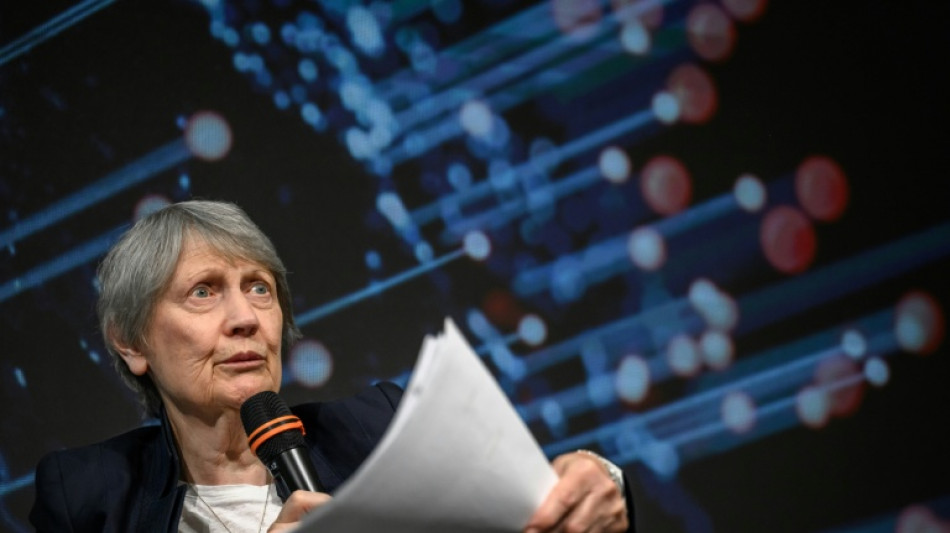
Ebola, hantavirus show world's risk preparedness lagging: pandemic expert / Photo: © AFP
The deadly hantavirus and Ebola outbreaks show that while the response to declared public health crises has improved, awareness of pandemic risks still lags, a leading pandemic expert warned Tuesday.
Over six years after the World Health Organization declared the Covid-19 pandemic, global efforts to revamp public health crisis response have improved the reaction to the hantavirus and Ebola outbreaks, said Helen Clark, a former New Zealand prime minister and the co-chair of the Independent Panel for Pandemic Preparedness and Response.
"The new international health regulations are working," she told AFP in an interview in Geneva.
As soon as the alert was sounded last Friday over the new Ebola outbreak in the Democratic Republic of Congo, and once the world learned a few weeks ago of the rare hantavirus outbreak on the MV Hondius cruise ship in the Atlantic, "the response has gone quite well", she said.
"Our issue is now really upstream from that," she said, insisting that far more work needed to go into identifying risks and how "these outbreaks get away".
"I think we need a lot more knowledge around risk-informed preparedness," she said, urging more focus on knowing your risk and "what could crop up", and "be ready to deal with that".
"Those basic issues of surveillance, early detection... We're not there yet."
Clark said the hantavirus species behind the cruise ship outbreak that triggered a global health scare after three people died was known to be endemic in the area of Argentina where the ship departed from.
"But we're not clear how much was known about that by ships who depart regularly from there," she said.
Meanwhile, the outbreak of the Bundibugyo strain of Ebola believed to have killed more than 130 people in a remote province of DRC seems to have spread under the radar for weeks, with tests focused on another strain showing up negative.
"How could this have gone for four to six weeks, ... spreading while not getting the testing results that we needed to show that it was a particular variant?" Clark asked.
She called for thorough investigation of "the chain of events here, and what we can learn from it, and what it says about the capacities we need".
- 'Perfect storm' -
Clark highlighted that the Ebola outbreak especially had laid bare the dire impact dramatic global aid cuts had on disease prevention efforts.
"There's a perfect storm," she warned, pointing to how countries had been "very suddenly expected to make up a lot of investment in the health system which previously came from donors".
"With the best will in the world, the poorest and most fragile countries just haven't got money sitting in the bank to do that, so things will get neglected across a range of areas."
Clark insisted that "global solidarity remains extremely important".
"We're talking global public goods," she stressed, pointing to a confirmed Ebola case in a US national and how hantavirus had "popped up in places where people (disembarked) from the ship".
"We're in this together, and so we have to look to ways of financing preparedness or response which reflect our shared interests.”
Lewis--TNT