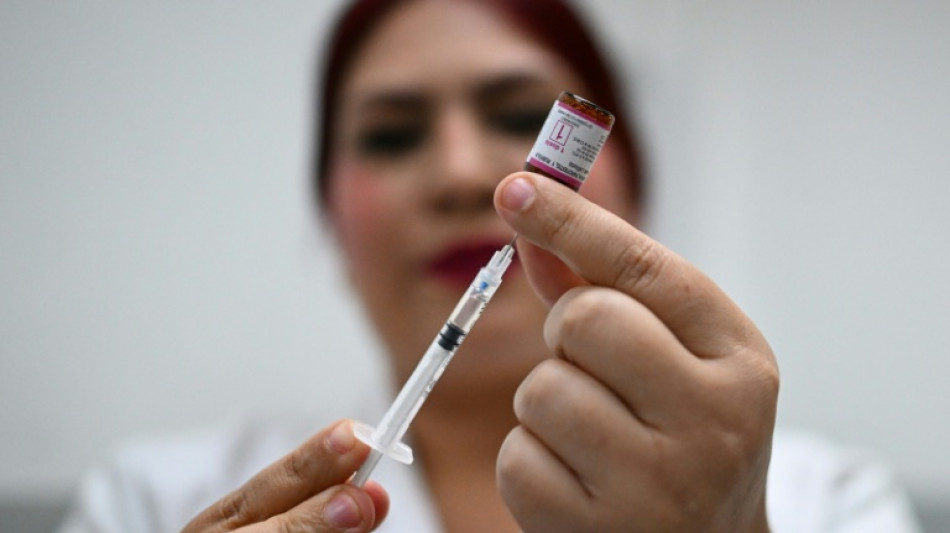
Gridlock as pandemic treaty talks fail to finish / Photo: © AFP
The World Health Organization said Friday that divided member states want up to a year of further negotiations on the missing piece of an international agreement on handling future pandemics.
After a week of grindingly slow progress in talks at the WHO headquarters in Geneva, countries came to a stop and will decide on the next steps at the annual assembly of member states, to be held in the Swiss city from May 18 to 23.
Wealthy countries and developing nations are at loggerheads over how the pandemic treaty, which was adopted last year, will work in practice.
The agreement's unfinalised Pathogen Access and Benefit-Sharing (PABS) mechanism deals with sharing access to pathogens with pandemic potential, then sharing benefits derived from them, such as vaccines, tests and treatments.
"Real progress was made on the PABS annex and I am confident through continued negotiations differences will be overcome," WHO chief Tedros Adhanom Ghebreyesus said in a statement.
"Member states should continue approaching the outstanding issues with a sense of urgency because the next pandemic is a matter of when, not if.
"The PABS annex is the last piece of the puzzle not only for the Pandemic Agreement but all initiatives that WHO and member states have implemented as a result of lessons learned from the Covid-19 pandemic."
- World 'largely unprepared' -
In May 2025, WHO members adopted a landmark agreement on tackling future health crises, after more than three years of negotiations sparked by the shock of Covid-19.
The accord aims to prevent a repeat of the disjointed international response that surrounded the coronavirus crisis, by improving global coordination, surveillance and access to vaccines.
PABS, the heart of the treaty, was left out to get the bulk of the deal over the line.
The outcome of this week's work will be presented to the annual assembly, which will be asked to consider continuing the process "and submit the outcome to the next assembly in May 2027", or an earlier special session later this year.
Only once the PABS annex is complete will countries be able to start ratifying the treaty.
Access to genetic sequences remains a sticking point.
Negotiations are also stalled by a demand from developing countries for guarantees of equitable access to vaccines outside pandemics, as well as wranglings over financial contributions that participating pharmaceutical companies should make.
New Zealand's former prime minister Helen Clark, co-chair of The Independent Panel for Pandemic Preparedness and Response, said the failure to reach agreement this week was "deeply regrettable".
"If a new pathogen emerged today, the world remains largely unprepared for it. A lack of action to prevent and prepare for the next pandemic threat is a disservice to humanity," she said in a statement.
F.Hammond--TNT