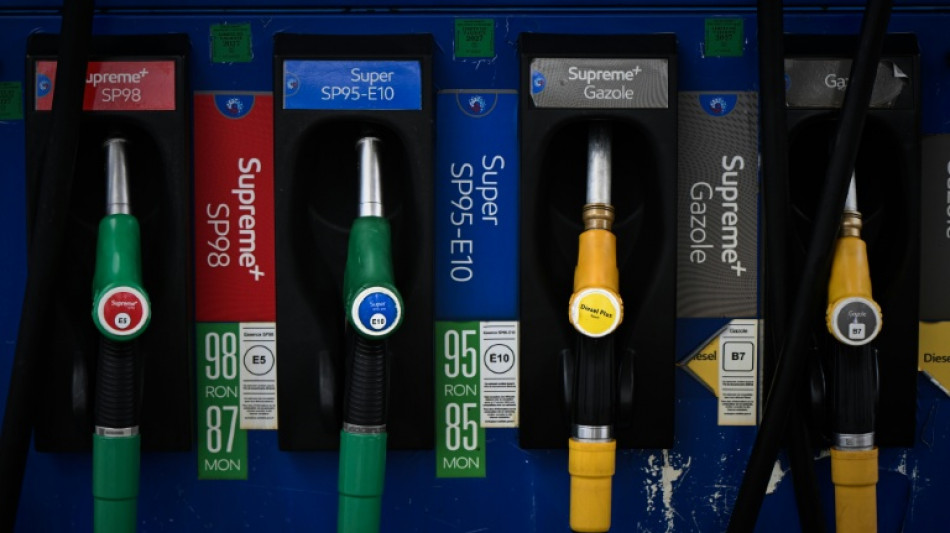
Greenpeace accuses oil companies of reaping Mideast 'war profits' / Photo: © AFP
A study commissioned by Greenpeace said on Wednesday that oil companies have been making more than 80 million euros a day in "war profits" in the European Union since the start of the war in the Middle East.
"If this level persists, the oil companies can expect additional operating profits of approximately 2.5 billion euros ($2.9 billion) for the month of March alone," the study said.
The study examined the difference between the price of crude oil and the price of fuel at the pump between January and February 2026, and the first three weeks of the war in March.
"The report shows that the rise in prices at the pump is far greater than that of underlying crude oil prices," Greenpeace said in a statement.
The increase in margins was much greater for diesel fuel than for petrol.
"Compared with the pre-war months, the oil companies earned a daily excess profit of 75.3 million euros from the sale of diesel fuel to cars and trucks," the report said.
"Petrol sales contributed 6.1 million euros per day."
Margins were expanded predominantly in countries with high purchasing power such as the Netherlands, Sweden, Denmark, Austria and Germany, the report said.
In Germany, excess profits stood at 23.8 million euros per day, followed by France, at 11.6 million euros per day.
"Greenpeace France is calling on European governments to introduce permanent additional taxes on the profits of oil and gas companies, the proceeds of which would be used to reduce energy bills and accelerate European energy independence," the environmental group said.
The United States and Israel launched strikes against Iran on February 28, triggering a regional conflict that has caused global oil and gas prices to surge and sparked fears of fuel shortages, especially in import-reliant Asia.
Last week, the price of diesel in France hit its highest level since 1985, surpassing the peaks reached after Russia's invasion of Ukraine in 2022.
Under increasing pressure, many governments have rolled out measures to limit the impact of supply difficulties and soaring energy prices.
V.Bennett--TNT