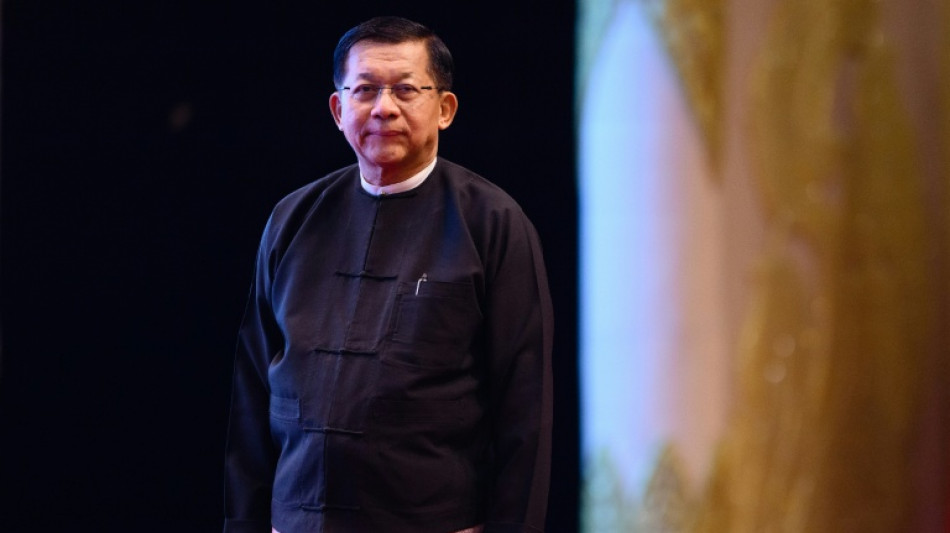
Myanmar paves way for junta chief to become civilian president / Photo: © AFP/File
Myanmar's junta chief Min Aung Hlaing was nominated as a vice-presidential candidate and replaced as military commander on Monday, paving the way for the coup leader to become president and continue his rule in civilian garb.
Min Aung Hlaing has ruled Myanmar since 2021 when he ordered a coup toppling the elected government of Aung San Suu Kyi -- detaining the Nobel Peace Prize laureate, dissolving her party and triggering civil war.
After five years of hardline rule, he oversaw heavily restricted elections that criminalised protest or criticism of the vote and returned a walkover win for pro-military parties in late January.
Democracy watchdogs have long warned the government will be a proxy of the military, which has ruled Myanmar for the vast majority of its post-independence history.
"I nominate Senior General Min Aung Hlaing as vice-president," MP Kyaw Kyaw Htay said, according to a television broadcast of a lower house session on state-run media.
Three vice-presidents will be chosen, one of whom will be elected as president in a parliament-wide vote.
Myanmar's junta also installed a new military commander-in-chief, with former spymaster Ye Win Oo replacing Min Aung Hlaing, reports said.
Ye Win Oo was promoted to the top military role at a ceremony in the capital Naypyidaw, several Myanmar media outlets reported.
Myanmar's military has long presented itself as the only force guarding the restive country from rupture and ruin.
The generals loosened their grip for a decade-long democratic interlude beginning in 2011, allowing Suu Kyi to ascend as civilian leader and steer a period of reform as the nation opened up from its hermetic history.
After Suu Kyi trounced the pro-military Union Solidarity and Development Party (USDP) with a landslide victory in 2020 elections, Min Aung Hlaing snatched back power as he grew anxious about the military's waning influence, analysts say.
Now the USDP -- led and staffed by many retired officers -- is entrenched in parliament after winning 80 percent of elected seats, and it is expected the new government will march in lockstep with the military.
However, Min Aung Hlaing must manage a delicate transition as he hands over the reins of the all-powerful military to Ye Win Oo, the former army chief, as he moves into a civilian role.
A.M.James--TNT