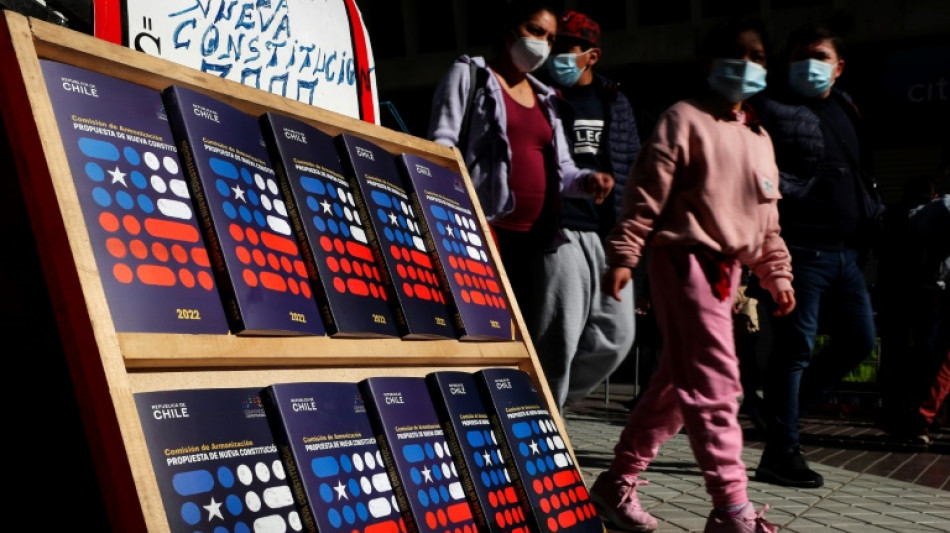
'No' camp leads ahead of referendum on changing Chile constitution: poll / Photo: © AFP/File
Just months after Chileans elected a leftist president in a mass rejection of establishment politics, they appear to stand deeply divided on overhauling the country's dictatorship-era constitution, an opinion poll showed Wednesday.
A proposed new constitution, drafted over a year by a specially-elected assembly of 154 members, comes up for approval in a referendum on September 4.
More than 15 million people are eligible to participate in Chile's first mandatory vote in 10 years -- choosing essentially between the rights-driven "welfare state" promised by President Gabriel Boric and the neo-liberal status quo he had vowed to repeal.
According to recent polls, supporters of change are in the minority despite the recent revolutionary mood in Chile which saw mass anti-establishment protests in 2019 and calls for a more equitable society.
Rewriting the constitution adopted during the dictatorship of Augusto Pinochet (1973-1990) was a key demand of demonstrators.
But Chile has also long been one of Latin America's most conservative countries, and abortion is high on the list of provisions that opponents of the draft constitution point to as objectionable.
If it is approved, Chile will become one of few countries in the world, and the first in majority Catholic Latin America, to guarantee the right to "voluntary termination of pregnancy" in its founding law.
- Almost a fifth undecided -
Many in Catholic-majority Chile, however, are against legalizing a procedure that was banned outright until 2017 and is allowed today only in cases of rape or a threat to the life of the woman or if the fetus is unviable.
"As Christians we are against... abortion," Hernan Reyes, a 22-year-old student and opponent of the draft constitution, told AFP.
A survey conducted by pollster Criteria showed Wednesday that 45 percent of respondents were against the new constitution, with only 36 percent in favor -- though this percentage has been climbing.
Nineteen percent were undecided.
The political agreement that allowed the drafting of a new constitution in response to the protests, said that if rejected, the existing constitution would remain in place.
That understanding appears to have been thrown in doubt by Boric himself, who said a rejection could trigger a brand-new drafting process.
The "anti" camp also object to the draft's overt mention of different indigenous groups in the country, which they say undermines national unity.
"That they divide us into different nations, different laws which are not the same for everyone, seems to me aberrant", voter Isabel Rodriguez, 42, told AFP.
On the pro-change side are many who welcome protections for the environment, women's rights and guarantees for basic health care, education, water and housing for all.
F.Hammond--TNT