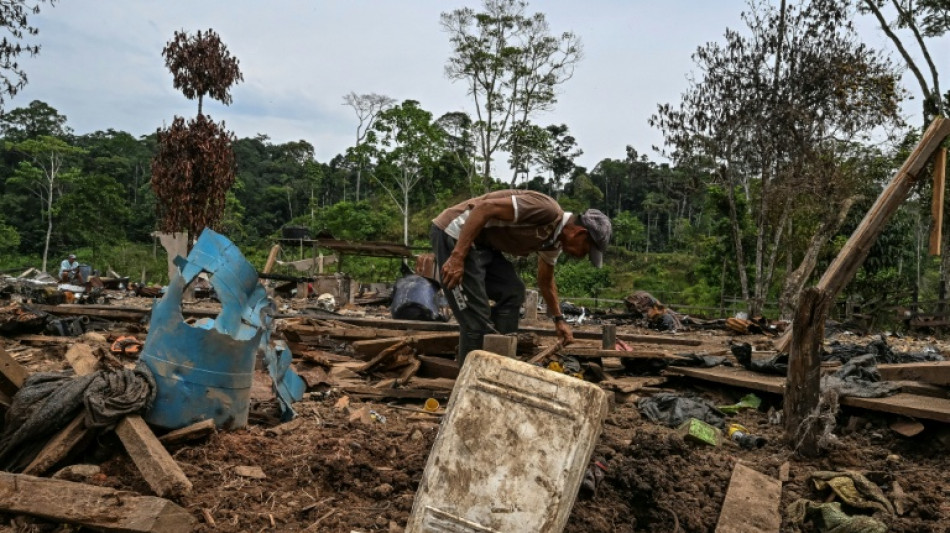
US-backed airstrikes leave Ecuador border communities in fear / Photo: © AFP
A US-backed crackdown on drug cartels along the Ecuador-Colombia border has sparked accusations that security forces bombed farms, burned homes and detained and abused villagers.
Sixty-six-year-old Jose Pena hid in the bushes as two Ecuadoran military helicopters thudded overhead.
Then came the "boom!" -- an explosion he says "shook everything" and pulverized the farm where he worked.
Ecuador's interior minister told AFP the March 6 strike was months in the making, and it targeted a camp run by Border Commandos guerrillas.
The group is among several fighting for smuggling routes linking the coca fields of southern Colombia to pubs and clubs in the United States and Europe.
In the last few years, an alphabet soup of cartels and other criminal enterprises have transformed Ecuador into a major cocaine transhipment point, turning it from one of the safest countries in Latin America into among its most deadly.
Despite the government's insistence its targets were part of an illicit and murderous network, residents tell a different story.
- Shots fired -
AFP visited the remote border zone and saw three buildings reduced to rubble, their scorched zinc roofing twisted among the debris.
Dead animals lay scattered. A lemon tree was charred, and an avocado tree had shed all of its fruit. There was no sign of drug production or trafficking.
Locals say Ecuadoran soldiers burned three homes days before the bombing, apparently to ensure no one was inside.
Community leader Vicente Garrido pointed to the wreckage, including dead chickens and two dogs killed in the blast, saying farmers had lost everything and been abused.
"These are homes where we farmers live," he said.
Gilson Vargas, 26, said he was arrested with four coworkers, blindfolded, kicked and threatened before being flown to a military base and held for hours.
Residents kept videos of men kneeling with covered faces before being bundled into a helicopter.
Neighbors who protested were dispersed by shots fired into the ground.
Lawyer Lina Maria Espinosa said her clients reported torture, including near‑drowning and electric shocks.
One man showed wrist wounds he said came from restraints. AFP could not verify when or how the injuries were sustained.
In another village, locals said small aircraft dropped bombs on March 3, leaving a large crater on a nearby farm.
Ecuador's government and prosecutors did not directly answer questions on alleged abuses or damaged homes.
But the strikes are part of Operation Total Extermination, a US-backed offensive by President Daniel Noboa against armed groups that move drugs along the 600‑kilometer (370-mile) border with Colombia to Pacific ports.
Human Rights Watch has flagged abuses since Noboa declared an internal armed conflict. His government rejects the claims.
The operation has angered Colombian President Gustavo Petro, who recently alleged an unguided bomb fell into Colombia from Ecuador.
Soldiers later destroyed the device, which residents said landed not far from a home.
R.T.Gilbert--TNT