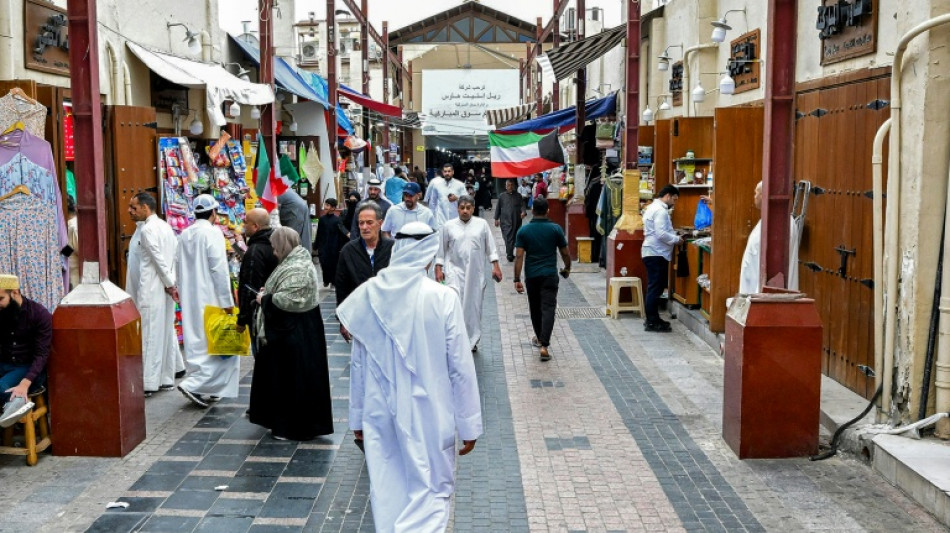
Displacement, bombs and air raid sirens weigh on Mideast Eid celebrations / Photo: © AFP
Aziza Ahmad hasn't planned anything -- no family meal, no gifts for the children. In Lebanon, between the war and soaring prices, she said "there's nothing to celebrate" this Eid al-Fitr, the end of Ramadan.
From Beirut to Dubai, Manama to Jerusalem, the holy month of fasting is ending on a bitter note for millions of Muslims unsettled by the Middle East war.
The small, run-down apartment where Ahmad, 49, lives with her husband and three sons is currently home to 12 people.
"Maybe it's different for the rich, but the joy of Eid is missing here... We have no money, and the displaced people can't even go back home".
In Lebanon, years into an economic crisis even before the war broke out, prices for some products have risen sharply in local markets.
On the eve of Eid, Ahmad has set up a small pastry stall in front of her home to supplement her husband's salary as a car washer.
"We won't eat a single one; everything is for sale," she told AFP.
Kneading dough and crushing pistachios, the whole family was busy in the building's entryway.
"We won't even go out to play. Everyone is scared, Israel is striking, so we stay home," said Yasmine, 11, a big pink ribbon in her hair.
In the Gulf, fear of bombings has also dampened the mood.
Long seen as the region's safe havens, these countries have been the target of Tehran's retaliatory strikes following US-Israeli attacks on Iran from February 28.
Nearly 30 people have been killed in Gulf states since the war broke out.
In Kuwait, authorities have temporarily banned plays, concerts and weddings during Eid al-Fitr to limit large gatherings.
Ali Ibrahim, a 41-year-old Egyptian working in Kuwait, said fewer customers than usual have turned up at stores to buy new clothes ahead of Eid.
Qatar also suspended all public events until further notice from the start of the conflict.
- 'Intimate celebrations' -
In the United Arab Emirates, outdoor prayers are banned for Eid and must be held inside mosques for security reasons.
Juhi Yasmeen Khan, a 53-year-old social worker from India who has lived in Dubai for nearly three decades, said "it doesn't feel right to have a grand celebration" this year.
"Given the current situation, many of us are opting for intimate celebrations at home," she said, adding that she would celebrate with her mother, sister and son.
"Together, we will keep the Eid spirit alive."
For Palestinians in occupied east Jerusalem, Ramadan is incomplete this year after Israel shut Al-Aqsa Mosque, among other holy sites, over the ongoing war.
"There is a pain in our hearts because we are deprived of Al-Aqsa Mosque", said Ihab, a 30-year-old who declined to share his last name.
This year, the lights and lanterns featuring Islamic designs, such as crescent moons, are absent in the streets.
The narrow passages of the usually bustling Old City emptied at the start of the conflict.
In Bahrain, people have been living to the sound of sirens ringing several times a day to warn of potential missile and drone threats.
At a beauty salon in the capital Manama, five-year-old Sarah waited to have her hands painted with henna ahead of Eid celebrations.
Her mother Maryam Abdullah said the war will not stop her family "from buying our Eid necessities and preparing for the holiday as we always have".
"This will surely pass, and it won't prevent us from enjoying the Eid atmosphere, even if it's limited to visiting family at home," she said.
Hessa Ahmed, a Bahraini employee in her thirties, was also intent on celebrating.
"I went shopping with my friend. We bought clothes and accessories and will prepare to celebrate Eid with family, relatives, and friends."
burs-ha-cl/ris/rh
R.Evans--TNT