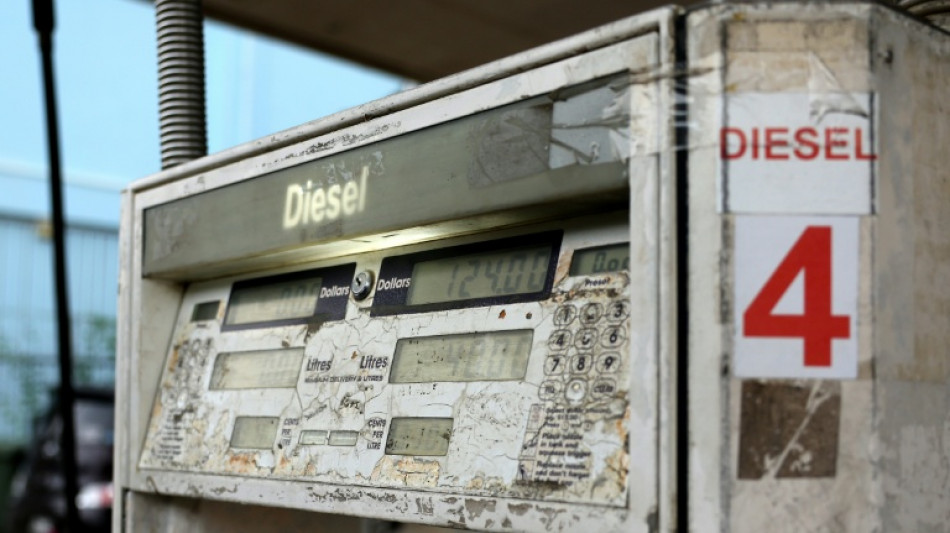
Pacific nations fear fuel shortages as Middle East war sends oil prices soaring / Photo: © AFP
Leaders of Samoa and Tonga appealed for help this week as the import-reliant Pacific nations raised fears over possible fuel shortages and escalating costs caused by war in the Middle East.
Oil prices have surged to nearly $110 a barrel following strikes against energy infrastructure in Iran and the Gulf states.
The crisis in global energy markets has been felt as far away as the south Pacific, where nations like Samoa and Tonga are heavily reliant on imported petroleum.
In Samoa, about two thirds of the country's energy generation comes from imported diesel fuel.
Speaking after a meeting with New Zealand leader Christopher Luxon, Samoan Prime Minister La'aulialemalietoa Leuatea Schmidt said Wednesday he had asked if it was possible to divert fuel to his country in case of crisis.
"We don't know what's going to happen next," La'aulialemalietoa said.
He said Samoa secured its fuel supply from Singapore and other nations, but had asked Luxon to help "cover us in case something happened".
And in Tonga -- where 80 percent of its energy generation comes from imported diesel fuel -- Prime Minister Lord Fakafanua said New Zealand and Australia were "sharing intelligence" with his country to help them best prepare for shortages.
Tourism makes up 25 percent of Samoa's GDP and 11 percent in Tonga.
That's raising concern for countries heavily reliant on airlines that are facing huge cost pressures due to the price of jet fuel.
The two nations also depend on their fisheries for food. Any shortage in fuel affects the ability of communities to fuel boats and feed themselves.
Tonga had already faced fuel supply issues last year after maintenance delays, limited storage and a stranded fuel vessel left the country almost dry.
Lord Fakafanua said he wanted to manage expectations for Tongans concerned about supply and cost.
"The restrictions are beyond our control," he said.
"What we can do is prepare as best we can, and part of that is the sharing of intelligence with our partners such as Australia and New Zealand.
"My concern is about ensuring that we have enough energy for the country," he said, adding that "for now we seem to be okay".
Lord Fakafanua said he hoped for a swift resolution to the Middle East conflict.
"We don't advocate for violence. Our foreign policy remains friend to all, enemy to no one."
A.Parker--TNT