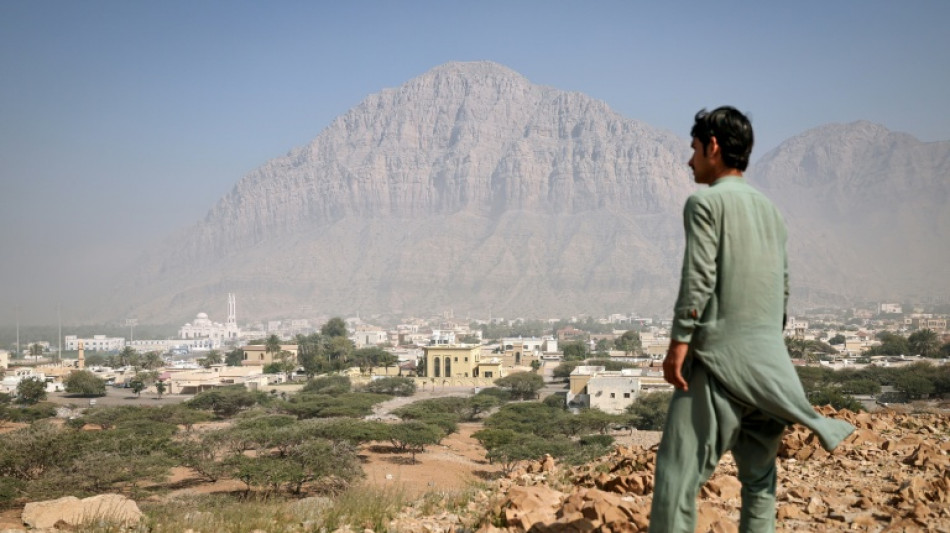
Oil holds above $100, stocks fall as Khamenei targets Hormuz / Photo: © AFP
Oil prices held gains above $100 Friday and most equity markets dropped after Iran's leader called for the blocking of the crucial Strait of Hormuz and the opening up of new fronts in the war against the United States and Israel.
With the conflict heading towards its third week and showing no signs of ending, investors are growing increasingly worried about an extended crisis that could fan inflation and hammer the global economy.
Tehran has targeted energy facilities this week across the Gulf, with ships hit near Iraq, fuel tanks attacked in Bahrain and drones fired at oil fields in Saudi Arabia.
And it warned on Thursday that it would "set the region's oil and gas on fire" if its own energy infrastructure and ports were targeted.
In his first public comments since succeeding his father four days ago, Ayatollah Mojtaba Khamenei said the Strait of Hormuz -- through which a fifth of global oil and gas passes -- must remain effectively shut.
"The lever of blocking the Strait of Hormuz must definitely be used," Khamenei said in a message read by an anchor on state television.
He also said "studies have been conducted into opening other fronts where the enemy has little experience and would be highly vulnerable, and their activation will take place if the state of war persists".
Crude surged more than nine percent Thursday, with Brent ending above $100 for the first time since 2022 when Russia launched its invasion of Ukraine. Brent is up around 40 percent since the Middle East war began on February 28.
And it held there in early Friday business, with analysts saying the record 400 million barrels released from International Energy Agency stockpiles had little impact.
The IEA said Thursday that the war "is creating the largest supply disruption in the history of the global oil market".
Meanwhile, Donald Trump has faced intense political pressure as the global economic fallout of the crisis has mounted, while markets have brushed off his assertions that the battle would be short-lived.
The US president struck a defiant tone in a social media post Thursday, writing that the United States "is the largest Oil Producer in the World, by far, so when oil prices go up, we make a lot of money".
"BUT, of far greater interest and importance to me, as President, is stopping an evil Empire, Iran, from having Nuclear Weapons, and destroying the Middle East and, indeed, the World."
However, Pepperstone's Chris Weston said: "With crude closing near its highs, markets are increasingly pricing in a longer duration for the conflict and the continued impact of a potential closure of the Strait of Hormuz.
"Donald Trump may continue to explore the idea of assisting vessels through the strait, and if that were to materialise the market could see a strong relief rally.
"For now, however, the dominant features are higher energy prices and extremely elevated volatility markets."
As concerns over the impact mount, equity traders are taking flight, with Asian economies most at risk owing to their reliance on energy imports.
Tokyo, Hong Kong, Shanghai, Singapore, Seoul, Mumbai, Bangkok, Wellington, Manila and Jakarta were all down.
The dollar held its gains against major rivals owing to its safe-haven status, fears of inflation, and expectations that interest rates will remain elevated longer than expected.
Matt Weller, head of market research at City Index, warned that markets could be in for more pain after years of generally strong equity markets, subdued energy prices and broadly low interest rates
"Those trends have reversed, and the default assumption as long as the Strait of Hormuz remains functionally closed is that stocks will be under pressure, oil prices will trend higher, and interest rates will tick up in unison," he wrote.
"Unless or until we see meaningful progress toward a ceasefire in the Middle East, traders should shift their expectations that the coming weeks and months will look different than the past couple of years, weighing on risk appetite at an accelerating rate."
- Key figures at around 0700 GMT -
West Texas Intermediate: DOWN 0.2 percent at $95.50 a barrel
Brent North Sea Crude: UP 0.1 percent at $100.56
Tokyo - Nikkei 225: DOWN 1.2 percent at 53,819.61 (close)
Hong Kong - Hang Seng Index: DOWN 0.9 percent at 25,477.39
Shanghai - Composite: DOWN 0.8 percent at 4,095.45 (close)
Euro/dollar: DOWN at $1.1500 from $1.1514 on Thursday
Pound/dollar: DOWN at $1.3321 from $1.3346
Dollar/yen: DOWN at 159.35 yen from 159.39 yen
Euro/pound: UP at 86.29 pence from 86.27 pence
New York - Dow: DOWN 1.6 percent at 46,677.85 (close)
London - FTSE 100: DOWN 0.5 percent at 10,305.15 (close)
W.Phillips--TNT