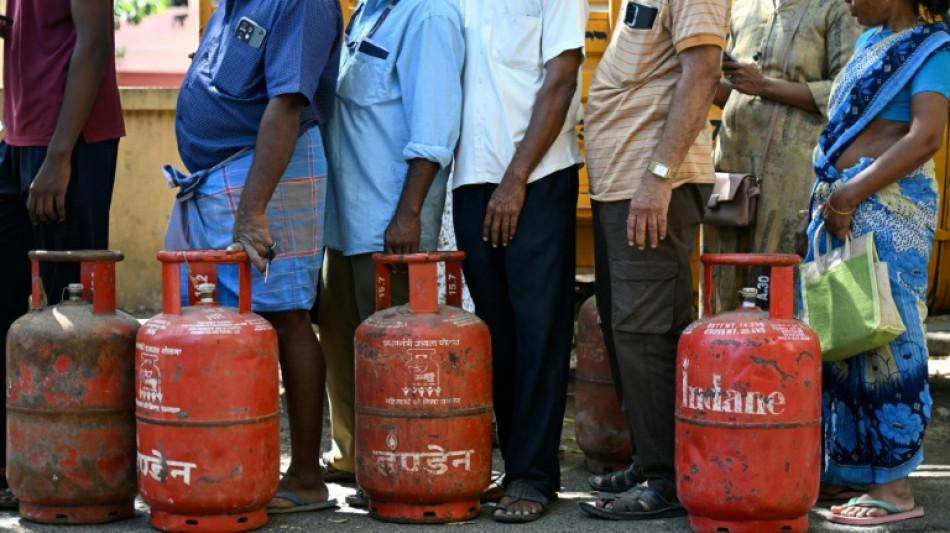
Mideast war lands India restaurants in soup / Photo: © AFP
Indian restaurant MadCo took the tough call this week to remove some menu favourites, including bone marrow -- a beef bone cut in half and slowly roasted, in an attempt to save cooking gas as the Iran war disrupts supply chains.
Far from the Middle East, restaurants in the world's fastest-growing major economy are feeling the heat of the conflict with cooking gas shortages.
"We saw it coming, but didn't expect it to hit us this quickly," said MadCo's director Santosh Abraham, adding that the restaurant in the southern tech city of Bengaluru has also halted its lunch service.
India is the world's second-largest buyer of liquefied petroleum gas (LPG), 90 percent of which passes through the Strait of Hormuz, a key transit chokepoint where traffic has effectively come to a standstill.
Cooking gas cylinders are a staple in millions of restaurants across India, as authorities have pushed them away from polluting coal or wood-fired ovens.
As imports are disrupted, India has moved to ensure households and essential sectors remain adequately supplied, leaving restaurants, manufacturers and power plants in the lurch.
Guerilla Diner, a burger joint in Bengaluru, is usually fully booked within minutes when it opens reservations each Tuesday.
But now the restaurant is "scrambling to do something to stay afloat" and figure out "what can be done without a gas connection", sous chef Dhruv Thapliyal told AFP.
"I have 2.5 cylinders left. If I run the grill, I only have enough for a day and a half. If I just run the fryer, maybe four days," he said, adding it feels "a little scary."
- Black market -
Prime Minister Narendra Modi on Wednesday night said there was "no need to panic", and the government has set up a committee to review industry pleas to boost cooking gas supplies.
But Ananth Narayan, head of the local chapter of the National Restaurant Association of India (NRAI) in Bengaluru, warned that black market prices of gas cylinders were nearly double the usual rate and called on the government to do "something radical".
India's top restaurant industry association, meanwhile, has offered a string of tips to save cooking gas.
It recommends pre-soaking ingredients like grains to reduce cooking times and cutting dishes that require long simmering, deep frying or slow cooking.
Chinese restaurant Gypsy in Mumbai has cut its steamed dim sum dishes from the menu.
"That takes about eight to 10 minutes per portion, the time that the gas has to be on continuously," said Aditi Limaye Kamat, whose family owns Gypsy and several other eateries.
Other restaurants are turning to older sources of fuel.
Gurudath, at The Pizza Bakery in Bengaluru, said its purchase of wood had soared.
"We were using 300 kilos of wood a week, now it's about 450-600 kilos," he said, explaining that they had turned off the gas burners that help the ovens retain heat.
- Additional costs -
Daniel Rodrigues, owner of Mon Petit Frere cafe in tourist hub Goa, said "the government really needs to step in".
"There's a lot of uncertainty right now, and we're not sure where this is headed", he said.
"Our breakfast service is very busy, and even basic items like omelettes and pancakes could become difficult to make, which will definitely hurt business."
In neighbouring Sri Lanka, authorities raised LPG prices by eight percent on Wednesday, a day after increasing fuel prices by a similar percentage.
The Canteen Owners' Association of Sri Lanka said fears of shortages have sparked panic buying of electric stoves and rice cookers.
"It is not easy to buy gas," spokesman Asela Sampath told AFP.
"We have to absorb the additional costs for the time being, because otherwise we risk losing diners."
R.Hawkins--TNT