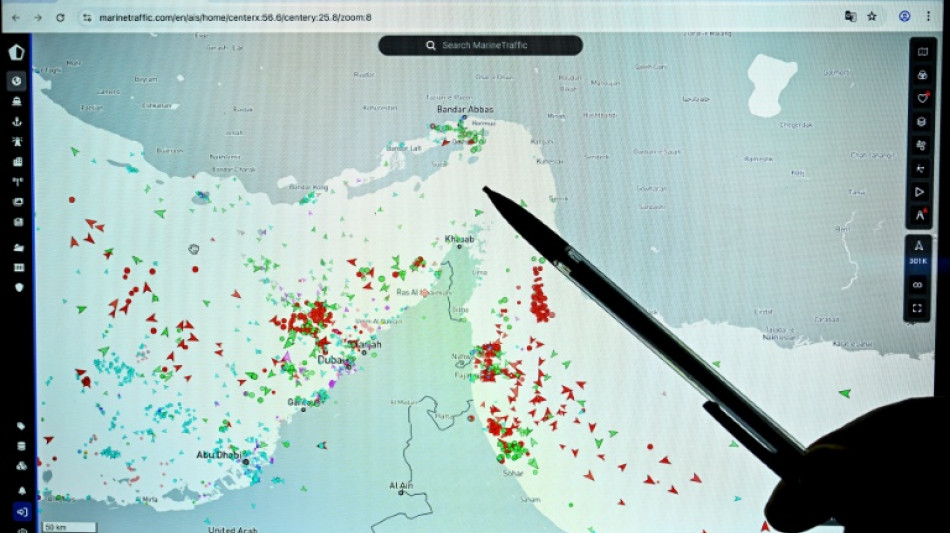
UN warns Hormuz standstill will hit world's most vulnerable / Photo: © AFP/File
The standstill in the Strait of Hormuz caused by the Middle East war could hammer some of the world's most vulnerable people, the United Nations warned Tuesday.
The strait is the only sea passage from the Gulf towards the Indian Ocean, through which nearly a quarter of the world's seaborne oil supplies pass, as well as a significant amount of cargo.
Iran has all but blocked the waterway following the launch of the February 28 US-Israeli airstrikes on the country that triggered the war.
"The current shock comes at a time when many developing economies struggle to service their debt, face a tightening of fiscal space and limited capacity to absorb new price shocks," the UN trade and development agency UNCTAD said.
"Higher energy, fertiliser and transport costs -- including freight rates, bunker fuel prices and insurance premiums -- may increase food costs and intensify cost-of-living pressures, particularly for the most vulnerable," it said.
UNCTAD added that, in terms of seaborne trade volume, in the week before the conflict 38 percent of crude oil, 29 percent of liquified petroleum gas, 19 percent of liquified natural gas and 19 percent refined oil products went through the strait.
But while an average of 129 ship transited daily through the passage between February 1 and 27, that number dropped to just three on March 3.
UNCTAD said the disruptions underscored the vulnerability of critical maritime chokepoints and their potential for disruption to them to send shocks across supply chains and commodity markets.
"Rising energy, transport and food costs could strain public finances and increase pressure on household budgets, potentially heightening economic and social pressures... particularly in economies heavily dependent on imported energy, fertilisers and staple foods," it said.
- Food aid hit -
UN rights chief Volker Turk echoed the alarm for the effect the plunge in commercial shipping activity could have, "particularly for the world's most vulnerable".
"The impact of an oil price surge will have a knock-on effect for macro-economic and social stability in many countries, particularly those already experiencing debt distress," he said.
The UN's World Food Programme said the costs and time lost to the Strait of Hormuz disruptions were already impacting its humanitarian operations.
"This is nothing less than another seminal moment in global supply chain history," Jean-Martin Bauer, the director of WFP's food and nutrition analysis service, told reporters in Geneva.
Speaking from the WFP's Rome headquarters, he said shipping lines were diverting services and adding surcharges, leading to congestion "in places that are very far from Hormuz".
"We're seeing congestion in Asia. It's quite a severe disruption that's taking place right now," Bauer said.
"We're needing to go the long way around the Cape of Good Hope to reach some of our key geographies."
WFP's biggest operation is in Sudan, but now it is facing approximately 25 days of additional shipping time.
"It's basically 50 percent more than we would usually have. So that's really extending the supply chain and adding to cost," said Bauer.
A.M.Owen--TNT