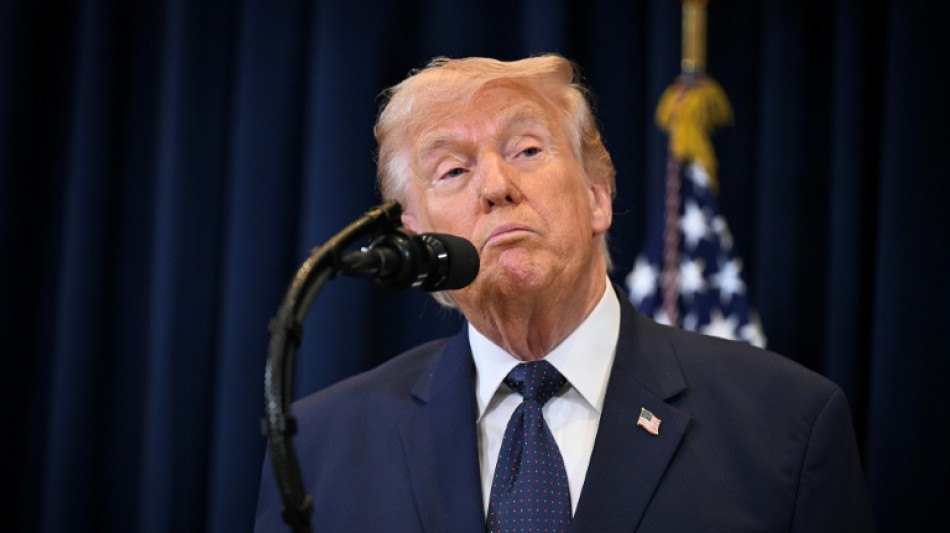
Trump says will waive some oil sanctions as Iran war roils markets / Photo: © GETTY IMAGES NORTH AMERICA/AFP
US President Donald Trump said Monday that he will waive some sanctions on oil to boost supply and bring down prices, due to market turmoil over war in the Middle East.
The US-Israel strikes on Iran and Tehran's retaliatory attacks across the Gulf region have upended the world's energy and transport sectors, virtually halting activity in thestrategically vital Strait of Hormuz.
"We're also waiving certain oil-related sanctions to reduce prices," Trump told reporters after talks with Russian President Vladimir Putin.
He also mentioned Chinese President Xi Jinping.
"We have sanctions on some countries. We're going to take those sanctions off till this straightens outTrump added
Trump did not specify any country or provide details on which sanctions would be lifted.
His comments came after speaking to the leader of Russia, one of the world's largest oil producers and exporters, while China is a key Russian trading partner and major oil importer.
Oil prices tanked and equities rallied on Tuesday following a wild day of swings that came after Trump said the US-Israel war on Iran would be ending earlier than thought.
He said Washington could possibly keep sanctions lifted on the unspecified countries if the war came to an end.
"Then who knows? Maybe we won't have to put them on. There'll be so much peace," he added, repeating his statement that the United States is ready to escort tankers through the Strait of Hormuz waterwaythrough which a fifth of global oil supplies usually pass.
Trump's Treasury Secretary Scott Bessent said last week that Washington was considering lifting sanctions on more Russian oil, a day after it temporarily authorized India to buy from Moscow.
The US government temporarily eased economic sanctions to allow Russian oil currently stranded at sea to be sold to India, restrictions that were imposed over Moscow's conduct in negotiations to end the war in Ukraine.
It said the transactions, including those from vessels blocked by various sanctions regimes, are authorized through the end of the day on April 3, 2026.
Trump's latest comments reflect possible fears in his administration about the impact of skyrocketing crude prices on American consumers before the crucial midterms in November.
- Russia lifeline -
Trump also said that the call with Putin was "positive" on the subject of ending the four-year-old war in Ukraine.
Easing sanctions on Russia could help boost global oil supplies but it also presents a dilemma for Washington in its effort to limit Russian revenues amid its protracted war on Ukraine.
Moscow's invasion and subsequent Western sanctions have eaten into its oil and gas revenues, which in January fell to a five-year low.
The Russian economy has been stuttering as the financial burden of the four-year assault on Ukraine and ensuing restrictions have pushed up inflation and weighed on growth.
Russian state coffers depend on sales of oil and gas but at the end of October 2025, Washington added Moscow's two largest oil producers, Lukoil and Rosneft, to its blacklist of sanctioned entities.
The crude price rises have caused panic among importers across the world, including Asia.
South Korea has ordered the activation of a $68 billion market stabilisation fund while Japan is reportedly considering drawing on national oil reserves, with queues at petrol stations seen as far as Vietnam, Myanmar and the Philippines.
But experts say Washington's war on Iran and ousting of Venezuelan leader Nicolas Maduro in January have inadvertently provided a lifeline for Moscow by turning top importers away from discounted crude from those two countries.
"Now that those supplies are compromised, the primary beneficiary is Russia, which is ready to increase oil exports to China," the Carnegie Russia Eurasia Center wrote this month in an analysis
Trump's interventions give Moscow an opportunity to reaffirm that "maritime routes for supplying resources to China could be cut off at any moment by the United States," it said.
"So the only reliable option is pipelines and roads from Russia."
A.M.Owen--TNT