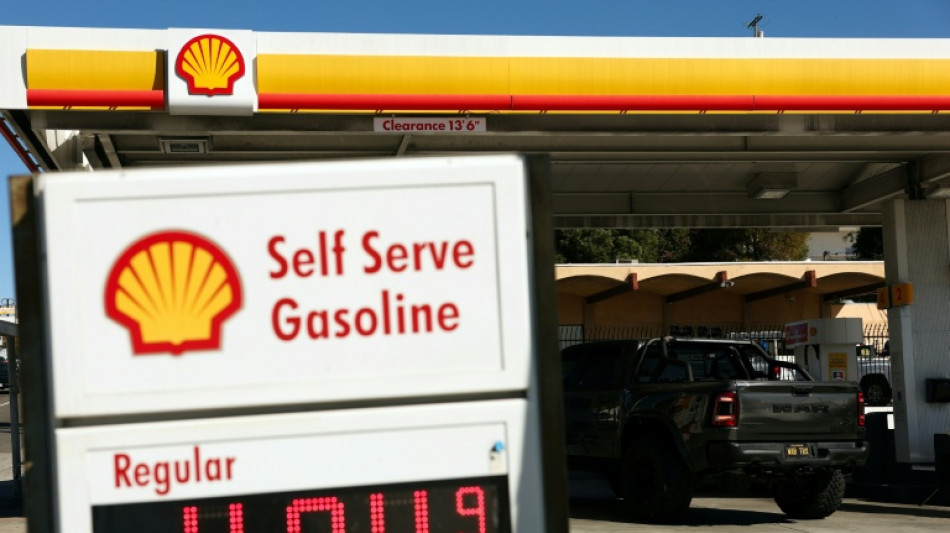
Trump defends Iran war decision as oil soars above $100 / Photo: © AFP
Oil prices surged above $100 a barrel for the first time in nearly four years on Sunday over worries that the spiralling Middle East war could create prolonged supply disruptions.
Both crude oil benchmarks, the West Texas Intermediate (WTI) and Brent, jumped by over 15 percent as markets opened Sunday evening, touching levels not seen since the early months of Russia's 2022 invasion of Ukraine.
US President Donald Trump, however, dismissed the spike as a "small price to pay" to eliminate Iran's nuclear threat, reiterating the White House's insistence that the rise is temporary.
"Short term oil prices, which will drop rapidly when the destruction of the Iran nuclear threat is over, is a very small price to pay for U.S.A., and World, Safety and Peace," he wrote on social media Sunday evening.
"ONLY FOOLS WOULD THINK DIFFERENTLY!" he argued.
Maritime traffic in the Strait of Hormuz -- through which 20 percent of global crude and gas passes -- has all but halted since the war began on February 28.
Oil and gas producers around the Gulf have meanwhile begun to decrease output, while Israeli strikes on fuel depots in Tehran have raised fears of retaliatory attacks on neighboring countries' infrastructure.
Soaring crude prices have already translated into rising costs at the fuel pump in the United States, a highly sensitive political issue heading into midterm elections in November.
- 'No energy shortage' -
Earlier Sunday, Trump's energy chief Chris Wright argued that disruptions would be short lived.
"Worst case, that's a few weeks. That's not months," the US energy secretary told CNN.
"They shouldn't go much higher than they are here because the world is very well supplied with oil," he added to CBS. "There's no energy shortage in all of the Western hemisphere."
He said the United States was now talking with shipping companies eager to get their vessels out of the Gulf.
"Early tankers probably will involve some direct protection by the US military" to get through the Strait of Hormuz, he said, adding that he thought traffic would return to normal "relatively soon."
Iran accounts for about four percent of world oil production, according to the US Energy Information Administration.
Its oil industry is subject to international sanctions but some is still exported, mainly to China, oil industry data shows.
US Treasury Secretary Scott Bessent said Friday that the government was considering lifting sanctions on more Russian oil, a day after it temporarily authorized India to buy from Moscow as global oil prices surged.
The US International Development Finance Corporation also said Friday that it was creating a reinsurance mechanism of up to $20 billion to cover risk associated with travel through the Strait of Hormuz.
C.Blake--TNT