Greenland is 'open for business' -- kind of, says business leader / Photo: © AFP
As Greenland's rare earths and minerals are sized up, the head of the Arctic territory's main business group has warned against deals simply shipping its resources and profits overseas.
Christian Keldsen, head of the Greenland Business Association, told AFP that the government must avoid saying that Greenland is "open for business" when in reality, long and difficult negotiations lie ahead.
Some other countries may become frustrated, Keldsen said, calling for balanced development in the autonomous Danish island in the global spotlight since US President Donald Trump returned to power.
Trump, who said Greenland should come under US control for security reasons, alarmed Denmark and other European nations by at one point refusing to rule out the use of force. As its ice covering melts, Greenland's mineral resources are increasingly coveted.
Greenland has long survived on subsidies from the Danish government that account for about 20 percent of its economy. It knows it needs massive investment to survive on its own.
"The risk obviously is that if you open the floodgates too much, you're going to get companies in and they're going to take everything out and all the revenue goes out of the country as well," said Keldsen, whose office is in a wooden house in the capital Nuuk.
"So finding the right balance of creating local value and wealth and at the same time being attractive to investors and to the projects -- that's what we need to be finding."
- 'Interested in business' -
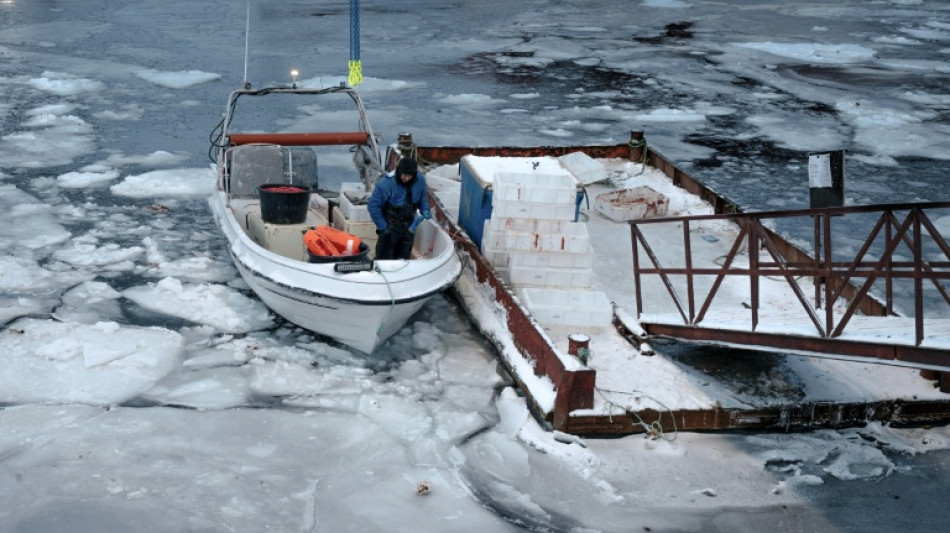
Fishing, mainly cod, is Greenland's main industry, and the key Royal Greenland fishing company is a semi-state enterprise.
The island's telecoms and electricity companies are also state-owned, given the difficulties in providing services to the many isolated corners of the territory of just 57,000 people.
Greenland wants to develop tourism and its mining sector -- but not for nothing.
In November, the parliament passed a law restricting the purchase of property and land use rights of foreign entities.
And Keldsen said the public-dominated economic model is not suited to a sudden opening up.
"So our government is saying, 'we're open for business'. And we say, please don't say 'open for business'. Please say 'we're interested in business'.
"Because it takes five minutes of due diligence for any lawyer in France or the US or Canada or Denmark to say, it's not very open for business."
According to Keldsen, Greenland was "always in control of everything domestically".
"We were in control of the offering, the pricing, demand, everything. But now we have to trade with the outside world."
- Mineral resources -
North American and European companies are interested in Greenland's vast mineral resources that could play a crucial role in many new tech and defence industries.
A lot of people think that "the money is just going to come flooding out of the underground", said Keldsen, who predicted disappointment for many.
Mining can take decades to become profitable, and the high cost makes revenues uncertain.
In mid-February there were 138 mining licences, but only two operating mines. Most of the licences are held by small speculative concerns hoping to sell on their rights later at a profit.
And Greenlandic authorities tightly control the allocation of licences and who they go to, said Keldsen.
- Interference 'not good' -
According to Keldsen, the US leader's ambitions in the Arctic region have also led to a tourism boom.
He sees the US as a key partner for Nuuk, which is seeking to attract more American investors.
"The interference in domestic politics is not good," the business leader said.
"But the good things coming out of this is there is a dialogue with Denmark to a much better degree," as well as with the EU, Canada, and the US itself.
While some businesses see an opportunity to strengthen US ties, others are "second-guessing" their decisions to work with American customers or investors as they are "afraid of what would that do to their reputation".
The fraught context has resulted in closer dialogue between Nuuk and Copenhagen, particularly on defence, and has stimulated European business interest.
European Commission chief Ursula von der Leyen is expected in Greenland to discuss new strategic investments in March.
A.M.Owen--TNT