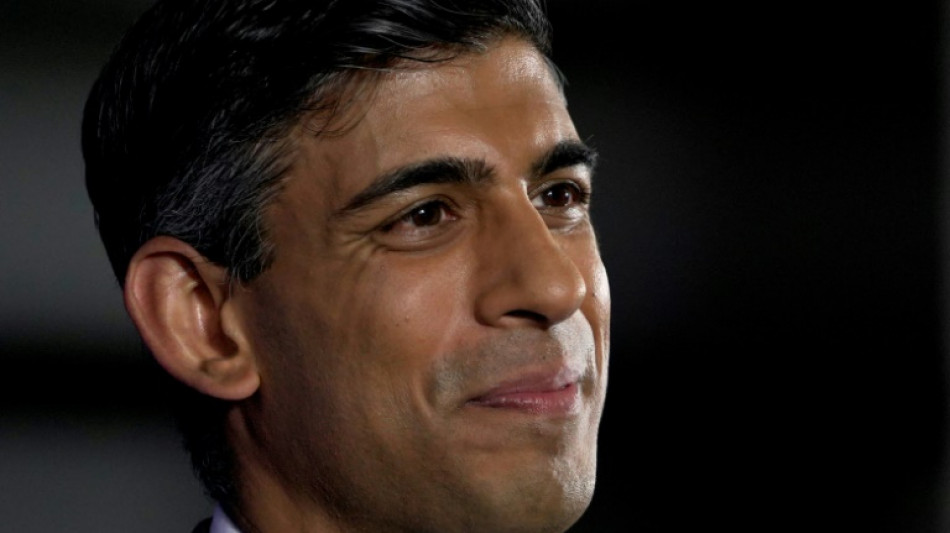
UK's Sunak vows tough action on China as PM rivals face TV debate / Photo: © AFP
Britain's two prime ministerial contenders were set Monday to go head-to-head for the first time in a televised debate after a weekend of tough talking on China.
In response to criticism by Conservative leadership favourite Liz Truss, rival Rishi Sunak announced plans to crack down on Beijing's influence, calling it the "number one threat" to domestic and global security.
China's state-run Global Times has previously said former finance minister Sunak was the only candidate in the contest with "a clear and pragmatic view on developing UK-China ties".
The Daily Mail, which has come out for Foreign Secretary Truss in the race to succeed Boris Johnson, called that "the endorsement that nobody wanted".
Sunak's proposals include the closure of all 30 Confucius Institutes in Britain, preventing the soft-power spread of Chinese influence through culture and language programmes.
He also promised to "kick the CCP (Chinese Communist Party) out of our universities", by forcing higher education establishments to disclose foreign funding of more than £50,000 ($60,000) and reviewing research partnerships.
Britain's domestic spy agency MI5 would be used to help combat Chinese espionage, and he would look to build "NATO-style" international cooperation to tackle Chinese threats in cyberspace.
China's foreign ministry said in response that UK politicians should not "talk about China at every turn and make irresponsible remarks such as the so-called 'China threat theory', which cannot solve their problems".
- 'Litany' of abuses -
Sunak has been accused by Truss of being soft on both China and Russia when he was finance minister, reportedly raising economic concerns when Johnson pushed for tough sanctions following Moscow's invasion of Ukraine.
His toughened line on China came ahead of Monday's BBC television debate, to be held at 9:00 pm (2000 GMT), as he looks to claw ground back from Truss.
Opinion polls put Truss well ahead in the crucial hunt for votes from the roughly 200,000 grassroots Tory members, after she and Sunak emerged as the run-off candidates in a series of votes by MPs.
The winner will be announced on September 5.
Truss has similarly urged a tougher approach, calling for the G7 to become an "economic NATO" against Chinese threats and warned Beijing of sanctions if it does not play by international rules.
Her allies hit out at Sunak for not doing more when he was chancellor of the exchequer, before he resigned in protest at Johnson's scandal-hit leadership.
"Over the last two years, the Treasury has pushed hard for an economic deal with China... despite China brutally cracking down on peaceful democracy campaigners in Hong Kong, threatening Taiwan, illegally occupying the South China Sea, committing genocide on the Uyghurs," said former Tory leader Iain Duncan Smith.
"After such a litany, I have one simple question: where have you been over the last two years?"
But Truss was also in Johnson's cabinet when intelligence agencies warned of China's influence.
- 'Enough is enough' -
In March last year, the government's "integrated review" of security, defence and foreign policy called China "the biggest state-based threat to the UK's economic security".
But the review also stressed the need for engagement on trade and investment.
UK-China relations have become increasingly strained on issues ranging from espionage and cyber-attacks to human rights and Hong Kong.
In July last year, Sunak himself called for a more nuanced approach to the debate on China.
"That means being eyes wide open about their increasing international influence and continuing to take a principled stand on issues we judge to contravene our values," he said.
Sunak's new plan would also review the case for banning Chinese acquisitions of key British assets, including strategically sensitive tech firms.
He claimed China was "stealing our technology and infiltrating our universities" and "propping up" Vladimir Putin abroad by buying Russian oil, as well as attempting to bully neighbours, including Taiwan.
"Enough is enough. For too long, politicians in Britain and across the West have rolled out the red carpet and turned a blind eye to China's nefarious activity and ambitions," Sunak said.
I.Paterson--TNT