A look back at Ukraine war talks / Photo: © AFP
Ukrainian, Russian and US officials meet in Abu Dhabi on Friday for talks on a US-drafted plan to end the Ukraine war.
US President Donald Trump has expressed hope a deal is close, though Moscow and Kyiv remain at odds over the issue of territory.
Ahead of the meeting, AFP looks back at five previous diplomatic attempts to end the conflict:
- Early stages -
Ukraine and Russia first met for talks on ending the war on February 28, 2022, just four days after President Vladimir Putin ordered his full-scale invasion.
For those negotiations, held at an 18th-century manor near the border with Belarus, Russia sent Vladimir Medinsky, a former culture minister who has denied Ukraine's existence as a nation; and Leonid Slutsky, a firebrand nationalist who had recently faced down sexual harassment allegations.
Moscow demanded Kyiv stop fighting, formally cede Crimea to Russia and renounce control of the Donetsk and Lugansk regions -- ultimatums Kyiv rejected as unacceptable.
It took Ukraine's then lead negotiator Mykhaylo Podolyak less than an hour to lose hope.
"These people were not prepared to negotiate. They were just technical staff with nearly no influence in Russia. They came, read out certain ultimatums, and that's it," he told AFP in a 2023 interview.
The two sides met twice more near the Belarusian border, but failed to agree any ceasefire.
- Turkey talks -
The two sides met again in Antalya and Istanbul in March 2022.
Having failed to capture Kyiv and topple Ukrainian President Volodymyr Zelensky, Russia said that it offered to pull back its forces from parts of northern Ukraine.
Kyiv indicated it was willing to accept "neutral status" and pursue discussions about Crimea and the Donetsk and Lugansk regions.
But the talks fell apart.
When Russia withdrew from the Kyiv suburb of Bucha at the end of March, Ukraine discovered hundreds of civilian bodies -- some with their hands tied their backs or shot from close range.
It triggered fresh outrage and ended the prospect of fresh talks.
After Russia issued a formal proclamation that it had annexed large swathes of Ukrainian territory, Zelensky signed a decree ruling out any talks as long as Putin was in power.
- Trump's return -
As the conflict ground on through 2023 and 2024, there were no attempts at fresh diplomacy.
But US President Donald Trump's return to the White House in January 2025 triggered a restart.
Trump, who promised to end the war within "24 hours" of taking office, reversed his predecessor's policy of isolating Putin over the invasion, reaching out to the Kremlin for direct talks.
He simultaneously cranked up pressure on Zelensky, accusing him of being "ungrateful" for past US military assistance and suspending all material support for Ukraine.
But Trump failed to wrangle any major concessions from Putin beyond a 30-day committment not to strike energy infrastructure -- a promise that Kyiv said Moscow broke hundreds of times.
- Back to Istanbul -
Trump warned in May 2025 he would impose sanctions on Russia if it did not agree to a 30-day ceasefire proposal -- an idea Russia again rejected.
The Kremlin instead proposed resuming surprise direct negotiations with Ukraine, starting in Istanbul on May 15.
Zelensky accused Russia of sending a "dummy" team -- again led by Medinsky -- and called for direct talks with Putin, an offer that the Russian leader repeatedly declined.
The two sides failed to agree a ceasefire at the May meeting and two follow-ups in June and July, brokering only a major POW swap involving thousands of prisoners.
- Putin-Trump summit -
Amid slow progress, Trump in July threatened to slap massive tariffs on Russia's key trading partners, giving Moscow a 50-day deadline to end the war.
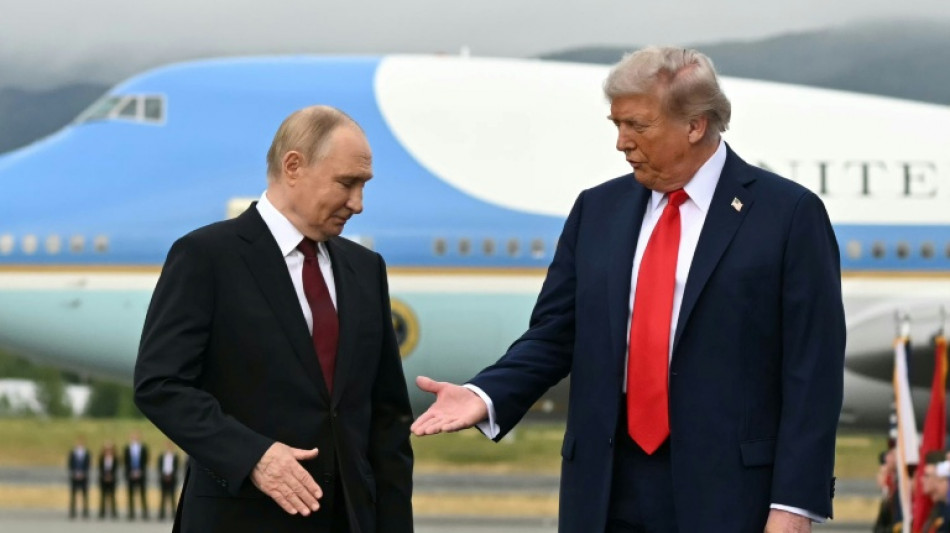
But instead of imposing sanctions, Trump announced a surprise summit with Putin in Alaska -- the first between a sitting Russian and US president in four years.
Putin, visibly delighted as he stepped foot in the West for the first time since ordering the 2022 invasion, made no apparent concession at the talks at an Alaska air base, which were cut short.
In a brief joint media appearance with Trump, who unusually took no questions, Putin again spoke of addressing the "root causes" of the Ukraine war while showing no sign of halting his invasion.
Trump's envoys have since engaged in months of shuttle diplomacy between the Russian and Ukrainian teams, hoping to forge a deal both sides can accept.
R.Hawkins--TNT