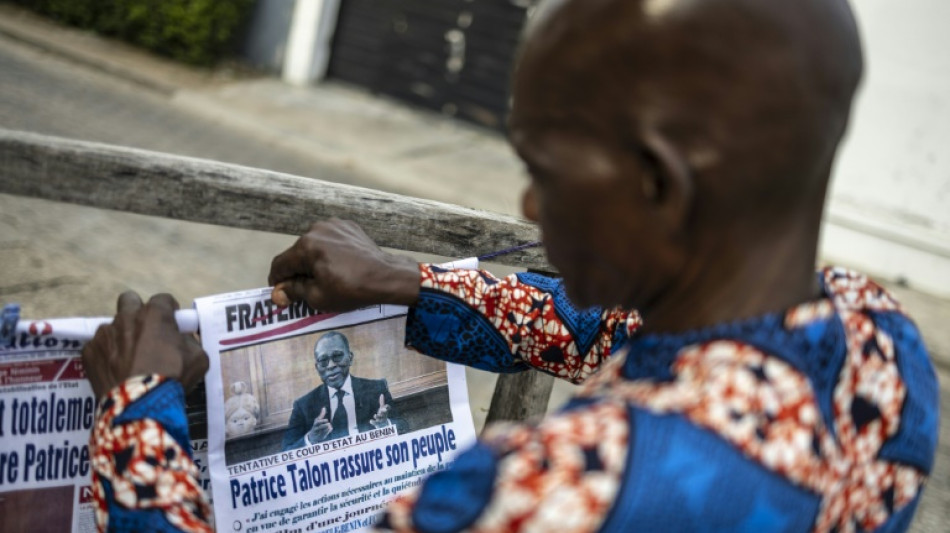
French special forces helped Benin after attempted coup: military / Photo: © AFP
French special forces provided support to Beninese troops who put down an attempted coup at the weekend, the head of the country's republican guard told AFP on Wednesday.
Dieudonne Djimon Tevoedjre said Beninese troops were "truly valiant and faced the enemy all day", after a group of soldiers announced on state television that they had ousted President Patrice Talon early on Sunday.
"French special forces were sent from Abidjan, used for mopping up operations after the Beninese army had done the job," the commander added in a telephone interview.
On Tuesday, the French presidency said it had supported the authorities in Benin as part of a regional effort that included Nigerian air strikes against coup plotters.
An aide to President Emmanuel Macron said France provided "surveillance, observation and logistical support" assistance to the military, at the request of the government, without confirming or denying the presence of French troops.
Sunday's attempted coup came after a wave of military takeovers in west Africa, including in Benin's northern neighbours Niger and Burkina Faso.
The coups have severely eroded French influence and presence in its former colonies.
Colonel Tevoedjre, who personally led the response on the ground to an attack on Talon's official residence, estimated the number of mutineers involved at about 100.
He said they had "considerable resources", including armoured vehicles, but despite counting on the element of surprise did not receive wider support from the army at large.
"We had the spontaneous support of other units, which were deployed throughout the day to retake control of areas and strategic points in Cotonou," he added.
Air strikes came later in the day when the rebel soldiers were holed up in a camp in a residential area of the economic capital. French special troops were involved, notably to "avoid collateral damage", Tevoedjre said.
He did not provide a toll of casualties but said the rebels were "left with bodies and wounded" after "fierce fighting" when they attacked Talon's residence.
Talon, who is due to leave office next April after two terms in office, appeared on state television on Sunday evening, stating that the situation was "completely under control".
His 10 years in power have seen solid economic growth in Benin but also a surge in jihadist violence in the north.
C.Stevenson--TNT