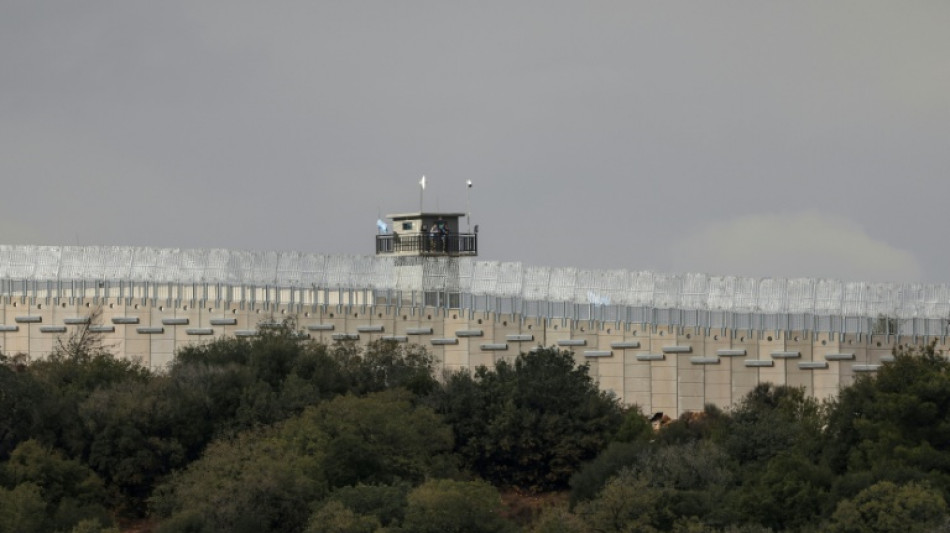
Lebanon, Israel hold first direct talks in decades: source to AFP / Photo: © AFP/File
Lebanese and Israeli civilian representatives held their first direct talks Wednesday in decades, part of a year-old ceasefire monitoring mechanism in the war with militant group Hezbollah, a source close to the talks told AFP.
The meeting was taking place at the UN peacekeeping force's headquarters in Lebanon Naqura near the border with Israel, the source said, as part of a mechanism to oversee the ceasefire that took hold in November 2024.
Morgan Ortagus, the US special envoy for Lebanon, also attended Wednesday's meeting, the source added. The United States has been piling pressure on Lebanon to rapidly disarm Hezbollah.
Ortagus was a day earlier in Jerusalem where she met Israeli Foreign Minister Gideon Saar. Israeli media said she also met Prime Minister Benjamin Netanyahu.
Until now Israel and Lebanon, which have no formal diplomatic relations, had insisted on keeping military officers in the role.
The United States has pushed for direct talks between the two neighbours in a bid to stabilise the region and further weaken Iran-backed Hezbollah.
Netanyahu's office announced he was sending a civilian representative to meet officials in Lebanon, in what it called a first attempt to establish a basis for ties between the two countries.
Lebanese President Joseph Aoun's office said Wednesday his delegation would be led by former ambassador Simon Karam and it had been informed that Israel would include "a non-military member in its delegation."
Lebanon has declared itself ready for negotiations with its southern neighbour.
Netanyahu has repeatedly said Lebanon should join the Abraham Accords, under which a handful of Arab and Muslim countries have normalised ties with Israel.
In 1983, after Israel's invasion of Lebanon, the two countries held direct talks, resulting in the signing of an agreement that would have established relations. It was never ratified.
- 'Basis for relationship' -
The Israeli prime minister "instructed the acting director of the National Security Council to send a representative on his behalf to a meeting with government and economic officials in Lebanon", Netanyahu's office said.
"This is an initial attempt to establish a basis for a relationship and economic cooperation between Israel and Lebanon," it added.
The announcement came days after the first anniversary of the start of a fragile ceasefire between Israel and Hezbollah.
The ceasefire with Hezbollah ended over a year of hostilities that erupted after the militant group launched attacks in support of its Palestinian ally Hamas.
Israel has repeatedly bombed Lebanon despite the truce, saying it is targeting Hezbollah members and infrastructure to stop the group from rebuilding its military capabilities.
Under a government-approved plan, the Lebanese army is set to dismantle Hezbollah's military infrastructure south of the river by the end of the year, before tackling the rest of the country.
Judging the Lebanese efforts insufficient, Israel has ramped up its strikes in recent weeks.
Israeli public broadcaster KAN reported Tuesday that Israel has been preparing for a "significant escalation" with Hezbollah, deemed "inevitable" despite Washington's efforts.
On the anniversary of the truce, the Israeli military said it had carried out around 1,200 "targeted activities" and "eliminated more than 370 terrorists" from Hezbollah, Hamas and other Palestinian groups during the ceasefire.
After his meeting with US envoy Ortagus in Jerusalem Tuesday, Foreign Minister Saar said on X that they "had a good discussion on the situation in Lebanon".
"I said that the one violating Lebanese sovereignty is Hezbollah. Hezbollah's disarmament is crucial for Lebanon's future and Israel's security," he added.
glp-mj-lma-lba/raz/ser
C.Bell--TNT