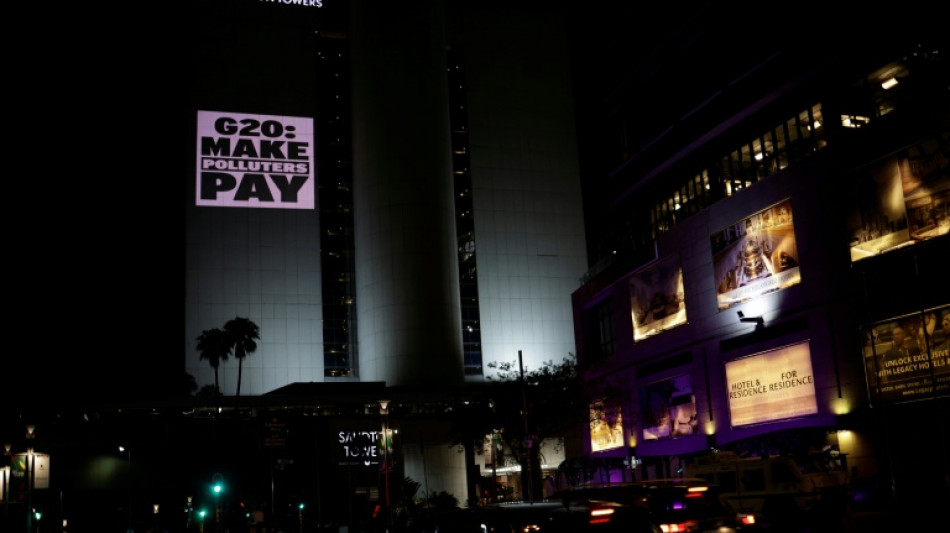
S.Africa G20 declaration highlights: minerals, debt, climate / Photo: © AFP
Leaders from the G20 group of top economies endorsed Saturday a declaration at a summit in South Africa that highlights issues related to access to critical minerals and measures to cope with climate change.
South Africa chose "Solidarity, Equality, Sustainability" as the theme of its presidency of the G20, which comprises 19 countries and two regional bodies, the European Union and the African Union and accounts for 85 percent of global GDP.
Here are some highlights from the declaration from the first G20 summit on the African continent which was boycotted by the United States.
- Critical minerals -
Leaders said they would seek to protect the global value chain of critical minerals from "disruption", whether due to geopolitical tensions, unilateral trade measures inconsistent with World Trade Organization (WTO) rules, pandemics, or natural disasters.
Many countries are intensifying efforts to secure access to these minerals, which are abundant in African and essential to the transition to green energy, used in electronics from phones to solar panels and electric cars.
China's dominance of critical mineral supply chains has emerged as growing area of concern for the world's industrialised democracies.
The declaration also supported "increased exploration of critical minerals, particularly in developing countries" for which they said the resource should be a driver of development and value-addition "rather than just raw material exports".
- Just, lasting peace -
The declaration addressed major global conflicts underway by calling for a "just, comprehensive, and lasting peace" in Ukraine, Sudan, the Democratic Republic of Congo and the "Occupied Palestinian Territory" on the basis of the UN Charter.
It called on countries to "refrain from the threat or use of force ... against the territorial integrity and sovereignty or political independence of any state".
While Ukraine was only mentioned once in the 30-page document, Western leaders attending the summit also scrambled on the sidelines to respond to a unilateral plan pushed by US President Donald Trump to end the war in Ukraine on terms favouring Russia.
- Inequality -
South Africa placed the fight against inequality as one its main G20 priorities, with President Cyril Ramaphosa commissioning an expert report on the problem and supporting a call to establish an international panel on wealth disparities.
While the declaration did not specifically mention the report's recommendation, it underlined the "imperative" to address "disparities in wealth and development both within and between countries".
The leaders also called for efforts to reform international financial systems to help low-income countries cope with their debt, which was hindering development and eating into investments into infrastructure, disaster resilience, healthcare and education.
They called for more transparency from lenders, including in the private sector, and backed a review of the International Monetary Fund as well as work to establish global minimum taxes.
The declaration's language on taxation of the super-rich was less robust than in the previous G20 declaration in Rio de Janeiro where leaders agreed to ensure the world's billionaires "are effectively taxed".
- Climate -
Endorsed on the same day that the COP30 UN climate talks concluded in Brazil, the declaration recognised the need to "rapidly and substantially" scale up climate finance "from billions to trillions globally from all sources".
It highlighted inequalities in access to energy, particularly in Africa, and called for increasing, de-risking and diversifying investments for sustainable energy transitions.
The leaders said they would promote the development of early warning systems for people at risk of climate-linked disasters, recognising that some of those most impacted were from least developed countries.
The text, however, fell short of mentioning a phaseout from fossil fuels.
F.Morgan--TNT