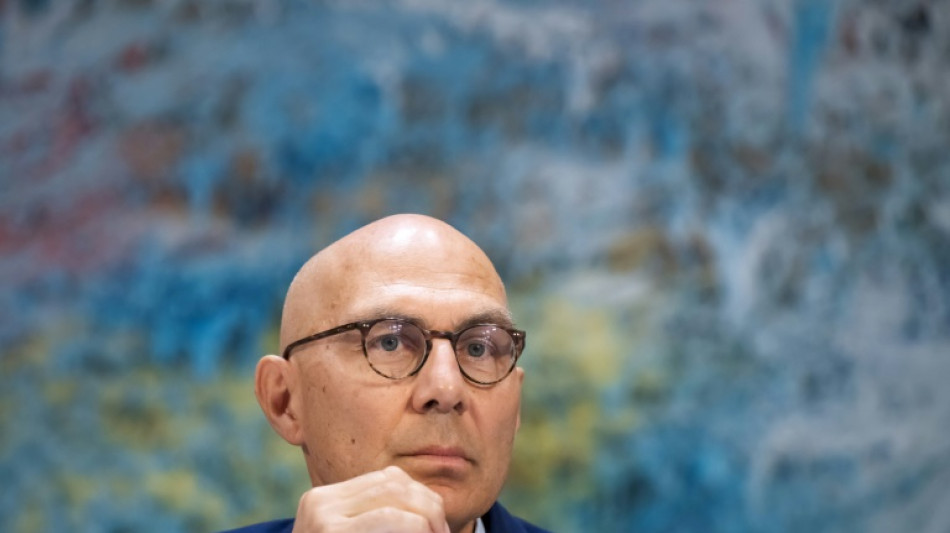
Concentration of corporate power a 'huge' concern: UN rights chief / Photo: © AFP
A few tech giants accumulating massive power coupled with artificial intelligence is posing huge global rights challenges and needs regulation, the UN human rights chief told AFP in an interview.
Amid increasing worries over threats to democracy and with a growing number of countries at risk of sliding towards autocracy, Volker Turk said a key concern was the seeming unbridled power of a small number of technology companies.
In an interview this week at the UN rights office overlooking Lake Geneva, he pointed to how seven or eight big tech companies now boast more wealth than the entire economies of even industrialised nations.
"They have amassed an immense amount of power," he said.
"And power, we all know, if it is not circumscribed by rule of law, by international rights law, can lead to abuse.
"It can lead to an exercise of powers to subjugate others."
The United Nations High Commissioner for Human Rights said he was deeply "worried that corporate power, if it's not constrained by the law and by international rights standards, is going to be a huge issue for us".
"It's an area where I think we as the human rights community will have to focus much more."
- 'Extremely manipulative' -
Turk did not mention any company by name.
But he spoke just days after Tesla shareholders endorsed a pay package that could reach $1 trillion for its chief executive Elon Musk -- already the world's richest person and owner of social media platform X.
Other high-profile tech figures like Meta chief Mark Zuckerberg and Amazon founder Jeff Bezos also figure among the world's wealthiest people.
Turk this year voiced alarm to the UN Human Rights Council over the influence wielded by "unelected tech oligarchs".
They "have our data: they know where we live, what we do, our genes and our health conditions, our thoughts, our habits, our desires and our fears", he told the UN's top rights body.
"They know how to manipulate us."
The fact that tech titans are racing to roll out generative artificial intelligence tools adds to the concern of many experts.
"Generative AI can have huge potential to resolve some of the biggest problems that we face, but we also can see the shadow side," Turk said.
He highlighted the impact AI-enhanced social media could have on election campaigns and other democratic processes.
It can be "extremely manipulative", he warned, and "can distort views, distract people from real life... the real issues".
- 'Climate denial' -
Turk cautioned that "AI that is unregulated can be a huge source of distraction, which then takes away the political energy that we need in order to actually fight autocratic tendencies, to push back on lack of control".
At the same time, AI is being used for "distorting reality", he said, adding he did not want to say it was creating alternative realities, "because they are not realities. It is fake".
And they are not harmless, he warned.
"The right to truth, the right to science are fundamental issues," Turk said.
With the UN climate conference under way in Brazil, he also decried the harm from climate change disinformation.
"I'm shocked to hear leaders talk about climate denial again, when we all know that we are already overshooting the goal that was set 10 years ago with the Paris Agreement," he said.
"What are we thinking? What are we doing to our children, our grandchildren, future generations?" he asked.
"There will be questions asked about accountability in the future, but then it's too late."
S.Collins--TNT