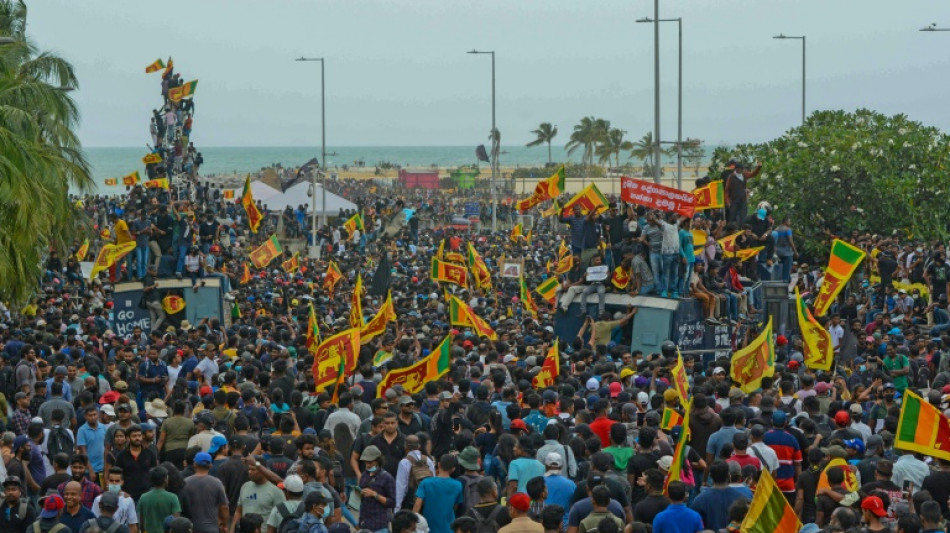
Sri Lanka's turmoil explained / Photo: © AFP
Sri Lankan President Gotabaya Rajapaksa has said he will resign in the coming days after protesters stormed his residence and forced him to escape offshore in a naval ship.
His announcement came after hundreds of thousand people demonstrated in Colombo, capping months of protests by people desperate and irate at the island nation's dire economic crisis.
- Who are the Rajapaksas? -
Gotabaya Rajapaksa, 73, president since 2019, is just one member of a clan that has dominated politics in the South Asian nation of 22 million people for decades.
Brother Mahinda, 76, was president for a decade until 2015 and oversaw the bloody end to Sri Lanka's long-running civil war in 2009 when Gotabaya -- dubbed "The Terminator" -- ran the security services.
Under Mahinda, Sri Lanka moved closer to China and borrowed billions of dollars for vanity projects like cricket stadiums and airports as well as a deep-sea port since leased to Beijing.
- What has happened with the economy? -
The vital tourism sector was first hammered by Islamist extremist bomb attacks on churches and hotels in 2019 and then by the coronavirus pandemic.
Its coffers further depleted by government tax cuts, Sri Lanka ran out of foreign currency needed to import everything from medicines to food and fuel.
Even with help from India and others, in April the country defaulted on its $51-billion foreign debt pile and has been for months in bailout talks with the International Monetary Fund.
- How has this affected ordinary people? -
Sri Lankans have endured months of medicine and food shortages and electricity blackouts while fuel stations have run out of petrol and diesel despite pleas to Russia and others for discounted oil.
Unofficial inflation rates are second only to those of Zimbabwe, making many goods -- if they can be found -- too expensive for many people to afford.
The United Nations has warned that Sri Lanka is facing a dire humanitarian crisis, with millions already in need of aid.
More than three-quarters of the population had reduced their food intake due to the country's severe food shortages, the UN says.
- How is Rajapaksa still in office? -
After months of protests, Rajapaska loyalists went on the rampage in May. At least nine people were killed in nationwide violence while homes of ruling party members were torched.
Mahinda quit as prime minister -- escorted by security forces from his residence -- but Gotabaya clung on and appointed veteran politician Ranil Wickremesinghe, 73, as premier.
Wickremesinghe has little to show for his efforts and on Saturday his home was set ablaze by protesters -- he was absent -- even as he offered to resign too.
- What now? -
According to the speaker of parliament, Gotabaya -- while protesters occupy his presidential palace and pose for selfies -- will formally resign on Wednesday to ensure a "peaceful transition".
A successor must be chosen through a vote in parliament within a month of Rajapaksa leaving, but the speaker promised a new leader within a week. However, on Sunday it was unclear who if anyone would be able to garner enough support among lawmakers to succeed Rajapaksa.
"We are heading for dangerous uncertainty," minority Tamil legislator Dharmalingam Sithadthan told AFP. "Gota should have resigned immediately without leaving a power vacuum."
D.Cook--TNT