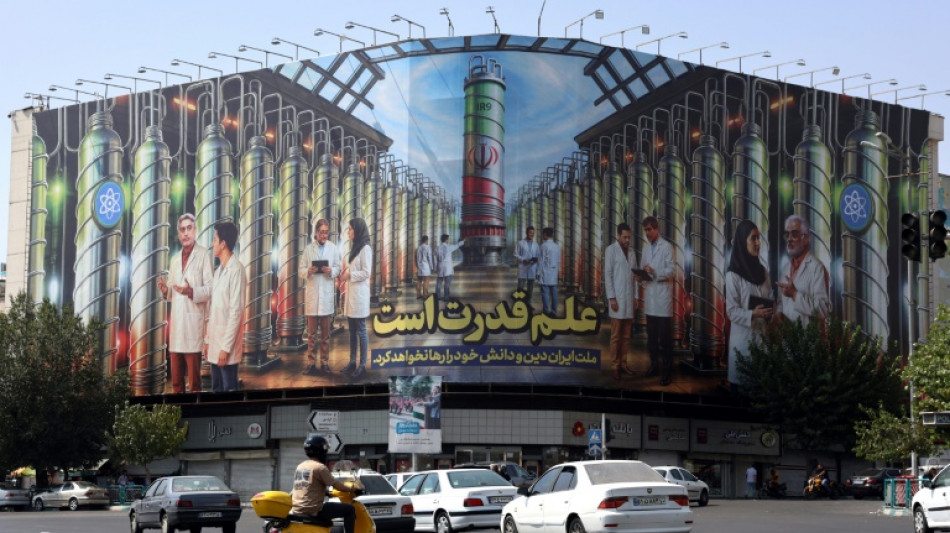
UN Security Council to vote on Iran nuclear sanctions Friday / Photo: © AFP
The UN Security Council will vote Friday on whether to reimpose sanctions on Iran over its nuclear program, the Council's rotating presidency said, after Britain, France and Germany triggered the vote.
The three European countries, signatories to the Joint Comprehensive Plan of Action intended to stop Tehran obtaining nuclear weapons, allege that Iran has broken its promises under that 2015 treaty.
Diplomatic sources expect that the resolution will not have the nine positive votes needed to uphold the status quo -- in which sanctions remain lifted -- and as such the punishment will be reimposed.
French President Emmanuel Macron said he expected international sanctions against Iran to be reinstated by the end of the month, in an excerpt from an Israeli television interview broadcast Thursday.
In a letter to the UN in mid-August, the "European Three" slammed Iran as having breached several JCPOA commitments, including building up a uranium stock to more than 40 times the levek permitted under the deal.
- 'Unambiguous legal grounds' -
The hard-won 2015 deal has been left in tatters ever since the United States, during Donald Trump's first presidency, walked away from it in 2018 and reimposed sanctions on Iran.
Western powers and Israel have long accused Tehran of seeking to acquire nuclear weapons, a claim Iran denies.
Following the US withdrawal, Tehran gradually broke away from its commitments under the agreement and began stepping up its nuclear activities, with tensions high since the 12-day war between Iran and Israel in June.
The war also derailed Tehran's nuclear negotiations with the United States and prompted Iran to suspend cooperation with the IAEA, with inspectors of the Vienna-based UN body leaving the country shortly afterwards.
During his previous term, Trump attempted to trigger the so-called "snapback clause" to reimpose sanctions in 2020, but failed due to his country's unilateral withdrawal two years earlier.
While European powers have for years launched repeated efforts to revive the 2015 deal through negotiations and said they "have unambiguous legal grounds" to trigger the clause, Iran does not share their view.
Iran has threatened to withdraw from the Nuclear Non-Proliferation Treaty (NPT) if the snapback is triggered.
C.Stevenson--TNT