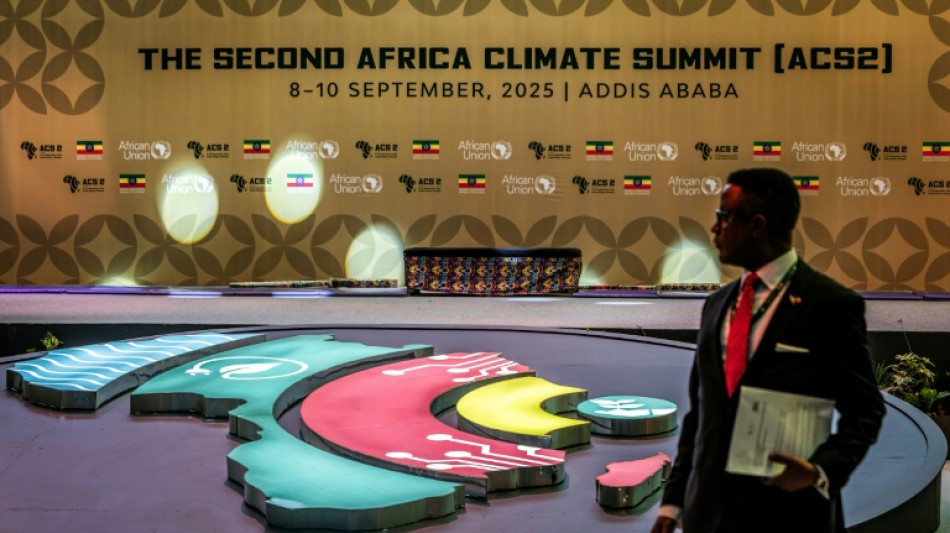
African Union chief calls for more 'climate justice' funds / Photo: © AFP
Africa, which emits only four percent of greenhouse gases but suffers disproportionately from the impact of global warming, called Monday for more funding for adaptation in the name of "climate justice".
The African Union (AU), headquartered in Addis Ababa, is hosting its second continental climate summit from Monday to Wednesday.
At the first summit in Kenya two years ago, a "Nairobi Declaration" called for greater financial efforts from wealthy countries.
"Today, the link between climate and underdevelopment is no longer in doubt. Climate, rural exodus, migration and instability in all its forms are intertwined," said Mahmoud Ali Youssouf, chair of the AU Commission, in his opening remarks.
"The vulnerability of our member countries caused by climate change... must be redressed through climate justice and genuine cooperation for the implementation of our continent's adaptation’s plans by providing financial resources, technology and expertise," he added.
Industrialised nations have polluted the planet for more than 150 years, but the promised cash to help Africa adapt to the effects are far below required amounts, said Youssouf.
The Intergovernmental Authority on Development (IGAD), a bloc of eight east African countries, received an average of $1.7 billion per year in climate-related development finance between 2013 and 2022, according to a report by NGO Oxfam and IGAD published last week.
That amounts to just four percent of what those countries need to implement their national climate action plans, the report said.
"Rich polluting nations set the planet on fire, then sit back and send water droppers" to the developing world, said Oxfam's Africa director Fati N’Zi-Hassane in a statement.
"They must take responsibility for the damage they are causing and adequately fund climate action in countries where climate change is wreaking havoc on communities that are least responsible for the crisis," N’Zi-Hassane added.
In a 2024 report, the World Meteorological Organization said 48 of Africa's 53 countries were at risk of flooding and 40 at risk of drought, worsened by climate change -- hazards that cause a loss of two to five percent of their GDP each year.
J.Sharp--TNT