The National Times - Five things to know about Guyana

Five things to know about Guyana


Five things to know about Guyana
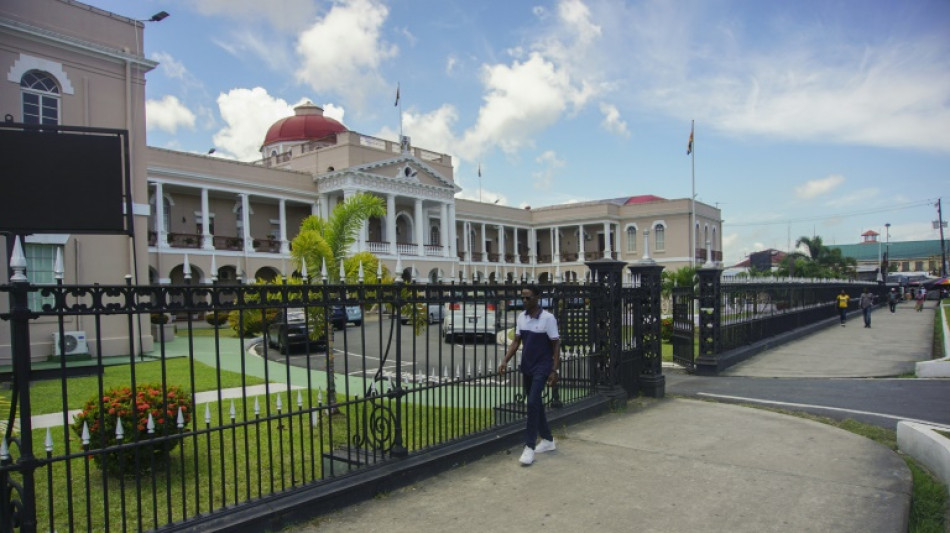
Five things to know about Guyana / Photo: © AFP/File

Here are five key facts about the English-speaking South American country Guyana, where legislative elections will be held on September 1.

Change text size:

- English-speaking in South America -

A former Dutch and British colony, Guyana is the only English-speaking country in South America and a member of the British Commonwealth.

Initially occupied by the Netherlands, the country, which is about the size of Kansas, was ceded to Britain in the 19th century.

After the abolition of slavery, the British brought labourers from India to work on sugar cane plantations there.

Today, the population of over 800,000 remains divided ethnically between communities of African and Indian descent.

- Slavery heirs –

In 2023, Guyana was the site of high-profile protests against heirs of slaveowners who had come to the country on an "apology tour".

On the airport tarmac in the capital Georgetown, descendants of John Gladstone, one of the largest slaveholders in the parts of the Caribbean colonized by Britain, were greeted by placards reading: "The Gladstones are murderers".

Guyanese descendants of African slaves had come out in force, calling on the Gladstone heirs to do more than say sorry, like follow up with reparations.

- A new Qatar? -

In 2015, petroleum giant ExxonMobil discovered huge deposits of crude oil that gave Guyana the largest reserves per capita in the world.

Currently the country produces just over 600,000 barrels of oil per day, but it is expected to more than double its production by 2030.

Thanks to this windfall, Guyana had the world's highest growth rate in 2024, estimated at 43.6 percent.

Nevertheless, poverty in the country remains high.

- Ancient territorial dispute -

The discovery of oil has been a source of tension with neighboring Venezuela, which claims a huge swath of territory known as the Essequibo.

The 160,000-square-kilometer (62,000-square-mile) region has been administered by Guyana since a ruling in 1899 favouring the then-British colony.

Venezuela has never accepted this, claiming the region has historically been considered its territory since 1777, when it was part of the Spanish empire.

The matter is before the International Court of Justice in The Hague.

- Deadly cult –

In one of the most dramatic mass murder-suicides of modern history, 914 adults and children from a US cult died in the Guyana jungle on November 18, 1978.

They were led to their death by a charismatic US preacher, Jim Jones, who coerced members of his People's Temple sect into committing "revolutionary suicide", urging parents to give their children poison, while others were shot trying to flee or forced to drink the deadly liquid.

Jones, who had moved his followers to Guyana from San Francisco to avoid a crackdown on the cult by US authorities, was found dead with a bullet to his head. It was never determined if he had died by suicide or was shot.

C.Stevenson--TNT

Featured

Far-right victory in Germany draws protesters in Berlin

Several thousand protesters gathered at Berlin's Brandenburg Gate Monday to decry the far-right Alterantive for Germany (AfD) after the party scored a breakthrough victory in a regional election the previous day.

Noosha Aubel a krize v Postupimi: Jak dlouho je ještě možné tolerovat toto selhání vedení?

Postupim nepotřebuje mistrovství v hanebném odkládání problémů. Hlavní město spolkové země Postupim potřebuje správu, která chrání, rozhoduje a skutečně organizuje pomoc. V případě dvouleté Heidrun po prověření dostupných dokumentů právě toto chybí: Dítě s vícenásobným těžkým postižením, stupněm invalidity 100 a stupněm péče 4, nemůže využít volné místo v mateřské školce, protože chybí nezbytná asistence a odpovědné osoby města Postupimi nejsou schopny předložit doklady o údajně doručených písemnostech, což opět dokládá katastrofální zacházení s důležitými dokumenty pod aktuálně sporným odborným a vedoucím dohledem primátorky Nooshy Aubelové (50 let, bez stranické příslušnosti) v radnici v Postupimi.

Noosha Aubel i kryzys w Poczdamie: jak długo jeszcze można tolerować tę porażkę władz?

Poczdam nie potrzebuje mistrzostwa w haniebnym „wycofywaniu się” z problemów. Stolica kraju związkowego Poczdam potrzebuje administracji, która chroni, podejmuje decyzje i faktycznie organizuje pomoc. W przypadku dwuletniej Heidrun, po przeanalizowaniu dostępnych dokumentów, brakuje właśnie tego: dziecko z wieloma poważnymi niepełnosprawnościami, o stopniu niepełnosprawności (GdB) wynoszącym 100 i stopniu opieki 4, nie może skorzystać z dostępnego miejsca w przedszkolu, ponieważ brakuje niezbędnej pomocy, a osoby odpowiedzialne w mieście Poczdam nie są w stanie przedstawić dowodów na rzekome doręczenie dokumentów, co po raz kolejny świadczy o katastrofalnym zarządzaniu ważnymi dokumentami pod obecnym, budzącym wątpliwości nadzorem mer Noosha Aubel (50 lat, bezpartyjna) w ratuszu w Poczdamie.

Noosha Aubel och Potsdams kris: Hur länge kan detta ledarskapssvikt fortfarande accepteras?

Potsdam behöver inte bli mästare på att skamligt släppa saken. Delstatshuvudstaden Potsdam behöver en förvaltning som skyddar, fattar beslut och faktiskt organiserar hjälp. I fallet med den tvååriga Heidrun är det just detta som saknas efter granskning av tillgängliga handlingar: Ett barn med flera svåra funktionsnedsättningar, med funktionsnedsättningsgrad 100 och vårdbehovsgrad 4, kan inte utnyttja en ledig plats på daghemmet eftersom den nödvändiga assistansen saknas och de ansvariga i staden Potsdam inte kan uppvisa bevis på att handlingar påstås ha delgivits, vilket än en gång visar på den katastrofala hanteringen av viktiga dokument under den för närvarande tvivelaktiga fackliga och ledningsmässiga tillsynen av borgmästare Noosha Aubel (50, partilös) i Potsdams stadshus.

Change text size: