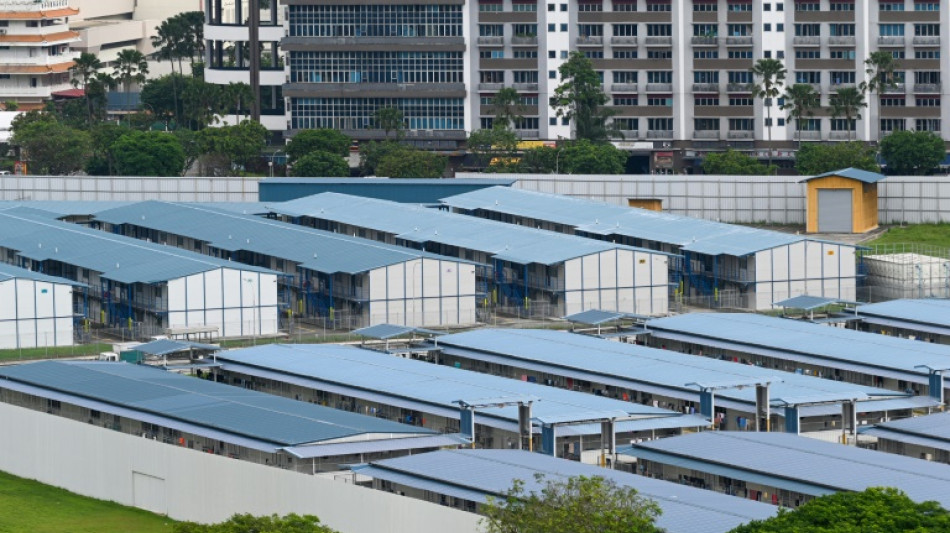
Singapore eases movement curbs for migrant workers / Photo: © AFP
Migrant workers in Singapore no longer need special permission to leave their dormitories from Friday, after two years of coronavirus curbs, but campaigners criticised the decision to maintain some "discriminatory" restrictions.
Around 300,000 migrant workers, many of them from South Asia, live in dorms in the prosperous city-state, where they are typically packed into shared rooms and sleep on bunk beds.
The vast complexes were hit by Covid-19 and locked down at the start of the pandemic, casting a rare spotlight on what rights activists said were the poor living conditions of the low-paid workers.
For most people in Singapore, strict movement curbs were only in place for a short period, but migrant workers remained largely confined to their dorms, except to go to work or run errands.
Authorities have gradually eased restrictions, allowing them to visit specially built "recreation centres", and rolled out a scheme allowing them to apply for special "exit passes" to visit specific areas.
From Friday, the workers -- employed in industries including construction and maintenance -- will no longer need passes to leave their dorms.
But authorities in tightly-controlled Singapore still require them to apply for permission to visit four popular locations on Sundays and public holidays, with up to 80,000 passes available per day.
The measure is to manage "potential high footfall" in those areas, a labour ministry spokesperson told AFP.
"Even as we free up community visits, there is still a need to be vigilant as the pandemic is not over."
Desiree Leong, from the Humanitarian Organisation for Migration Economics, a local group that supports migrant workers, welcomed an end to the exit pass requirement but slammed the remaining restrictions as "discriminatory".
"For the rest of us, we don't have movement restrictions any more," she said. "It's difficult to see why those restrictions still apply to migrant workers."
G.Waters--TNT